• Skip to primary navigation
  • Skip to main content
  • Skip to primary sidebar

Moreau Center Social Justice Programs

  • Home
  • Immersions
    • Affordable Housing
    • Border Immersion
    • Civil Rights
    • Community Organizing and Resistance (CORE) Immersion
    • Environmental Justice
    • L’Arche Bologna
    • Nicaragua
    • North Portland Civil Rights
    • Rural
    • Tanzania
    • Urban
  • Service Plunge
    • Blog Updates
  • Interns for Justice
  • Donate
  • Archived

Uncategorized

3/2/24 – New Orleans

March 2, 2024 By Carrina

Care
Open
Volunteering
Emotional
Nonprofit
Assistance
Neighborly
Transformative

Helpful
Others-first
Understanding
Selfless
Empathy

We started off the day volunteering at Covenant House. This organization and location
specifically provides housing for New Orleans youth ages 16-22, no matter the reason. First, we
spent a couple hours going through the donated clothes and sorting out the ones to keep. After
sorting and folding the clothes, we got to take some to hang up in the clothing closet. Then we
got to walk around and do a mini-tour of the building and also discuss Covenant House’s
mission. What stuck with me the most is how open the doors to covenant house are. This place
has no waitlist whatsoever, and is not just a shelter but also a place that provides resources and
support for the youth staying there. For example, some of the things mentioned were job
searches/resume building, connecting with family, food and clothing, healthcare, parenting for
youth who are current or expecting parents, among many others.

Our next activity was visiting an exhibit called The Trail They Blazed. This was a traveling
exhibit that was at the library of the university we stayed with (University of Holy Cross) near
the New Orleans area. It covered multiple events and organizations during the civil rights
movement in New Orleans area from the 50s-70s. The Desire neighborhood at the time became a
hotbed for activism, which led to the formation of the National Committee to Combat Facism
(NCCF), which is associated with the Black Panther Party. The NCCF provided free breakfast
for school kids, political education classes, voting transportation, grocery shopping for elders,
and distributed the Black Panther Party’s newspaper. Another topic the exhibit covered was
boycotts, many of these led by college students my age. They organized sit-ins to desegregate
lunch counters, advertised and led consumer boycotts, despite the risk of expulsion from their university (which unfortunately occurred to many students). Their efforts eventually led to integrated dining and restrooms, fairer hiring practices, and appropriate accommodations being made. Being a college student, this exhibit made me realize how much power we have to make the changes we seek. Now more than ever, it is crucial that we use our voice to speak up for injustice, whether here or the other side of the planet.

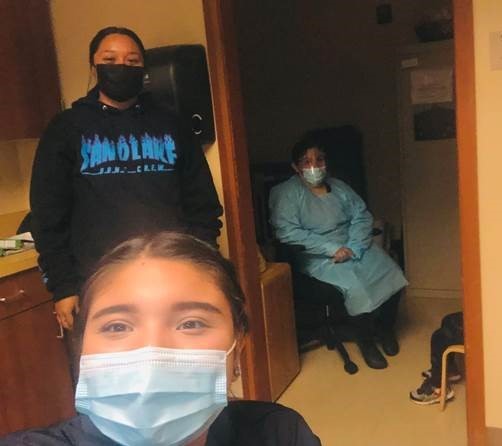
Kaylee Gunderson
Filed Under: Civil Rights, Civil Rights Immersion 2024, Uncategorized

Tim Arifdjanov- Ecumenical Ministries of Oregon, SOAR Immigration Legal Services

July 29, 2022 By Sophie

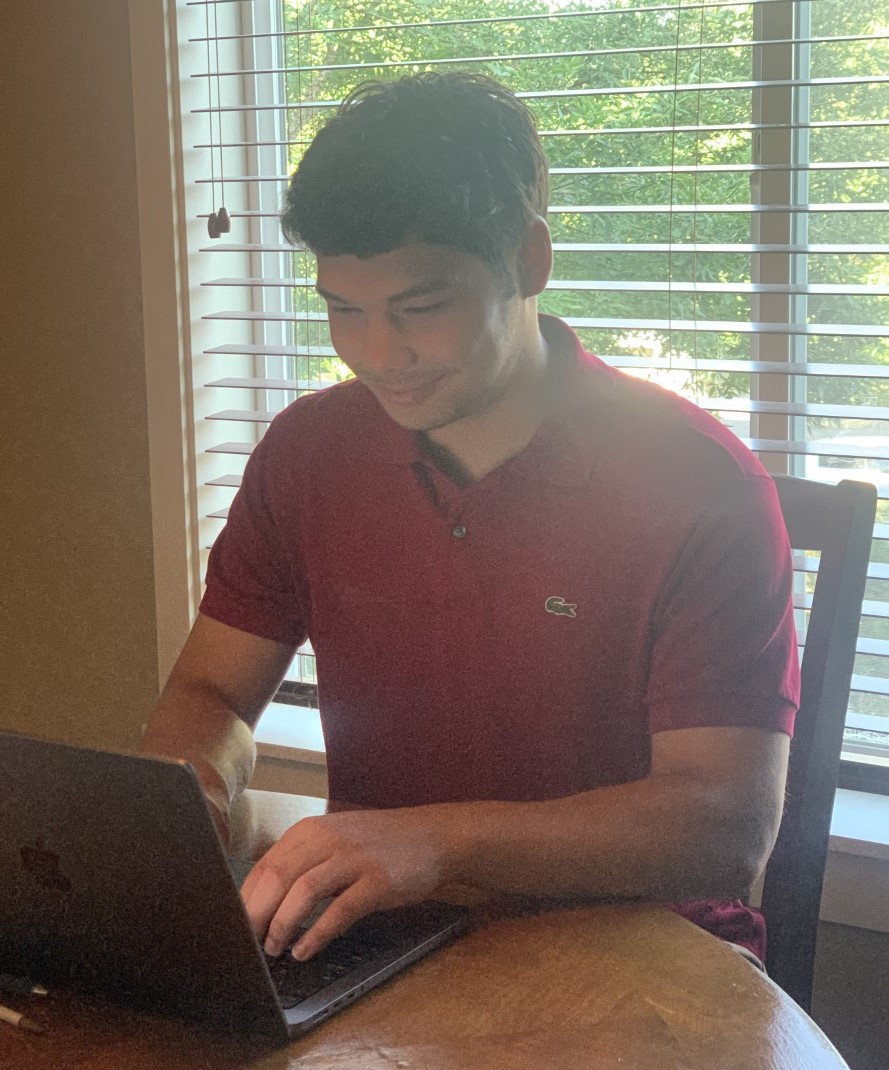
Tim working from home.

Hello, my name is Tim and I am a rising senior English major with hopes of becoming a lawyer one day. This summer, I’ve been interning at SOAR Immigration Legal Services, a program of the Ecumenical Ministries of Oregon. SOAR Immigration Legal Services began as an offshoot of SOAR, Sponsors Organized to Assist Refugees, which serves refugees who resettle in Oregon.

Refugees often need legal aid when wading through the US Immigration System, so SOAR’s ILS was founded to meet this need. SOAR ILS now represents refugees in court and helps refugees file documents to USCIS, the US Citizenship and Immigration Services. Much of SOAR’s work is pro bono or offered at a discount. In court, SOAR advocates for refugees who may be, for example, applying for asylum, or facing deportation.

Helping refugees file documents is less flashy, but it’s some of the most important work that SOAR does. Forms can be confusing, and checking the wrong box or disclosing information that doesn’t need to be disclosed can, in some cases, lead to deportation for the refugee who’s filing. By helping with the filing of the forms, SOAR ILS makes sure that refugees correctly represent themselves and that USCIS reaches a just decision.

Aside from legal work, SOAR ILS runs classes for the immigrant and refugee communities. Right now, we have a citizenship-test preparation class, and a class for Ukrainian refugees that explains to them their rights.

I’ve appreciated my time at SOAR because of the stories that I’ve been able to hear. Many of these stories are heartbreaking, or sag with injustice, but it’s encouraging when I hear about the wins.

I read the case file of one client who was fleeing the political persecution of Cuba’s Communist Party, and applying for asylum in the US. Reading about the unfair detention and cruel tortures she suffered through angered and saddened me, but I was happy to read that after a winding litigation process, she got asylum and is now a permanent US resident.

In another case, a client was having trouble with the US Citizenship process because he had been unjustly arrested in the 1970s. With help from SOAR, he was able to get the arrest cleared, and eventually became a US citizen. I was able to help prep this case file for use to instruct other nearby ILS firms on what to do in similar situations.

I’m glad I was able to work with SOAR and would not have been able to without Interns for Justice. I hope to do good work like the work SOAR does in the future.

Filed Under: IFJ 2022 blogs, Uncategorized

Anais Larios-Maldonado- Oregon Child Development Coalition

July 11, 2022 By Sophie

Hello! My name is Anaís Larios-Maldonado, and I’m a rising senior, majoring in Secondary Education and Spanish. I had the great privilege of interning at Oregon Child Development Coalition in the Hood River/Wasco counties this year, specifically for their Peak Harvest Early Education program of The Dalles, Oregon, as a Family Advocate.

Anais with her colleagues.

Oregon Child Development Coalition, known as OCDC, is a non-profit organization that focuses on providing migrant families an equitable education opportunity for their children while meeting their need for childcare. It is now “one of the largest early childcare and education service providers in Oregon,” serving in counties such as Clackamas, Hood River/Wasco, Klamath, Multnomah, and Umatilla to name a few.

The program that I serve is a Migrant and Seasonal Head Start designed for children of economically disadvantaged, migrant and seasonal farm workers. The families that we serve are below the poverty threshold and receive most of their income from agriculture.

For our center in The Dalles, it is very common to see families traveling from California to work the cherry harvesting season in The Dalles and Hood River. These families are typically working for a short period, as our program is only 4 weeks long, working seven days a week and starting as early as 4 am due to escape the heat.

As Family Advocates, our greatest focus is to assure that our students are safe and healthy. Because our counties are at high risk for COVID cases, we get health referrals from teachers every day to check the students’ temperature and communicate their symptoms with parents. We normally have a medical provider on site who examines children who are feeling ill, and we work directly with them to translate to families, provide cultural context to providers, and make the children feel safe and comfortable.

I’ve noticed that the children can feel apprehensive with medical professionals, especially when they do not speak their home language, as well as the struggle that parents undergo when they are not understood or listened to when speaking about their child’s illness. I now understand the value of Family Advocate positions, and I hope that we can have more culturally competent positions who can facilitate these interactions in other places, such as the medical field.

The children at our center are as young as two months old and up to five years of age. Most of our families are Spanish speakers and are in the county temporarily before migrating onto their next workplace. In this short amount of time, our goal is to maximize the services and support that these families need, such as connecting them to resources like WIC, in some cases Bridges to Health, our partnering clinic One Community Health, and other non-profits around the Gorge.

I come from a migrant farm working household, and I attended the Migrant Head Start program at OCDC when I was younger. For that reason, I feel incredibly grateful to have OCDC as my host site for the Interns for Justice program. It feels as though I circled back to serve the community that once shaped who I am today.

Filed Under: IFJ 2022 blogs, Uncategorized

Derek Berning- OR State Representative, Travis Nelson’s Office

July 1, 2022 By Sophie

Attending virtual community meetings.

Hello! My name is Derek Berning, and I’m a rising senior from Sublimity, Oregon majoring in economics at the University of Portland.

This summer I have been interning for state representative Travis Nelson of House District 44, which encompasses much of North and Northeast Portland, including UP’s campus. Rep. Nelson was appointed to the state legislature earlier this year after his predecessor Tina Kotek left the seat to enter the governor’s race in November; as a nurse and union representative, he seeks particularly to advocate for improved healthcare access and quality as well as workers’ rights and an empowered labor movement.

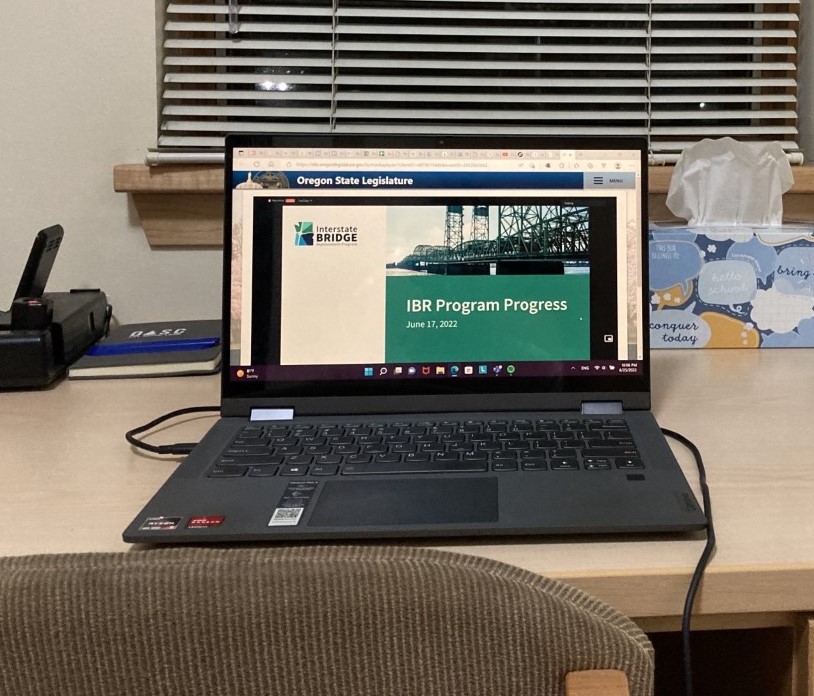
As his intern, I have been attending meetings of various governmental bodies—like Portland City Council and the Multnomah County Board of Commissioners—and community groups—like the neighborhood associations of North Portland and committees convened to plan the coming replacement of the I-5 Interstate Bridge. By attending these gatherings, I serve two purposes: First and most importantly, I take notes for Rep. Nelson to review so he can stay informed on key political happenings in the metro region, because his daily work as a legislator requires him to focus more on statewide issues than local ones. Second, I act as his stand-in and community liaison, ensuring his presence is felt in North Portland even at events he cannot himself attend—this function is especially important for district-specific gatherings like neighborhood association meetings.

These activities have allowed me to rapidly learn about the most important issues facing the metro region, from the realms of transportation (like the I-5 Rose Quarter and Interstate Bridge projects) to education (like the effort to ban concealed firearms in Portland’s public schools) to environmental issues (like the cleanup of the Portland Harbor Superfund site).

I have also witnessed directly the real-world process of policymaking and political engagement. Frequently the public—including myself—sees politics through only the lens of electoral campaigns, with their flashy promises and bitter rhetoric, but it is the intermediary of these campaigns where tangible change is actually made; this internship has revealed the less obvious ways in which policy is crafted.

Filed Under: IFJ 2022 blogs, Uncategorized

Kiley Zarzoza- Maple Valley Food Bank

July 2, 2021 By Sophie

Kiley at Maple Valley Food Bank.

My name is Kiley Zarzoza, and I am a Junior at the University of Portland, majoring in Nursing with a minor in Neuroscience. This summer, I am interning at the Maple Valley Food Bank (MVFB), in Maple Valley, WA.

The Maple Valley Food Bank provides food assistance and emergency services to low-income residents of Maple Valley, Black Diamond, and the Tahoma School District. Last summer, during COVID, I had the opportunity to volunteer with the Food Bank. I fell in love with the volunteers, staff, clients, and the work the Food Bank does. It was then through the Interns for Justice Program I got the opportunity to step into a deeper role at the Food Bank.

This summer my main project is helping highlight the different resources and organizations that can provide support in multiple areas. Through conversations and data collection I have been able to pin point areas of interest for clients. Some of these areas include; job training programs, utility assistance, health care, and dental care. During my second week I highlighted the Washington State Food Stamps Program, called Basic Food. Providing information on how and who can apply for this program.

The other part of this project is updating and adding to an existing resource list that the Food Bank uses.

One goal the director of the MVFB, Lindsey Habenicht, shared with me was being able to do more boots on the ground work. I worked closely with Allie Ross, community health coordinator, getting this goal started. We have delivered supplies and food to our houseless community members. During this summer we will be at the local farmers market a couple times making our presence known in the community and collecting donations. I have participated alongside the staff to reach more clients in need of food assistance throughout the community of Maple Valley.

Kiley & Allie tabling at the Farmers’ Market.

During my time as an intern I have been listening to people share their stories. I have been pushed outside my comfort zone and been able to learn more about myself. The Maple Valley Food Bank has taught me that with passion and compassion we can reduce the stigma around shopping at a food bank and support the people in our community.

Filed Under: IFJ 2021 blogs, Uncategorized

Meghan Potter- Rosewood Initiative

July 2, 2021 By Sophie

Meghan working from her home office.

This summer I am excited to be interning with the Rosewood Initiative, a nonprofit organization located in far East Portland that focuses on community engagement. The Rosewood neighborhood is significantly underserved, and its community members face many issues including systemic racism and poverty. As an organization, Rosewood seeks to address some of those injustices by working with the neighborhood and supporting them in various ways. What attracted me to Rosewood is what a wide range of programs and support they offer. In the past year, Rosewood has done everything from hold weekly COVID-19 vaccine clinics to successfully advocate for a new bus line that was needed in the Rosewood area.

I have been interning with Rosewood for the past month, and it has been a blast! The project that I am focusing on this summer involves checking in with the local businesses to see what support they might need as we are coming out of lockdown and COVID-19 restrictions. This project, that I have been able to work on mostly independently, has been fun for me because it is unlike anything I’ve worked on before. While learning about how businesses and nonprofits interact, I am also getting to know the neighborhood very well as I research all of these local businesses.

Rosewood Initiative Office

Apart from my primary project, I’ve also been able to be involved in Rosewood in other ways. My work has been a combination of virtual and in-person, and I’ve gotten to go into the Rosewood center at least once a week. This means that I’ve had the opportunity to really get to know some of the other folks on the Rosewood team and learn about the different work that they do. Through talking with other team members and sitting in on meetings, I am getting a very up-close look at how nonprofits like Rosewood are run. Additionally, I’ve been helping Rosewood reorganize their center as they prepare to open back up to the public and have helped other team members on various small projects. This experience has been truly one of a kind as I’ve been able to learn so much about Rosewood, community outreach, and myself.

I am very grateful for the IFJ program and all the folks at Rosewood for allowing this opportunity to happen, and I’m excited to spend the rest of the summer working with such an incredible organization!

Filed Under: IFJ 2021 blogs, Uncategorized

Small Efforts Lead to Great Contributions

March 7, 2020 By Tyler

 Reflection by Meg Bender and Brittany D’Souza

             It was our last full day on immersion and we spent our day today in the Columbia River Gorge. Mayor Arlene Burns and Peter from the Friends of the Gorge were our guides for the day. It started with a presentation, then they took us to Mosier. Mosier was the location of an oil car derailment in June of 2016. Luckily nobody was hurt but it opened their eyes to what could’ve been. This tragedy also became a focusing event for the community to become further engaged in climate activism. Mayor Burns taught us that small actions can have large positive outcomes. Her position as mayor is a volunteer position and she has devoted it to improving her community. Mosier has been represented in global conferences, including a gathering of mayors from major cities, such as Los Angeles and Houston, around the world in Chicago to commit their cities to the goals of the Paris Climate Agreement. While Mosier with a population of 430 doesn’t scream major city, Mayor Burns has taken the hand that they’ve been dealt to the world stage. Proving that no matter how small you believe your contribution may be, it adds to a global effort.

Walking beside the train tracks where the oil train derailed

              Later in the day, we took the time to get outside and explore the Gorge a bit more. We ended up on a hike at Horse Thief Butte, which provided amazing views of Mount Hood and the river below. As we rested after climbing up the Butte, we reflected on all the knowledge shared with us about the amazing body of water coursing below.

Hiking at Horsethief Butte with Mt. Hood in the background

              Finally, we ended our day by meeting with a group of activists from the local high school. The student activists testified before their city council and eventually approved the plan. This provided experience around the difficulties in getting policy approved and challenges they faced as young advocates. Overall, they provided us hope and reminded us of the fire many of us carried as younger adults. The passion that they have is evident and we were inspired to have the courage to advocate in any possible way going forward.

In gratitude,

Brittany and Meg

Filed Under: Environmental Justice, Environmental Justice 2020, Uncategorized

Operation Streamline

March 5, 2020 By Sophie

by Noa Higgins

There is a gathering of people in the court room. Our group of 14 lines two benches in the back of the large room. This is the place where justice is supposed to be served, where the judge hands out sentences to those who have broken the law in order to uphold the standards that we have put in place to protect our society. But here before us, we see officers passing out headsets for translating to the individuals sitting in the chairs. Each one is shackled by foot and those around their hands are connected to a clanking chain hugging their mid-drifts as they shuffle through their motions. And while the building presents itself as a professional place of justice, the situation before us pleads the opposite. The individuals calmly and quietly sitting in the chairs are not criminals with the goal of harm. They are individuals with faces of compliance, there to filter through the system that we have created for them, without truly understanding their sentencing. They are the people who were found, attacked, and arrested by border patrol in the desert, two days ago at the same time and place that we were walking through the trails. What is it that the system does not see here? Not only the system in general, but what does border patrol, and all of the individuals who play a direct or indirect role in condemning these individuals not see here?

What is it? If everyone else in the court room were to be given brown skin, Spanish as their first language, and a story about how they barely escaped violence, persecution, starvation, injustice etc. in their home country, imagine how different things would be. Imagine if the defendants each were able to explain their situation, telling the judge about their last meal at home before they grabbed their backpack and left. Each defendant explaining how he kissed his brother, mother, wife, son one last time before promising he would turn himself in if necessary so that they would not be left wondering where his body was. Or, in what was the case of many pleading asylum in the courtroom today, telling the judge how when they heard that final death threat from that group back home, they knew they had to get out as quickly as possible.

Because it is sometimes impossible to make others empathize, why have we created a system where there is no room for sympathy? Operation streamline doesn’t even give individuals their basic right to a full trial; they are herded like cattle through the doors, up and out of the chairs, to the microphones to say “si, si, si, culpable”, and back out the doors. Fifteen people standing in a row at a time, and one group right after the other for more than an hour, five days a week. The only thing most of these individuals are guilty of is searching for a better future for their kids, more working hours even in the worst of the jobs, safety, and refuge. It is sickening to think about how different things would be if the people sitting in the chairs in front of the judge were white and English-speaking. It is difficult to say what it is that those in favor of the system could possibly see, but it is clear the dehumanization that happens within these courts. Justice is in no way being served here.  

Finding the words to express what we recently witnessed is incredibly difficult. But the faces of the individuals looking back at those who are their to watch their “hearing” is something I believe none of us will ever forget. While sitting on the court benches as well as now, I find myself feeling helpless, only knowing to pray fiercely for protection for the brave people who had hope and justice cruelly ripped away from them.  

students entering Federal Court building for Operation Streamline

by Alexus Garcia

Extinguish

I struggle to picture myself in society after this experience

I feel stuck

Bound by theoretical shackles that could have very easily been my reality

Do you admit that you crossed the border illegally?

Immigration is divisive

Often classified: not for the dinner table

I exist in a world where my peers support the death of those who do not look like them

Are you pleading guilty voluntarily?

There is no economical benefit worth the inhumanity that is the United States Immigration System

I do not wear this flag with pride

I do not tolerate any individual that supports past or present policy

Do you understand the rights that you are giving up?

Hearing my name called in that court room

Garcia

Garcia

Garcia

How do you plead?

Culpable

A powerful reminder that everything we have as individuals is sheer luck

Due to my family

Who have sacrificed so that I could Flourish

It is a blessing that I was born in this country

Free from political corruption & poverty

By some random power

I was gifted safety & a life with loved ones

Protection under a government I am ashamed to call mine

Tucson

Nogales

A day of mixed emotions

Guilt

Anger

Vergüenza

Fortune

Still learning how to re-enter this world containing a fire I didn’t know existed

Filed Under: Border, Uncategorized

Fear and Desperation on the U.S.- Mexico Border

March 4, 2020 By Sophie

By Aidan Hall & David Vargas Puga

Our first view of Nogales, Senora set a tone that would stick with us for the rest of our excursion. The U.S-Mexico border cuts straight through this community, and measures have been taken to ensure that loved ones stranded on opposite sides cannot even hold hands across this line. The level of militarization of this border resembles that of places like the “demilitarized zone” that divides North and South Korea, who have technically been at war with each other for the past 65 years, but unlike these two nations, the U.S and Mexico ostensibly have a symbiotic
and friendly relationship.

  • Jose Antonio Mural

The war comparison unfortunately starts to make more sense when discussing the fate of José Antonio, the 16 year old Mexican boy shot 10 times in the back and killed by a U.S Border Patrol officer on the Mexican side of the border in 2012. The involved officer alleged that he felt threatened by the rocks Antonio was throwing at him, though despite the immense level of U.S surveillance of the area in question, no video footage was ever provided that could verify this claim. Other murders have occurred in the past few years following this exact pattern, and no Border Patrol officer has yet faced justice for their crimes. To be effective at achieving the goal of “American security,” the border wall needs protection: razor wire, security cameras, and guards with guns who have the willingness to use them at the slightest provocation. In Nogales, Sonora, the border is not just a wall or a barrier, but a threat, a loaded gun aimed at every Mexican citizen in sight, and the U.S doesn’t want to see any sudden movements.

On the other side of the border, and the other side of this issue, is the desperation faced by people like Daniel (name changed in respect for his privacy). As he tells it, he was forced to leave southern Mexico, from his home in Michoacán after the passage of NAFTA in 1994, which devastated the Mexican agricultural economy. Mexican farmers could not compete with the heavily subsidized American agricultural products flowing across the border after the establishment of continent-wide “free trade,” and as a result many thousands of workers were forced to seek employment elsewhere. Many of these migrants, like Daniel, decided to set their
sights on the United States. Unfortunately, U.S officials seem to have foreseen this situation, or at the very least, were ready to respond to it. The U.S Border Patrol introduced a new strategic plan in 1994, which attempted to reroute migrant traffic from the safe ports of entry in cities like Nogales to the more harsh and uninhabited desert regions of the border. The militarization and securitization of safe ports of entry would be accelerated sharply, and the border would be left less fortified elsewhere in order to bring this about. This plan of “Prevention Through Deterrence” had the express goal of endangering the lives of migrants coming from Mexico and
in doing so discourage them from making the journey, and for this reason, Daniel promised himself that though he yearned for the opportunity that the U.S had to offer, he would never attempt to cross anywhere but a safe port of entry.

Of course, as everyone knows, many migrants still do attempt this desert border crossing, and this speaks to the stark absence of economic opportunity throughout the country. As we learned, though there is much work to be done in Nogales, working at the various American-owned factories there, the workers are compensated very little for their labor. For
example, in order to have the money needed to purchase a single pound of pork, a factory laborer earning the minimum wage of 19 pesos per hour would need to spend more than nine hours doing brutal factory work. An American in Portland, Oregon would spend less than 30 minutes working to earn enough to purchase this pork at their local supermarket. The standard minimum for the workweek of a Nogales factory worker is roughly 48 hours, and the pay from this work schedule leaves few able to afford the basic necessities of life, forcing them to take on more and more shifts. We, as privileged college students, on the immersion trip, were delighted by how low the prices were at the supermarket we visited, but for the average resident of Nogales such a trip is an excruciating exercise in budgeting. Many ordinary people work upwards of 60 hours per week, and still must worry about whether they have enough to make it to the next pay day.
This kind of life of constant, back-breaking labor and economic anxiety seems rightfully horrifying to us American students, but for many of those trying to get by in Mexico, this state of affairs represents the standard “middle class” experience.


Fear and desperation were the most prominent themes of the day, and I don’t think that any of us on this trip will ever be able to forget it.

Filed Under: Border, Uncategorized

Day Three: “Si,” “No,” “Culpable” & a Poem: The Invisible Line

March 6, 2019 By Irene

Si, No, Culpable.
Reflection by Dulce Sanabria

Shackles. That was the first thing I saw as I walked into that courtroom today. These individuals are already so vulnerable, they are being subjected to unjust surrender, and they still need shackles?

Today we witnessed an Operation Streamline hearing at the Federal Courthouse. This practice criminalizes 75 individuals caught crossing the border in a mere hour and a half. These practices happen every day, Monday through Friday. They operate like clockwork, like a business, like these individuals are subjects and not people. The intent is to start the deportation process for as many people as possible as quickly as possible. The intent is to criminalize those that cross without regard for their reasons and to chip away at any possibility to legally enter the country in the future. The intent is to other them, to dehumanize them, to reduce them.

“Si.” “No.” “Culpable.”

This is what these individuals are reduced to. There is no hearing for their stories or their motives. We are seated as far away from them as possible. There is no hearing for their reasons, their personhood. And what for? For personal interest. For prisons to make money by housing as many individuals as possible. For profit.

Shackles. Capitalism. Racism. Those are the real shackles. The shackles that keep this country’s engine fueling the human rights crisis surrounding us every single day.

_______________________________

The Invisible Line
Poem by Leah Rowse

Today I saw seventy-five people lose their humanity.

In the blink of an eye they went

From standing in the courtroom to

Prison

Awaiting deportation.

In the blur of names and repetitive questions, the answers remained the same

Si

Si

Si

No

Culpable. Guilty.

What does it mean to be guilty?

It means never seeing the inside of this country legally.

Just because you crossed an invisible line.

At one point someone spoke to us about how they thought that there should be no borders, and this would end death and suffering.

I was apprehensive,

Due to the rhetoric fed to us that tells us

They will bring drugs with them.

They will steal our jobs.

They will overwhelm the country.

Sitting in that courtroom today, I was no longer apprehensive.

Fellow human beings were being treated like criminals, animals,

And I no longer wanted the walls, the agents, the operations, the courtrooms, or even

The invisible line

to exist.

All that line says is this is ours. This is yours. Stay on your side of the line.

This is a kindergarten mindset.

Once we grow up, we learn how to share.

And we learn that it shouldn’t matter who we share with, they are humans as well and are just as deserving of things as we are.

Seventy-five people were sent back to their side of the line today.

I pray that one day this country grows up.


Organizations/People
Isabel Garcia and Coalicion de Derechos Humanos (focused on ending Operation Streamline)


Filed Under: Border, Border Immersion 2019, Immersions, National, Uncategorized

  • Go to page 1
  • Go to page 2
  • Go to page 3
  • Go to Next Page »

Primary Sidebar

  • Facebook
  • Instagram
  • Twitter

Contact Us

Moreau Center
St. Mary's Student Center, MSC 162
5000 N. Willamette Blvd.
Portland OR 97203

T: (503) 943-7132
E: moreaucenter@up.edu

Hours: 8:30am-4:30pm
Monday-Friday

Copyright © 2025 · News Pro with Full Header On Genesis Framework · WordPress · Log in