• Skip to primary navigation
  • Skip to main content
  • Skip to primary sidebar

University of Portland Museum

  • Home
  • About
  • List of Entries

Carolyn

130 Years of Service: Waldschmidt Hall

October 17, 2022 By Carolyn

West Hall, ca1892

Built in 1891, West Hall served the short-lived Portland University (1891-1899) and was purchased along with the 25 acres of the bluff campus by Archbishop Alexander Christie in 1901 as a Catholic college (Columbia University renamed University of Portland in 1935) under the direction of the Congregation of Holy Cross. As the only structure at our beginning, West Hall contained the entire new University: becoming classrooms, dormitory, library, dining hall, Chapel, and offices. Naturally library, dormitory, dining hall and Chapel later migrate as new facilities appear. Today West Hall/Waldschmidt Hall houses student services and administrative offices. 

Renovation and Renaming Dedication Ceremony, October 17, 1992

In 1977, during the University’s Diamond Anniversary celebration, West Hall was named a historic building and placed on the National Register of Historic Places. At its century mark (1991-92), an extensive renovation brought an elevator, light, the grand-staircase, and more to the old bones. At a rededication ceremony thirty years ago on October 17, 1992, West Hall was renamed as Waldschmidt Hall in honor of the University’s 15th president (1962-1978), Bishop Paul Waldschmidt, C.S.C. 

Waldschmidt Hall, Dundon-Berchtold Hall, Chiles Center, September 2021
(Marketing and Communications photo)

As the University’s longest-serving building, Waldschmidt Hall has welcomed all University presidents from the first, Rev. Edward P. Murphy who rang the opening bell on September 5, 1901, to the University’s 21st president, Dr. Robert Kelly. 


For more pictures and history of West/Waldschmidt Hall visit the Clark Library’s Digital University Buildings Collection, displaying images of photographs and objects held by the University Archives and Museum (with descriptions from the Archives and Museum).

Related Posts:
In the Beginning: Cornerstone West Hall
In the Beginning: Day One

Filed Under: Campus - Landscape, Campus - Landscape 1 2 Comments

UP Museum at 30

October 11, 2022 By Carolyn

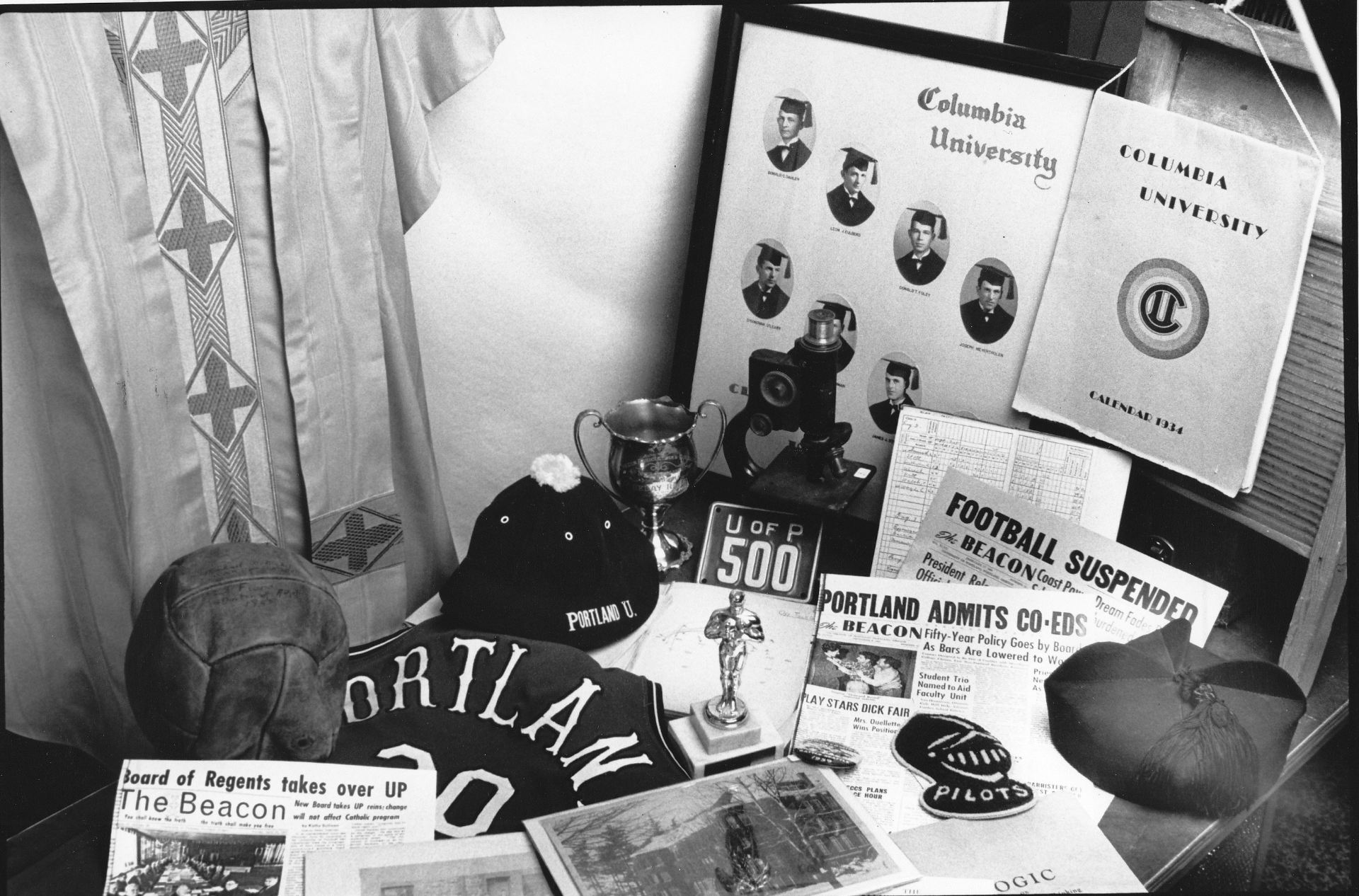
Selections from the University Museum, 1987

The University of Portland history museum was the brainchild of Dr. James Covert, Professor of History (1961-1997), while researching his 1976 book “A Point of Pride: The University of Portland Story“. Dr. Covert realized the need to save, preserve, and display treasured memorabilia and photographs connected to UP history. The “Heritage Room” was dedicated and opened to the public on October 15, 1992 during the four-day celebration of 90 years of Holy Cross at UP and the rededication and renaming of West Hall to Waldschmidt Hall; a one-room museum space in Shipstad Hall housing items donated by faculty & staff, alumni, and friends.

Family Weekend, 2022

In the 30 years since its opening many students, campus members, alumni and friends have visited the museum to learn about UP history and reconnect with the past. Display cases in campus buildings share event or theme displays drawn from our collections, and the museum contributes to the Library’s Covert Gallery and a display case on the Library’s lower floor.

In recent years the museum has been actively engaged in outreach opportunities to bring the museum directly to event spaces at the alumni reunion, family weekends, orientation, to name just a few. Archives & Artifacts staff host “PortLog“, a blog to share UP history in the form of posts to reach people across campus and beyond. PortLog posts and collection pieces are also shared on the Clark Library’s Facebook page.

In our efforts toward preservation goals, the museum collaborates with the Clark Library Digital Services team to digitize elements of the museum collection and present them online allowing visits to the museum from any device or location from around the world.

Dr. Covert’s vision continues on.

PortLog Posts highlights:
Dr. James Covert
Hours and Bases
A Given Life: Naming Rights

Digital Collections:
Digital Museum
University Songs
UP Presidents

Museum Displays

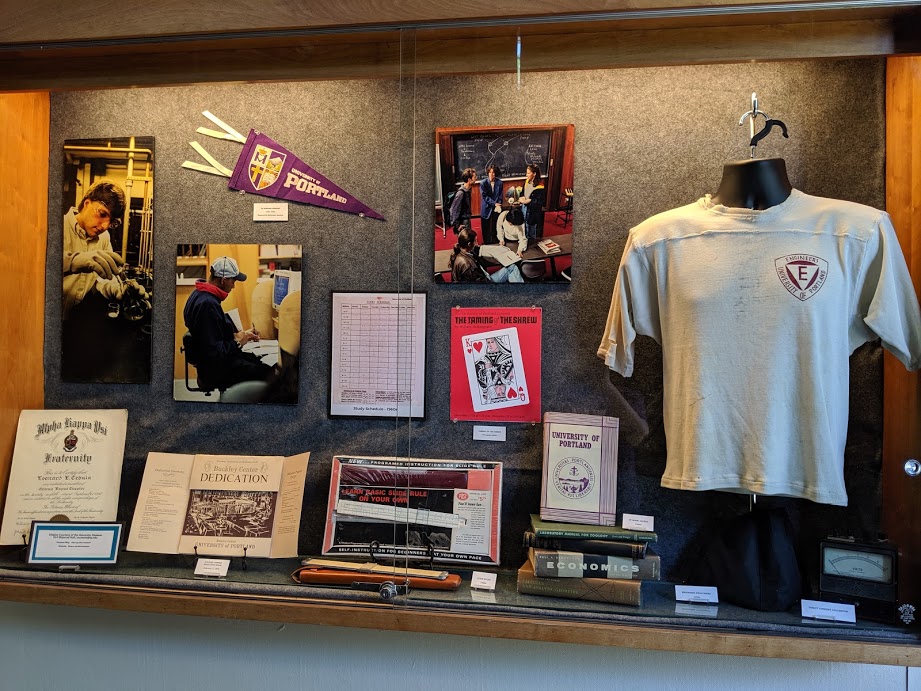
Academic Display, Alumni Reunion, 2019

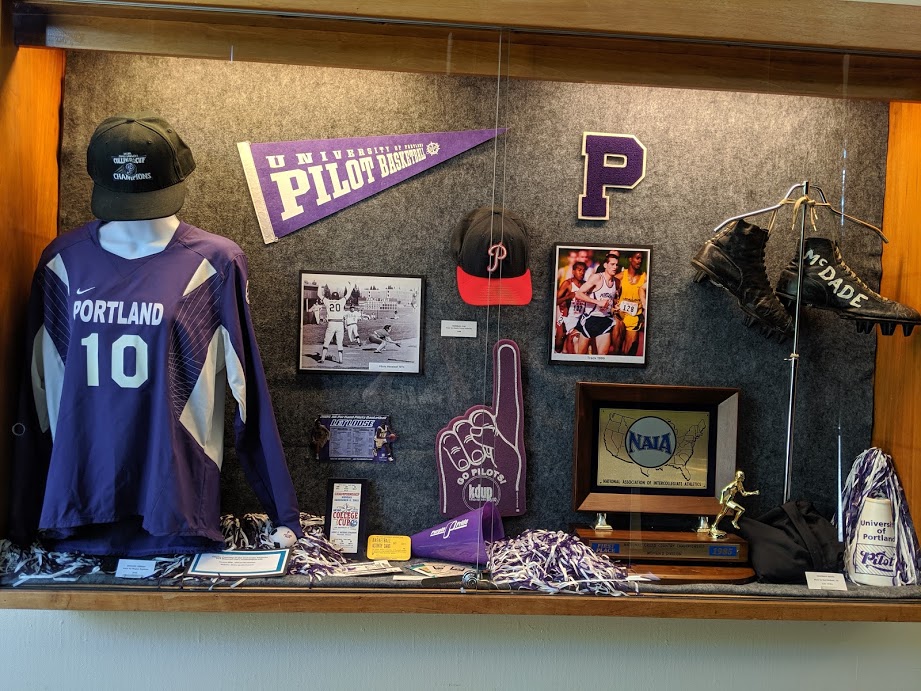
Athletic Display, Alumni Reunion, 2019

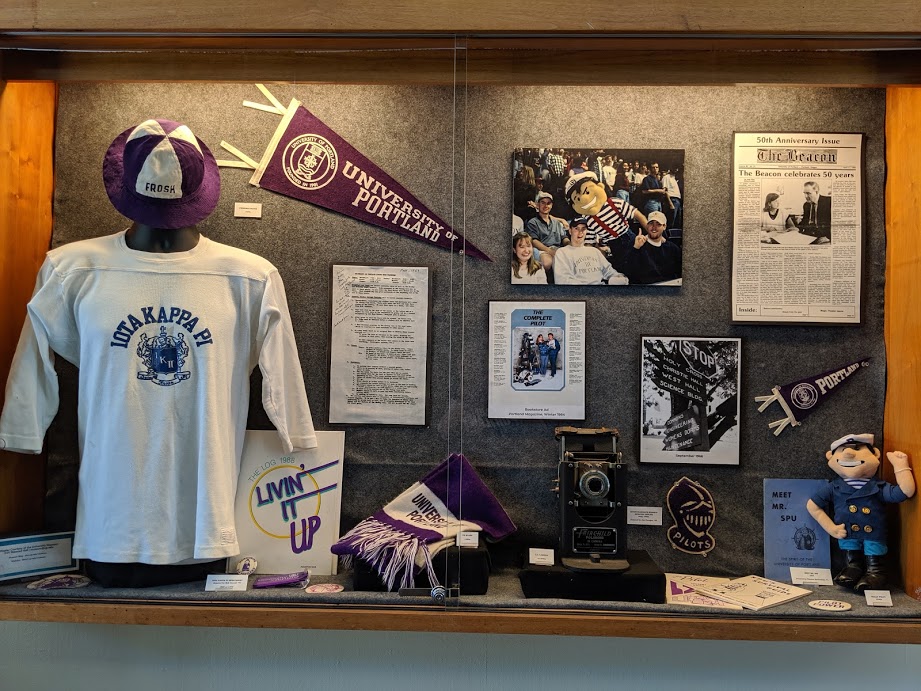
Social Life Display, Alumni Reunion, 2019


Filed Under: Objects, Objects 1 Leave a Comment

One-hundred-and-twenty years, and continuing

September 1, 2022 By Carolyn

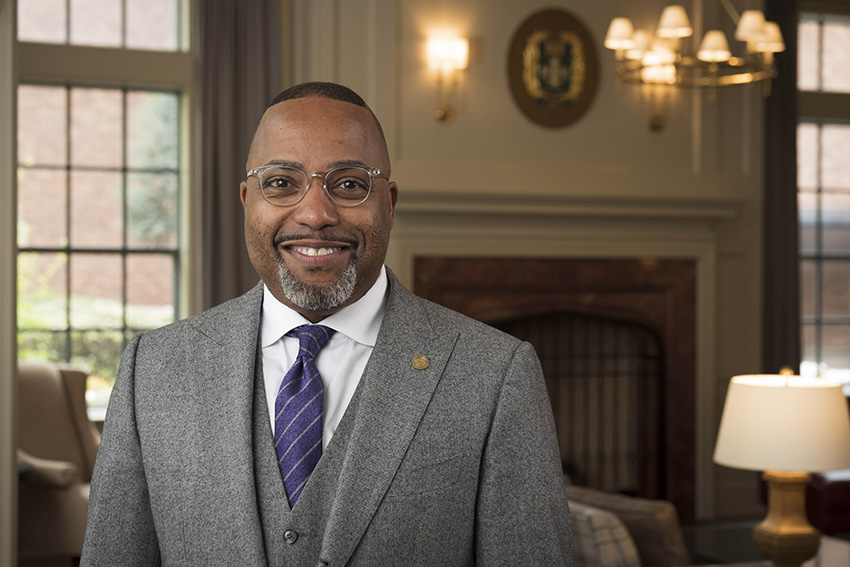
color photo of Dr. Robert Kelly
Dr. Robert Kelly, 21st President of the University of Portland (Marketing and Communications Photo)

Dr. Robert Kelly has been named the Twenty-first President of the University of Portland.  He is the first person to hold that office who has not been a Holy Cross Religious at some point earlier in his life.  (Trivia point: our first president, Rev. Edward Patrick Murphy, began his clerical career as a Holy Cross priest, and had even been president of a Holy Cross school, St. Edward’s College in Austin, Texas, before Archbishop Alexander Christie appointed him president of Columbia University for one-year in 1901.) 

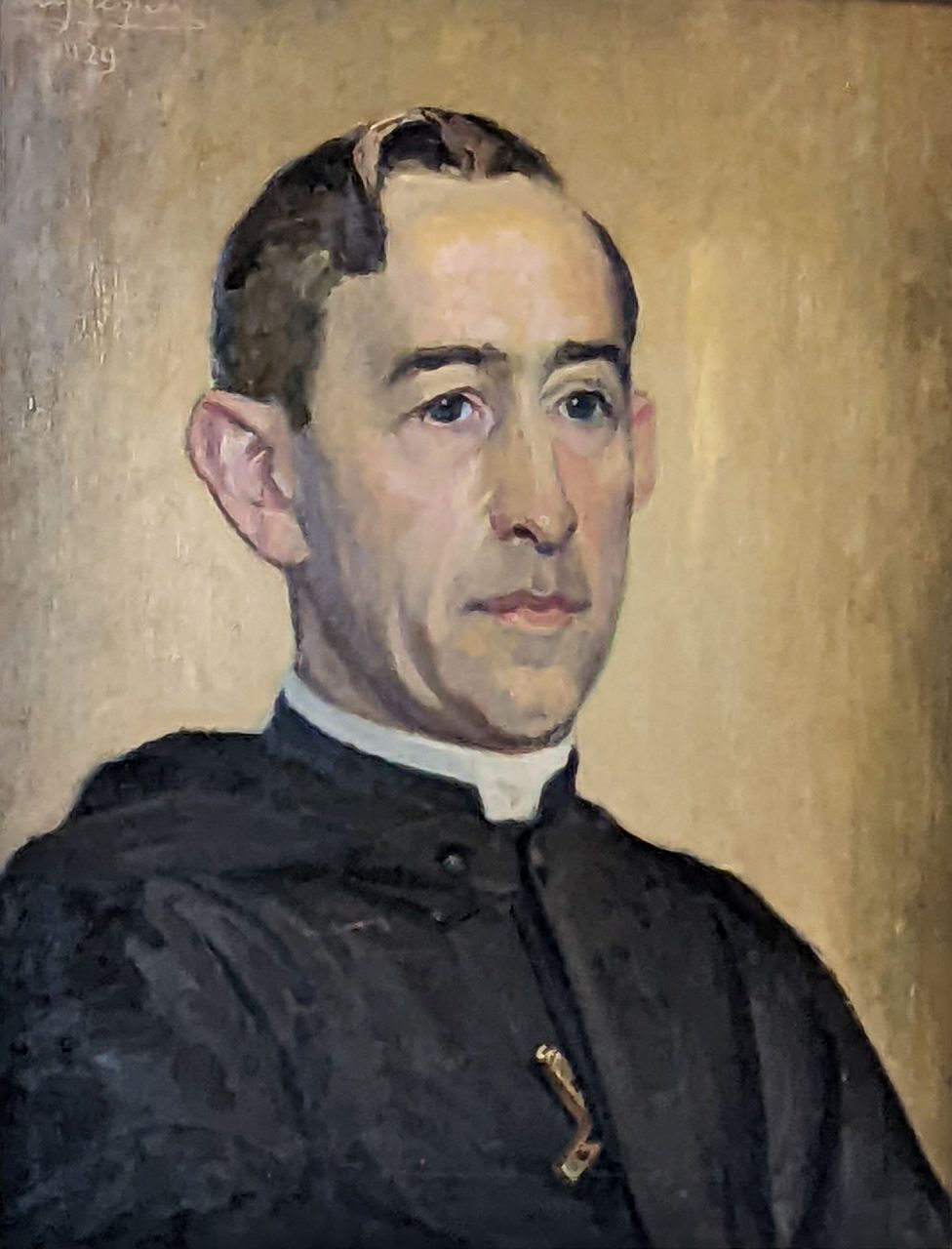
color photograph of a painting of Rev. Louis Kelley
Rev. Louis Kelley, C.S.C., 7th President, photograph of painting by Emil Jacques, 1929

But Dr. Kelly is not our first President Kell(e)y.

The name of the 21st President is now joined beside that of Rev. Louis Kelley, C.S.C.; the Seventh President (1928-1934).  Both of these educators—as indeed all of the presidents—assuming the role in a time of transition.  Between 1928-1934, we grew from junior college status to a fully accredited 4-year university program, and merged into full partnership with St. Vincent Hospital to form the School of Nursing. The school’s development during these years was so significant as to lead to altering our name to describe the new reality, Archbishop Christie’s Columbia University becoming the University of Portland in 1935.  Now entering our 121’s year, President Kelly’s time — and our time– promising a period of new growth and potential for the years ahead.

Filed Under: School History, School History 1 1 Comment

The Best Years of Our Lives – Revisit

June 16, 2022 By Carolyn

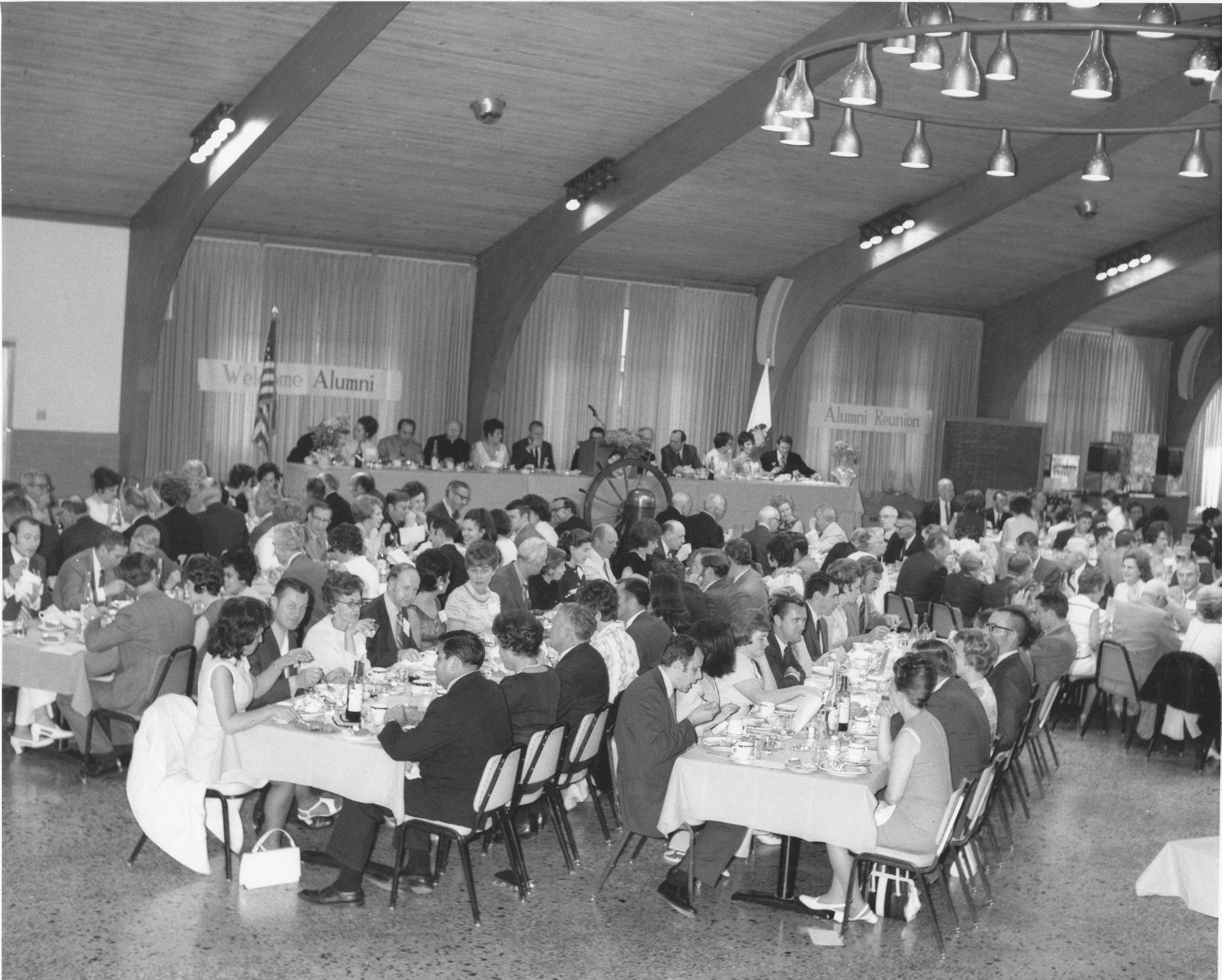
Every summer the University’s All-Alumni Reunion calls alumni back to the Bluff. Paused in 2020 and 2021, this annual event draws alumni for a 4-day “homecoming” event each June to reconnect, reminisce, and renew. Maintaining and networking alumni connections began in 1908 with the establishment of an Alumni Association. (Which would have comprised a modest 40 people, joining the 17 graduates of June 1908 with all previous degree recipients from 1902-1907.)  In 1924 records announce the first “homecoming” dinner for alumni athletes– returning alumni to campus during the school year — which expanded in 1933 to feature football games.  By the mid-1930s, Homecoming events include a dinner, dance, alumni meeting, rally, Mass, breakfast, and weekend football game.   

Class of 1965 at the 1970 Alumni Reunion (University Archives) (Click to enlarge)

In 1938, the first alumni chapter was formed in Salt Lake City. The Hooyboer brothers, Fr. John and Fr. Cornelius, served as admissions recruiters visiting high schools up and down the coast and across mountain states in the mid-1940s and 50s.  Their travels (and over-nights) included visits to alumni, thereby helping to strengthen the relationship between graduates and the University.  The first annual Alumni Reunion Weekend occurred in 1955.

Currently, the Office of Alumni & Parent Relations coordinates with the Alumni Association to connect alumni, family and friends to the life of the University of Portland. Alumni chapters exist in 15 Regions across the country providing opportunities for alumni to gather and connect outside of the annual reunion. There are also Academic chapters based on area of study and Affinity chapters for shared interests ranging from professional to social and cultural.

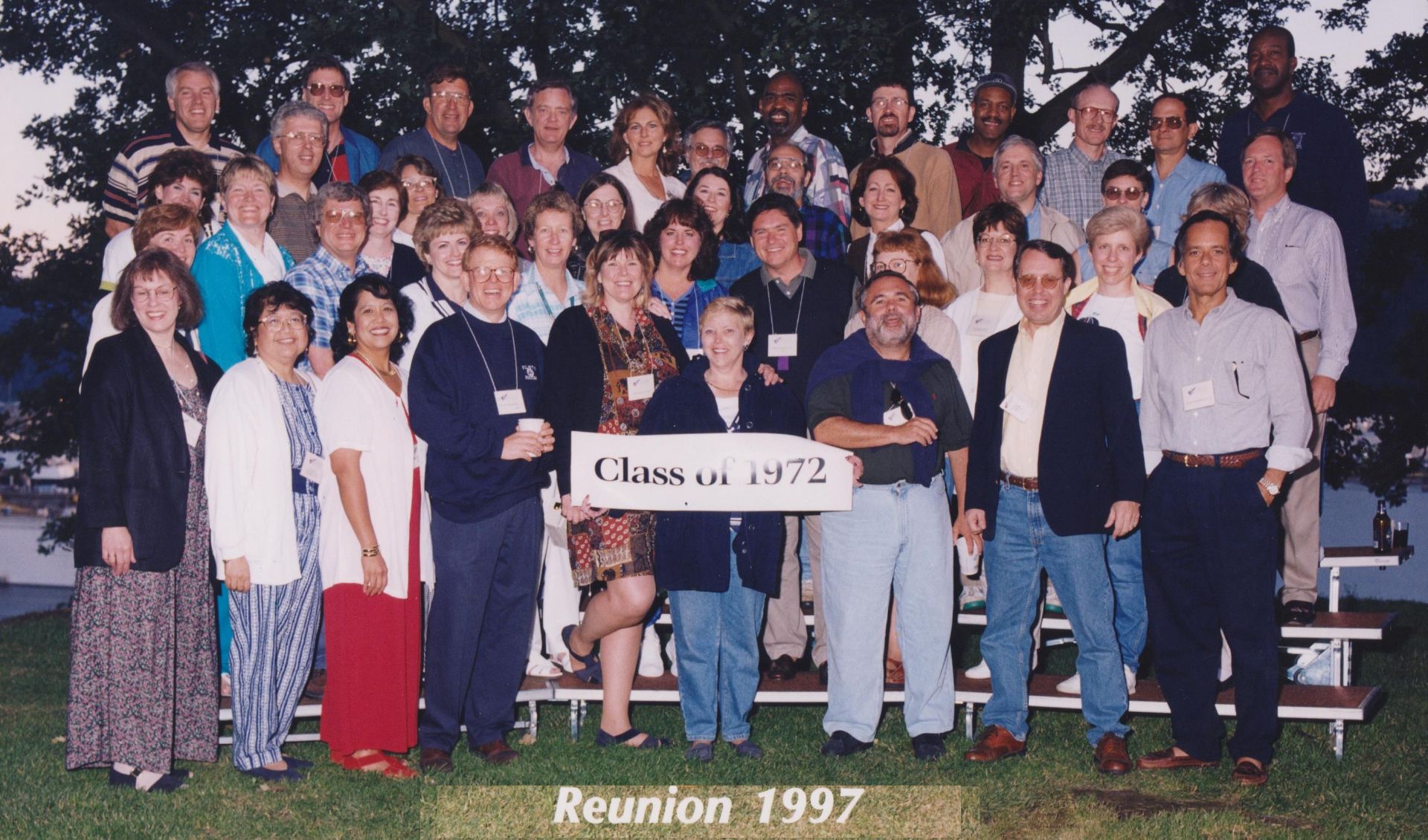
Both the University and the Reunion have grown from a century ago; in fact, during the last twenty-five years the undergraduate enrollment grew from 2700 in 1997, to nearly 4000 today. Pilot alumni strong!

1971 Alumni Reunion in the Commons (University Archives photo, Click to enlarge)
1969 Alumni Reunion Terrace Room Patio (University Archives photo, Click to enlarge)
Class of 1972 at their 25th reunion in 1997 (University Archives photo, Click to enlarge)

Filed Under: Annuals, Annuals 1 1 Comment

Entrepreneurial Spirit

May 18, 2022 By Carolyn

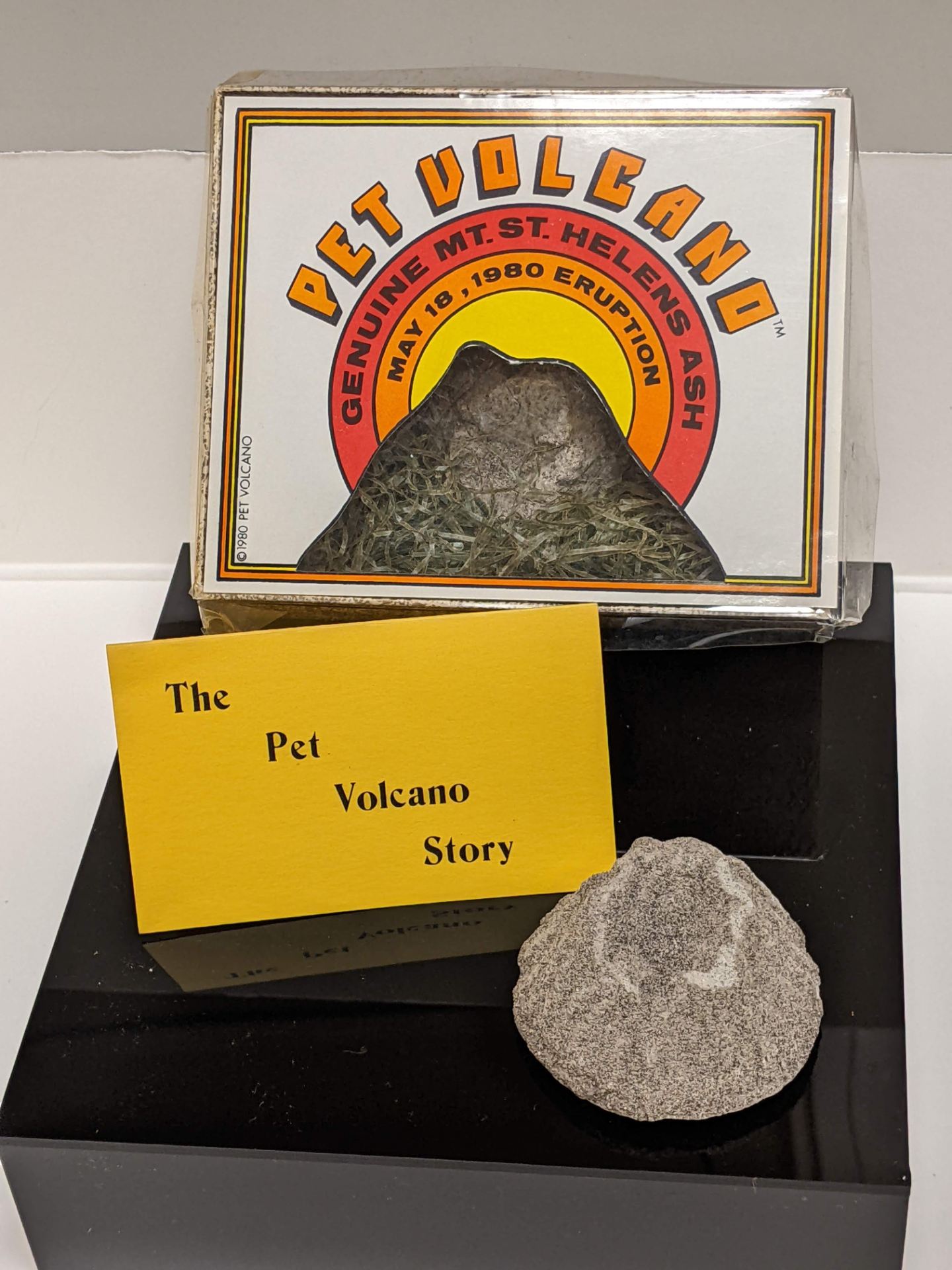
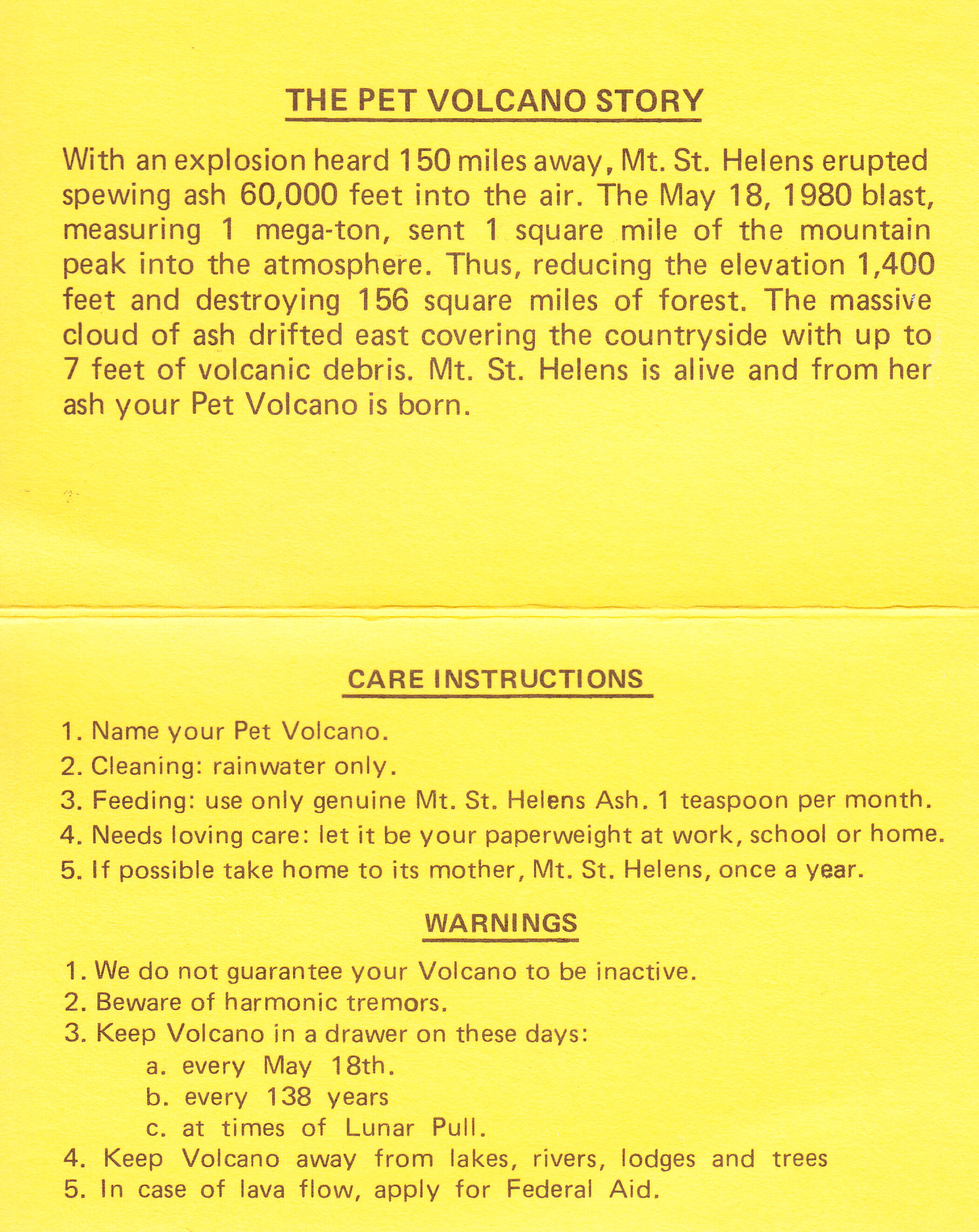
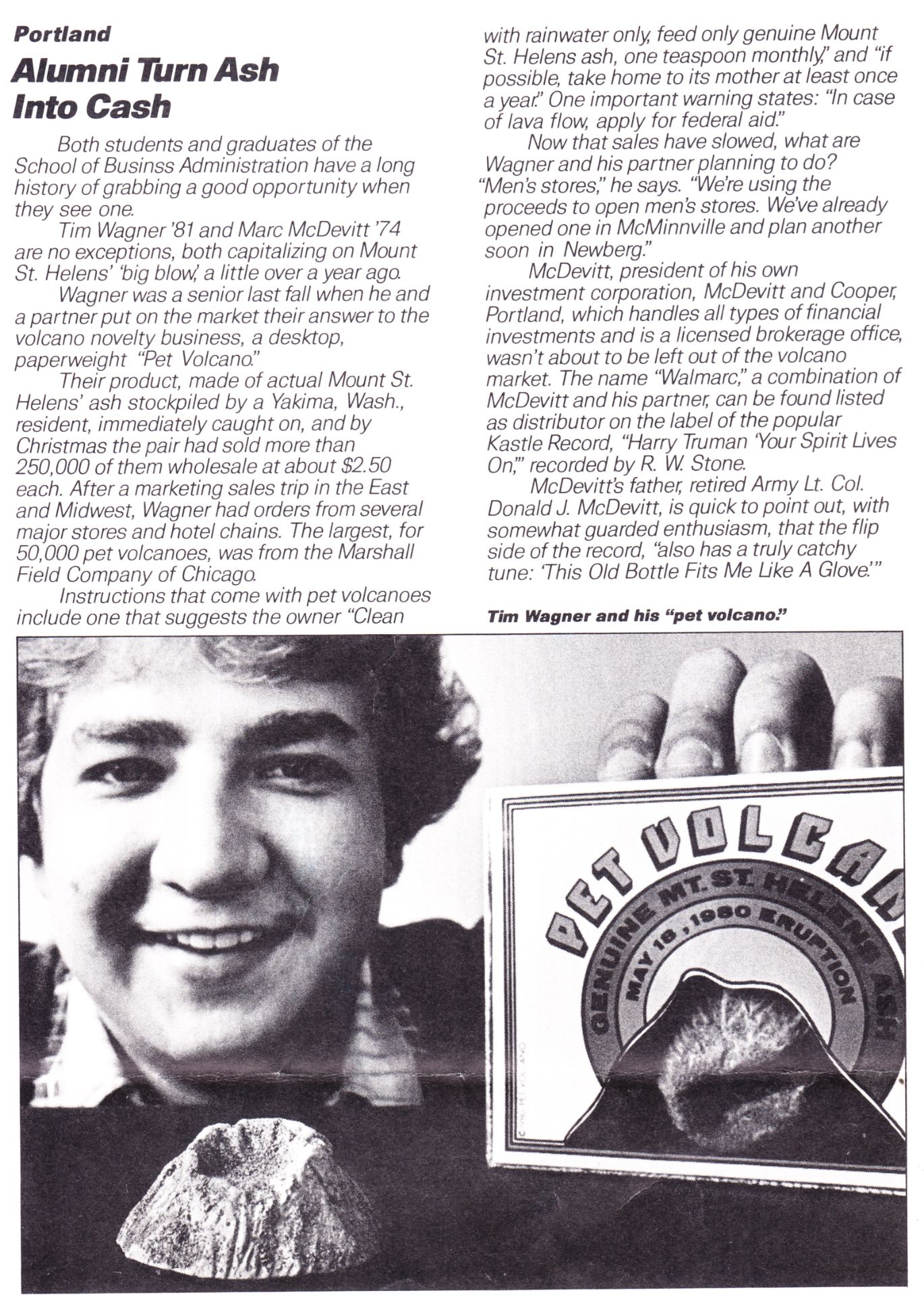
Pet Volcano, 1980

The Mt. St. Helens volcano exploded on May 18, 1980. One of those events that anchors one of those do you remember where you were when it happened questions in Pacific Northwest history. And for those who grew up here, evokes memory of seeing a thin layer or more of ash covering streets and objects, cars and trees, and lawns and mailboxes and sidewalks and park benches around Washington and Oregon, including the Portland metro area and the UP campus.

Click to enlarge image

Naturally, over time, some of that ash has been donated to the University Museum. Little glass jars with post-it-notes affixed, discarded by the original collector, seeking preservation and adoption on Museum shelves. But then too, we have the curious exemplum of a quite clever, lightning quick exploit-the-moment entrepreneurial insight. The Pet Volcano. The brain-child of two alumni entrepreneurs, Tim Wagner, ’81, and Marc McDevitt, ’74, the Mt. St. Helens ash was repurposed to create a novelty desktop paperweight. Their limited edition Pet Volcano had 250,000 sales by Christmas 1980. An original Pet Volcano with its box cover still lives in the UP museum.

Portland magazine, Summer 1981, vol. 1 no. 2, p. 9

Filed Under: Objects, Objects 1 Leave a Comment

2022 Retiring Faculty

May 2, 2022 By Carolyn

At the end of the 2021-22 academic year, eight members of the University of Portland faculty will retire after many years of service to this institution and making a difference in the lives of untold numbers of students.  The University gives thanks to our retiring faculty for their dedication and commitment to teaching and learning and wishes them all the best.

Dr. Ami Ahern-Rindell, Associate Professor of Biology, at UP since 1997
Dr. Michael Cameron, Professor of Theology, at UP since 2002
Dr. Mark Kennedy, Professor of Engineering, at UP since 1996
Dr. Steven Kolmes, Professor of Environmental Sciences, Molter Chair in Science, at UP since 1995
Dr. Matthew Kuhn, Professor of Engineering, Br. Godfrey Vassallo Endowed Professor, at UP since 1987
Dr. John Orr, Assistant Provost for Scholarly Engagement & Career Readiness, Professor of English, at UP since 1993
Jane Scott, Associate Librarian, Clark Library, at UP since 2014
Dr. Mojtaba Takallou, Associate Professor of Engineering, at UP since 1985

[Click on image for photo captions and slide show]

person wearing a white lab coat standing near a window
two people in a laboratory wearing white lab coats
Faculty wearing academic regalia in procession
Professor with lab equipment
Group of 6 students and their professor in front of Engineering building
Three professors wearing academic regalia and medals
color photo of Dr. Steven Kolmes
professor working at desk
Black and white photo of English and Foreign languages faculty members
professor at desk with computer and phone
faculty members in academic regalis
professor sitting at desk
professor with equipment in engineering laboratory

(Photos from the University Archives, Clark Library, Marketing and Communications, The Beacon)

Filed Under: Annuals, Annuals 1 Tagged With: faculty, university of portland 1 Comment

PilotsGive 2022: Support Student Success

March 31, 2022 By Carolyn

Help us to provide research tools for students right at their fingertips. We invite you to be part of our efforts to support student success at UP by raising funds for laptops for students to borrow. Please support the Clark Library by making a PilotsGive gift now or on April 6-7, 2022, from noon to noon. The direct link is: https://giving.up.edu/clarklibrary

computer monitor and keyboard
Apple IIc Computer, 1984 (University Museum, Click to enlarge)

The past two years have taught us how essential laptops and computers are to student success in providing access and distance-support for class-work, class-research, and even class attendance. Remote work closes distances. Drafting and revising essays on computers makes the work portable for students as they move between jobs, campus, residences. So, alongside pens and pencils, modern students carry a device that serves as desk, office, notebooks, and library wherever they go right in their backpack.  The computer is an essential, all-purpose tool– replacing post-it notes, index cards, multi-coded notebooks, marking-pens, erasers, and bottles of liquid-paper and sheets of correction tape which, before personal computers were the norm, meant extra long-nights-before-deadline for term papers and take-homes.

adding machine with keys
Monroe Calculating Machine, ca1922 (University Museum, Click on image to enlarge)

Technology helps, though access to technology is not the same for all students at various levels of income and drawing on different training and resources in their academic preparation. With increasing Zoom & Teams meetings and lectures, on-demand access to resources for classes and research, and greater ease for writing assignments, this year’s Clark Library PilotsGive campaign goal is focused on supporting student success by providing laptops for students to borrow.

manual typewriter with keys
Underwood Typewriter, 1938 (University Museum)

Those who give $100 or more will receive a beautiful vintage Clark Library bookplate, placed in a newly purchased book for our collection to commemorate the donation. Make a gift at https://giving.up.edu/clarklibrary

_ _ _ _ _ _ _ _ _ _ _ _ _ _ _ _ _ _ _ _ _ _ _ _ _ _ _ _ _ _ _ _ _
The Library, Archives, and Museum work collaboratively to make our resources available for student research and discovery through our digitization efforts of archives and museum collections and access to electronic journals and books, and streaming media from the library.

Filed Under: Annuals, Annuals 1 Leave a Comment

Families Return

March 10, 2022 By Carolyn

3 poster boards with photographs, letter jacket, university shirt, football, football helmet
UP Athletic and Spirit Memorabilia, University Museum display, February 19, 2022 (click on image to enlarge)

We use the words Family and Community easily and often as campus descriptors: our mission-goals and our values point directly to the people of UP belonging-together.  The annual Parents & Family Weekends have a long history going back to Campus Day picnics in the 1930s, with the current manifestation tracing back to 1973, or 1990, or the 2019-2020 academic year when we doubled the opportunity, inviting Families to campus for November and February weekends.

Nursing uniform, basketball jersey and engineers sweatshirt on display
University Museum display, February 19, 2022 (click on image to enlarge)

But putting the question of origins aside: after a long, unplanned hiatus lasting 734 days, Family Weekend returned to the Bluff over the weekend of 18-20 February 2022. Hosted by the office of Alumni and Parent Relations First-Year & Sophomore Family Weekend was the first big event for UP families since the start of the pandemic.

UP Mascot heads and spirit memorabilia on display
Wally Pilot Mascot Heads, University Museum Display, February 19, 2022 (click on image to enlarge)

Pilot families participated in campus tours, academic showcases and residence hall open houses, attended concerts (jazz, choir, orchestra), Comedy Sportz and trivia nights, watched baseball and basketball, a stage-drama, and more. Smiles from all were evident, even from behind face masks.

two people viewing memorabilia display
Family members view University Museum display, February 19, 2022 (click on image to enlarge)

The University Museum was invited and presented a colorful Pilot-spirited and academic memorabilia and photographs display in the Bauccio Commons on Saturday and Sunday for the Academic Presentations and Continental Breakfast.

Over 875 in attendance contributing to campus life throughout the weekend.

Parents Weekend program cover
University of Portland Parents & Families Weekend February 17-18.
Junior and Senior Family Weekend First-Year and Sophomore Family Weekend

Parents Weekend Program Cover, 1973; Parents & Family Weekend, 1990; Junior & Senior, First-year & Sophomore Family Weekends, 2019-2020

Related post:
https://sites.up.edu/museum/taste-of-up-for-families/

Filed Under: Annuals, Annuals 1 Leave a Comment

Benchmarks: Spanish flu 1918

March 2, 2022 By Carolyn

The 1918 Spanish Influenza and Columbia University: what happened back then? Our long months of Covid-19 protocols and precautions has made the pandemic a century ago into a FAQ (frequently asked question) today. This arises in the context – at different points in recent semesters – of daily operations at the University of Portland experiencing MAJOR disruptions due to the 2020 Covid-19 pandemic: from remote teaching to cancelled events.  And so, as we move step-by-step towards new patterns of 21st century interaction, here is some data about how the Spanish Flu was felt in the University community back in 1918. The short answer turns out to be boring, lacking excitement, and, is maybe, reassuring? The very few mentions found in our sources propose the totally undramatic conclusion that the Spanish Flu had little to no impact on classes or campus life.

Now, the longer answer.  First, from 1901-1935 we operated under a different name and different circumstances.  During the years of the Spanish flu pandemic enrollment was low (and those staying for degrees even fewer), with a mix of Boarders and commuters (Day-Dodgers). Today, a century later, enrollment is 3990+, anticipating, many, many earned diplomas in May. The 1920s comparative numbers follow:

  • 1916-17 — — — 154 (26 diplomas)
  • 1917-18 — — — 193 (17 diplomas)
  • 1918-19 — — — 206 (15 diplomas)
  • 1919-20 — — — 260 (18 diplomas)

The aim was learning. The degree-program was secondary. Students pursued a course of studies that included high school and college course work, but the degrees earned during those years were limited to the high school division (until 1924).  College work and credit could be transferred, but often served simply as professional preparation; with students leaving campus and entering the work-force upon completing the course of commercial studies on campus.

William Allen Casey Obituary, Columbiad Oct 1918, XVII.1, p. 20 (click to enlarge)

Scouring the pages of The Columbiad, a monthly student publication, there is only one recorded death in the University family attributed to the Spanish Influenza; Wm. Allen Casey (died, October 17, 1918).  He received a Science Diploma, graduating in 1917; of the twenty-six graduates, five missed the ceremony having already entered military service.  Casey was the valedictorian and distinguished himself in debate while at school.  He enlisted the following year and contracted the Spanish flu when stationed at the military training camp in Fort Monroe, Virginia.  His name is on the Broken Wall Memorial commemorated there as one of three University World War I deaths.
An alumnus, but his death from the Spanish flu occurred a year later and across the continent.

As to disruptions of classes or activities.  The 1918 fall football season was delayed and shortened because our league opponents cancelled school for a period of six weeks. It does not appear that classes were interrupted on the Bluff.

23 members of the 1917 class; Wm. Allen Casey in the second column, left
Columbiad XV.8, p. 220 (click to enlarge)

Then there is this poem, found in the Columbiad (January 1919, p. 45)

A Boarder’s Lament

The ‘flu’ may come and ‘flu’ may go.
But we go on forever.
The dance may stop and the picture slow,
We struggle on forever.
Day Dodgers loaf and make big dough,
We bone and bone forever
–Charles Lake, Diploma in English, 1920

p.s. Day-Dodgers refers to commuter students, used as a Boarder’s derisive / affectionate term of on-going envy and rivalry.  Here the word ‘flu’ cannot be taken as a secure connection between the poem and the 1918 global epidemic.  The poet may simply have found the word more amenable to versification than, say, mononucleosis or measles.

In an earlier post we showed that, from 1907-1934, the University advertised the campus as a wholesome and healthy garden spot outside Portland’s urban sprawl.
https://sites.up.edu/museum/spires-of-learning-reach-up-to-the-sky/

Citations:
The Columbiad, vol. XV.8 (June 1917), vol. XVII.1 (October 1918), vol. XVII.2 (January 1919).


Filed Under: School History, School History 1 Leave a Comment

Erosion and Re-shaping: Using Primary Sources in Teaching

November 10, 2021 By Carolyn

Dr. Robert Butler, Emeritus Professor in Environmental Sciences, arrived on the Bluff in 2004, and immediately saw that the physical Bluff itself—our green campus overhanging the Willamette River—could be an object-lesson in his science classes. 

But, how to create a learning-module about our patch of land?  In his first days on the Bluff, Dr. Butler visited the Archives and came away with a “treasure chest that I used in my teaching of Earth Science courses from 2004 through 2016!” Pulling some 25 or more historical photos of the campus that could be used as classroom and lecture exhibits. “To the eyes of a geologist, these photos demonstrate landscape changes, some natural but most from alterations by humans.”  

Dr. Butler selected these three photos to illustrate.

1914 Aerial Landslide below Waldschmidt Hall and Christie Hall

1) The 1914 aerial photo shows landslides/erosion on the edge of the Bluff east of Waldschmidt.  This land subsidence / rapid erosion was almost certainly precipitated by an oversteepening of the slope by construction of the road leading down to the rail line at the base of the slope.  

Swan Island in 1922 (top) and 1935 (bottom)

2) The comparison of Swan Island between 1922 and 1935 is a case study in major landscape modification by humans.  Prior to dredging, the main channel of the Willamette River passed along the north bank of what is now Swan Island.  On the south side of Swan Island and down-stream toward the city center, the river was impassible to large vessels.  When the main channel was opened by dredging, the dredge spoils created a landfill all-but closing the Swan Island channel. 

1969 Landfill below Mehling Hall

3) The 1969 aerial photo shows surface landfill into the gulch on the slope of the bluff below Mehling Hall. This landfill was an attempt to stop that gulch from advancing northwards and further eroding the upper campus. The current Physical Plant building rests on the landfill area. 

Dr. Butler recently sent us word about how these primary-source images “mined out of the Archives became critical resources in my teaching of Earth Science on the Bluff.  Students were quite engaged by these views of the campus over the past century.” 

Readers, do you have an Archives or Museum success story?  We invite you to share your own experiences using Archives and Museum resources.   Drop us a note at archives@up.edu and museum@up.edu about your discoveries in the Archives and Museum.

For additional historical views of the campus property see the Clark Library Digital Collection through this link, which provides more information about the 1964 aerial view accompanying this post on our home page.

Filed Under: Campus - Landscape, Campus - Landscape 1 1 Comment

  • « Go to Previous Page
  • Go to page 1
  • Go to page 2
  • Go to page 3
  • Go to page 4
  • Go to page 5
  • Interim pages omitted …
  • Go to page 20
  • Go to Next Page »

Primary Sidebar

Hours and Location

University of Portland Museum
014 Shipstad Hall

Available by e-email at:  museum@up.edu

Digital Collections

Explore some collections and resources from the Archives and Museum available online through Digital Collections


Social Media

Follow us on Facebook

Follow us on Instagram

Ask Us Anything

Ask Us Anything

We'd Love to Hear from You! Questions? Comments? Topics?

This form is protected by reCAPTCHA and the Google Privacy Policy and Terms of Service apply.

Copyright © 2026 · News Pro with Full Header On Genesis Framework · WordPress · Log in

Subscribe

Subscribe By Email

Get every new post delivered right to your inbox.

This form is protected by reCAPTCHA and the Google Privacy Policy and Terms of Service apply.


Loading Comments...