• Skip to primary navigation
  • Skip to main content
  • Skip to primary sidebar

Moreau Center Social Justice Programs

  • Home
  • Immersions
    • Affordable Housing
    • Border Immersion
    • Civil Rights
    • Community Organizing and Resistance (CORE) Immersion
    • Environmental Justice
    • L’Arche Bologna
    • Nicaragua
    • North Portland Civil Rights
    • Rural
    • Tanzania
    • Urban
  • Service Plunge
    • Blog Updates
  • Interns for Justice
  • Donate
  • Archived

sustainability

KARIBU KARIBU

August 15, 2015 By Alexa Carr

20150725_074521It takes a village to host an intern. Or such is the generous custom of the people in Bukura. Even in the last weeks I have not gotten used to my being received as such an honorable guest. People still hop up to offer me their chairs whenever I walk into a room, give me extra treats at tea time, and make sure that I always travel places safely and am never ever alone. In the evenings after school when I would go to my host mother’s cell phone shop I would meet many of her friends and people who worked in the neighboring market shops. On our walk home from the shop we would pass by many of the same people each day and greet them. In the mornings when I was walking to school alone they would recognize me and say hi. Or sometimes, in a fantastically uninhibited manner I would hear “Mzungu, greet me!” as I walked past.

Some of the female teachers at school began to call me their little sister. By the third of my eight weeks of work at the school one of the teachers offered to have a dress tailor made for me. So on our walk from school to my mother’s shop after school that day, we stopped by the tailor and she had me choose the fabric. They made it in the traditional Eastern African kitenge style. In the last week when it was completed and I wore it to school, my students told me I looked smart.

Even the students took it upon themselves to make me feel very welcome. One day in Class 5 after we had had some time to ask me questions about the US – during which they inquired of Albert Schwarzenegger, Tom and Jerry, and flying cars –  they offered me an orange, some pop corns they had packed from home, some biscuits also brought from home, some mango juice, and ground nuts. Apparently I wasn’t grading their homework harshly enough. Another time when we were at a musical competition, some Class 8 students offered to buy me a myriad of snacks from the vendors who had lined the walkways. Once when we visited the house of my mother’s friend and she found that I liked fish, she sent me home with some hard-to-come-by canned tuna. When early on I expressed a satisfaction with roasted sim sim (sesame seeds) and ground nuts (peanuts), they were almost never absent from the tea table. I am still marveling at the extent to which people supported my being there.
Filed Under: East Africa Internship, International Tagged With: East Africa, hospitality, Kenya, mzungu, sustainability

THE TEACHER IS RI-? RIGHT.

August 15, 2015 By Alexa Carr

20150616_204918A lot of my work at the school is intended to address the learning focus. There is much focus on memorization, memorization, memoriza-? Zation, good. Classes are taught with more emphasis on students being attentive and aligning their answers with the textbook’s or the teacher’s than on the creative, independent thinking that has been so integrated in to my own education. When I said that American high school students only have six or seven subjects at once, my coworkers who must test in and pass 14 subjects in grade 12 liked to try and convince me that the Kenyan school system is much harder than the Ameri-? American, yes. In Class Eight (the age equivalent to the American Grade Eight), students take a national exam which is intended to determine which quality of high school they will attend, the national level schools being the most sought after. Typically students in the city schools perform better on this exam because of better funding, resources, and infra-? Infrastructure, yes good. The rural school at which I was working was a bit of an outlier in that its scores competed with some of the city school’s scores, despite the distance some students had to travel each morning and the lack of incredible buildings or materials.
In order to best prepare for the Class Eight exams, Class Eight students at my school are boarding students. Girls sleep in one of the rooms of the homestead just behind the school field and boys sleep in bunks in a room next door to one of the classrooms. This proximity to school removes wasted time in travelling to and from home every day. They can then begin class by 5am daily and work until 8pm. They have about 3 half hour to hour long breaks throughout the day.

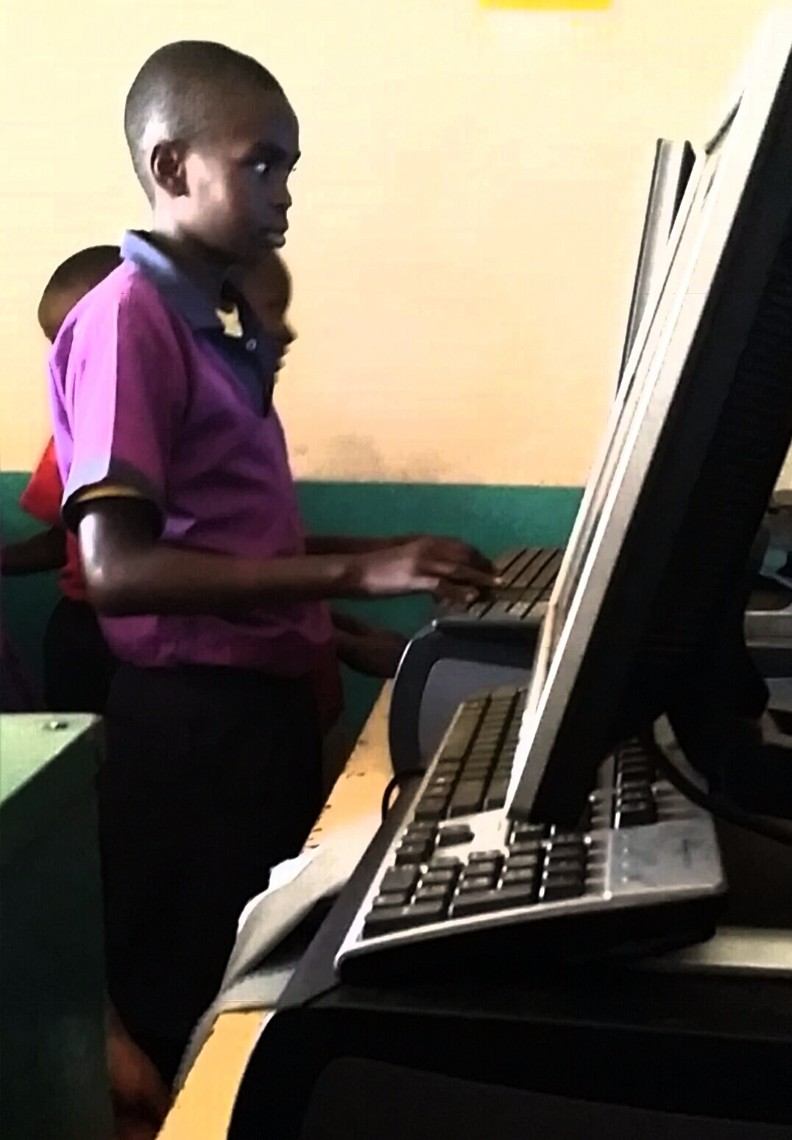
For all students in all class levels, the afternoons are sometimes spent on extracurricular activities such as preparation for music festivals, counseling sessions, debate practice, or computers. But most other times are spent in the classroom copying, reciting, and testing. Homework that has not been checked and signed by a parent may be cause for physical punishment. The snap-snap-snap-snap-snap-snap of the thin cane is heard periodically throughout the day when passing by the cla-? The classrooms. Most students know how to be obedient. Others have budgeted for the certain price of failing to please the differing expectations of certain teachers on certain days.

20150708_162752In part, good scores are encouraged through a public display of student ranking. Biweekly or sometimes even weekly, tests are given. Each test comprises five subjects which take about two hours each. Once the tests have been scored, summed, averaged, ranked on cell phone calculators, and then entered on red-pen lined sheets of graph paper, every student of every grade is called forward during morning assembly in order of their score with respect to their classmates. Good scores are considered the key to a successful future, and bad ones the equivalent of a slow and painful death. The road to hell was the metaphor used by the school’s director during one of the monthly teacher meetings to describe the students who needed more attention.
Not only is competition among the students highly encouraged, but also competition among the teachers. Never before had I considered the worth of a teacher to be so connected to the success of her students. I heard it said that if your students are performing poorly, you are failing them and when they are older and have become thugs will come and destroy your home. When class eights are given gifts to incentivize their numerically high achievement (notebooks for the highest scorers of each subject), teachers are given monetary rewards (200 bob ≈ 2USD for the teacher with the highest scoring pupils in each subject). An emphasis on critical thinking may be lacking, but so too is the guarantee that opting for critical thinking methods would be benefi-? Beneficial.

Filed Under: East Africa Internship, International Tagged With: development, East Africa Initiative, FSD, Kenya, sustainability

SCREENS, SHOES, AND SIGNS

August 15, 2015 By Alexa Carr

20150726_025905In the first world there are cautionary measures taken for every nonexistent danger. There are screens to keep out harmless insects. There are filters to filter water that is already drinkable. There are shoes to traverse roads that are smooth as a banana peel. There are yield signs suggesting that maybe you should be cautious when entering a line of rapidly-moving, human-controlled metal cages on wheels. Soon the third world will have these superfluous things too.

Barbara Kingsolver mentions in The Poisonwood Bible that her character who had grown up in the Congo found it strange when she returned to the US and found the curb was painted red because there are so many cars that it had to be designated which are allowed to be parked where. This well illustrates what it means to live in the first world. It’s not so much a series of “taking things for granted” as it is a relatively excessive amount of regulations and precautions.

Now I have returned to the states and am keeping in remarkably constant contact with friends and family I made while in Kenya. Since most Americans have come in to contact with Africans through charitable organizations asking you to feed their children, it is not seen that Africa has smart phones and expensive foreign perfumes and electricity and supermarkets. Certainly the American dollar can purchase more in Kenya than in the America. I hate that my living expenses in one day would support their one week. But soon enough this will no longer be true, because Kenyan workers are quite enterprising.

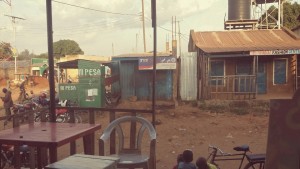
20150726_025042This may be somewhat counter intuitive to a first glance at the market place. It may seem as though there is much idling. Indeed the supply of boda boda taxis much overcompensates the demand for them as they congregate at the corners and on Sacco stages, sometimes sitting and waiting for hours for a single passenger. And frequently people miss work for multiple-day funerals or other family-functions. But the intent is there, the will to work is very much there.

Screenshot_2015-07-29-16-46-18Since it is much less likely in the rural areas that you will be employed by a larger company, you must open your own shop, or raise and sell chickens and eggs in your yard, or burn bricks on your homestead for building, or build and sell benches, or set up Wi-Fi hot spots to be used with the purchase of a soda, or type and print grant proposals, or sell food in the market or at schools, or taxi people on your motor bike.

In fact, so inspired was I by the convenience and thrill of the motorbike taxis that I got my motorcycle endorsement within a week of being back in the states. “I’m coming home / I’m coming home / Tell the world I’m coming home … The week after I got back / I never felt so strong / I feel like there’s nothing that I can’t try.” Words of wisdom from Diddy. Likely I would never have done this otherwise, nor do I even have the means to purchase and maintenance a bike now to practice. But when I return to Kenya – it will be on a motorcycle. Just in case I’m not stared at enough already.

Filed Under: East Africa Internship, International Tagged With: development, East Africa Initiative, Kenya, sustainability

HOW TO FACILITATE ETERNALLY SELF-PERPETUATING ‘DEVELOPMENT’

August 15, 2015 By Alexa Carr

After my hour long 730 class period is over, a day of self-directed activities begins. Before coming to work in this sustainable development internship position, I thought that I liked to make up my own structure and define my own modes of operation. Now however, I sometimes just wish I would be told exactly what to do. Probably this springs more from a desire to please in this foreign place more than anything else. If I knew what I was doing was something which was commanded of me, I could act with less hesitation in knowing with certainty that what I was doing was what was desired. Then I would be able to return the favor of the incredible hospitality shown to me.

foundsustain-logoBut if I knew exactly what needed to be done this would not be sustainable development. For there is rarely rarely rarely a single identifiable thing that must be done in development work. Before arriving I had no idea how to explain to people what I would be doing here beyond an “internship with the Foundation for Sustainable Development” What is sustainable development? Beats me…recite the foundation’s mission statement.  Now I can provide a slightly more thoughtful answer: it’s the art of encouraging self-perpetuating “improvement” without doing it yourself.

20150725_223812In many ways it is like raising a child. The parent himself has already conquered the throws of the terrible twos and the temperamental teens, and now is supposed to relive the experience with his child as some sort of moral guide, patient director, careful cultivator. But the parent mustn’t be too distant or too near lest the child develop an overly secure or underly secure attachment. The parent also mustn’t impose the boundaries of the lesser utilities available to them in their childhood, lest the child be unable to keep up with the inevitably changing environment around them. I.e. it would be a struggle to convince the child to use an old Walkman when she can see her parent has an IPod and Spotify account.

In describing development there is still the problem of defining improvement. Since improvement is not objective, the agent of development must be incredibly careful to get to know the community deeply so that they might work together in achieving a common goal. This goal must be useful, enduring, self- perpetuating, and driven from within. There is some talk of the “mzungu project,” whereby a mzungu (foreigner) comes in and takes on some project in the homeland of another community that simply dissipates once the mzungu has left. This is exactly what I must be sure not to do. In this manner my work here is even better defined by what it is not. It is not building a car with expensive foreign parts that can only be replaced with expensive foreign parts. It is not writing complicated code that is a headache for anyone else to modify. It is not bringing your child’s lunch to her every time she forgets it so that she cannot eat unless you provide for her. It’s a bit of tough love.

Filed Under: East Africa Internship, International Tagged With: development, East Africa, East Africa Initiative, FSD, Kenya, sustainability

MADAM ALEXA- TEACH ME PAGE 93 AT LUNCH?

August 15, 2015 By Alexa Carr

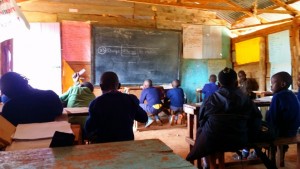
Monday through Friday I work 730 to 430 at a private elementary school. Right away when I arrive at school I have a class to teach- Grade 5 Maths. This is probably one of the highlights of most days as the class and I have become fairly comfortable with each other. That did not happen overnight. At first it was a great struggle for most to understand my American accent which would really be better described as an East-coast-born-Nashville-raised-Japanese-schooled-West-coast-grown amalgamation of inaudible slurs. Or as my fellow teachers like to demonstrate for me, some sort of high-pitched, nasally, European dialect.

20150725_223602Now that we are more familiar with each other’s misplaced stressed syllables, communication is somewhat easier. At the very least I rely on the chalk board to convey the necessary information visually. I have begun to put a problem on the board, have them work it out in groups, and then together as a class we go through it after I have had a chance to go around the class room and evaluate progress individually. I didn’t realize it consciously at first, but I began to recreate my own experience in my most recent math class from the teacher’s point of view. I have a new found appreciation for my math teachers, and a better understanding of exactly what makes a good teacher. It requires immense amounts of energy, an ability to know how to check for and recognize real understanding, and the ability to remember how you learned the things you now consider to be obvious truths – all in front of a room ranging from gaping mouths and blank stares to attentive ears and concentrated eyes.

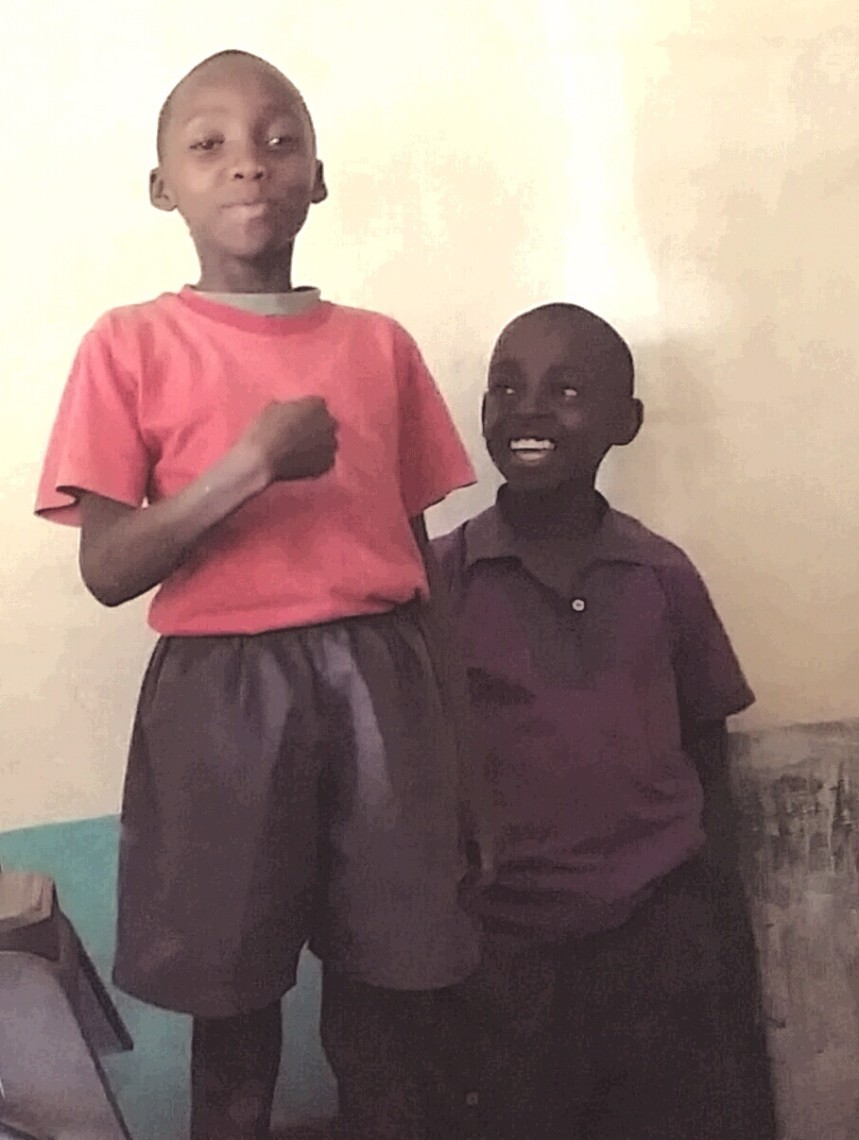
I wait while the pupils work through the problem I have given on the board, perusing their work from behind their healthily chore-toned postures. The pupils in their navy-blue collared, violet-bodied uniforms huddle around their wooden desks – not unlike the benches you would kneel in front of for communion in a Catholic church. In the mornings they are still wearing their sweaters and sweatshirts. Or sometimes heavy winter coats, knit pull overs, or a Hot Chocolate 15K Race day sweatshirt from California. Meanwhile I in my rural Kenyan teacher attire of ankle length skirts and blouses am always warm yet unendingly cajoled by fellow teachers to just put on a jacket. To just have a seat. To just eat more. To just be free with them. They have the best of intentions.

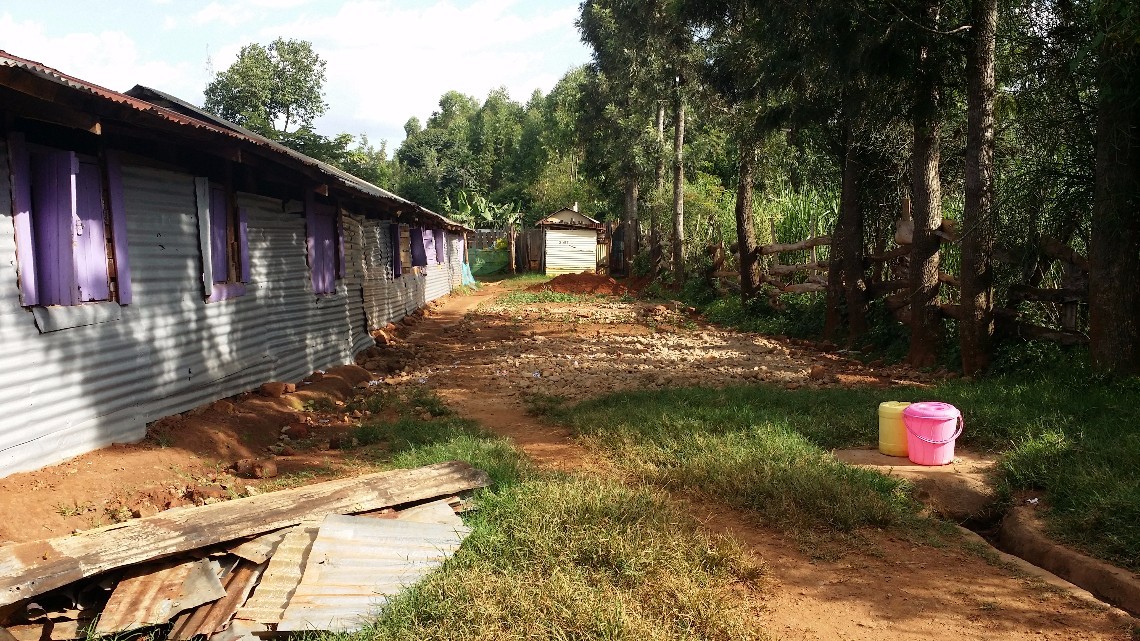
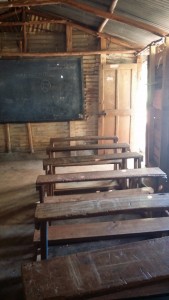
20150708_162806Outside the shuttered windows the damp morning field awaits the games of football and jump rope and singing and variations of hopscotch that take place during the 1 o’clock lunch hour. To either side of the fifth grade classroom stretch the other classrooms divided by thin vertical wooden sheets. You can hear every word of the lessons taking place next door. Like a portable in its frugal use of space and a storehouse in its simple use of materials, the stretch of classrooms lines one side of the long end of the field. As pupils graduate to the higher level each year, their home base classroom moves easterly up the field, away from the main road entrance, and towards the Indian Ocean. (Which I’m sure this is exactly what they’re thinking as they move from one classroom to the next.)

Once enough students have completed the given problem, I begin to work through the process for the problem on the board. The students obediently pay attention and respond to my prompts of 7×9 is…the first step to adding a fraction is…- sometimes even in a collective monotone for the very well-memorized terms such as GCF, LCM, etc. After I have finally etched the correct answer on the wobbly chalkboard, there is a cheer from those that have gotten it correct like that of spectators who have just confirmed after a breathless moment of anticipation that the ball just barely made it in the net. Likely these periodic little uproars disturb the 4th graders and the 7th graders on either side of the wooden separators, but at least we are enthusiastic about math. So I erase that problem with a crumpled up piece of notebook paper and move on to the next.

Filed Under: East Africa Internship, International, Uncategorized Tagged With: East Africa, East Africa Initiative, FSD, Kenya, sustainability

Jambo Kenya

August 15, 2015 By Alexa Carr

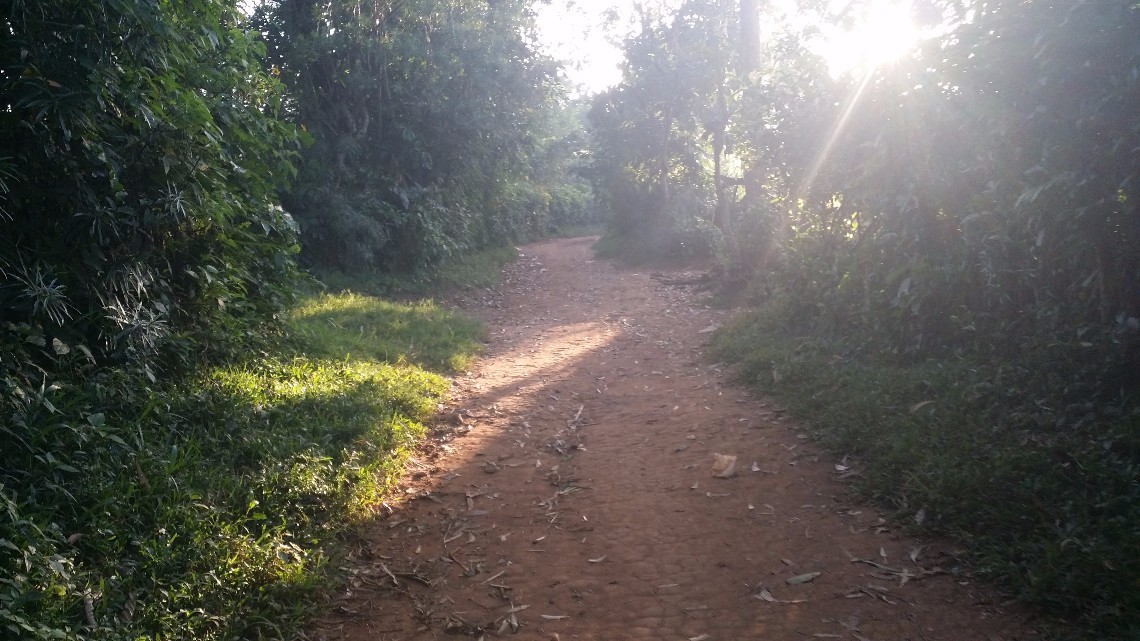
Nimefika salama – I have arrived safely – the message my host mother wanted me to text her every morning when I arrived at work. I insisted on taking the short cut path beside tall maize fields and through the homesteads, where her daughter had once been bitten by a dog. The risk was worth it though – these 14 minutes every morning were the closest thing I had to “freedom” every day – something I have too little of in Kakamega and too much of in Portland. Though there may be were bigger security risks than a stray dog when I flew out of Nairobi during Obama’s weekend visit there which prompted a travel warning, this was still the message I texted my host mother upon my arrival in the states.


Overview: What I missed most this time abroad: sarcasm, ice, and long runs. The most resounding lesson I’m taking home: Talk with the trust that your listener cares. The foods I most enjoyed: chapati (tortilla/naan hybrid), fresh mangos, and roasted maize. The most unfamiliar thing I tasted: fried flying ants. Whether I fell in love with an African: I had to turn down only three proposals. If this was a missions trip: No. The best Kenyan custom I experienced: always shake hands in greeting, not just meeting. What I was doing there: great question! Whether I will be going back: I certainly hope so.


For now, I am back in the country where my president – “the world’s most powerful man” – has provided uninterrupted Wi-Fi across the entire land so that the lazy rich white people don’t have to worry about the megabytes it takes to use Instagram while driving their Lamborghinis. Stereotypes at least serve some instructive purpose, as a prerequisite for revelation and amazement.

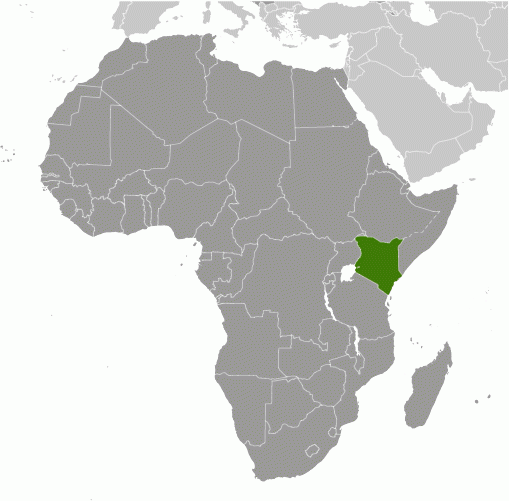
KENYA

I’ve heard many people travel to “Africa” and return saying that people there are much happier and will always say hello to each other in passing. Are you sure they always say hello to each other or just to you – the foreigner – who kind of stands out – a lot – with your inevitably failed attempt to walk and talk like the locals? For myself anyway, by my fifth week at work, my coworkers were telling me that my skirts were very ugly. I took it as a good sign they felt comfortable enough with me to say so…it only took more than half of my time being there.

Being an outsider is definitely an experience in itself. The preschoolers at the organization I was working enjoyed shaking my hand and then staring at my hand while still holding on to me, verifying that the uncanny see-through whiteness which cloaked by body was just some version of the skin that they too possessed.  Adults do the same thing in a different way. Instead of grasping me as I walk (actually they’ve done that too), they stare as I pass, or keep talking with me while I’m in the room. Travelling and meeting different people is unique in its ability to bring you closer to discovering what it is that everyone shares. Or at least speculating about it.

Filed Under: East Africa Internship, International Tagged With: East Africa, FSD, Kenya, sustainability

Primary Sidebar

  • Facebook
  • Instagram
  • Twitter

Contact Us

Moreau Center
St. Mary's Student Center, MSC 162
5000 N. Willamette Blvd.
Portland OR 97203

T: (503) 943-7132
E: moreaucenter@up.edu

Hours: 8:30am-4:30pm
Monday-Friday

Copyright © 2025 · News Pro with Full Header On Genesis Framework · WordPress · Log in