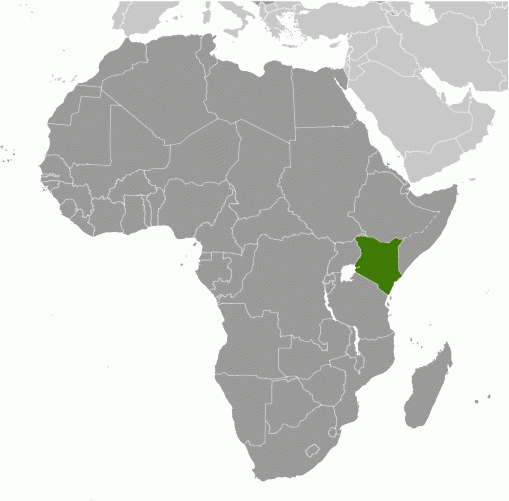
 Every night after dinner we take tea. One cup, two cups, four cups, seven cups. “Assist me with more tea,” my host mother says. It is not customary to ask someone to do something for you. If you need something, you command it, if the commanded individual can’t satisfy the need, then they just don’t do it. There’s no wasted filler words like “please if you wouldn’t mind and it’s not too much of a hassle would you be able to…” Likewise, an affirmative answer to a yes or no question usually consists of eyebrows quickly jerked upward in a brief widening of the eyes or a low decibel “mmm”. A happy customer at a Kenyan restaurant is not one who expounds their satisfaction with the meal and expresses thanks upon every filling of the glasses and removing of empty platters. Rather the customer is just contentedly silent. However, and very much on the contrary, descriptions of organizational methods, governmental systems, or structures of order require verbose explication, abundant examples, a pen and paper, a full stomach, and well working eyebrows and/or grunts. Because of this the half hour left for tea time often become a full hour, or even three. When discussing the need for governmental order to be strictly observed, the structure of the school day is sometimes loosened.
Evening tea is more of a relaxed tea time though. The English version of the news comes on at 9pm after the Swahili version at 7pm. By 9pm my host sisters are usually sleeping or headed that way, my father has gone to bed as he arises at 4am every morning, and my mother and I sit and watch the news or chat for a bit about new and old developments. My mother likes to inquire of the food I had eaten at school that day, the well-being of the other interns and their host families, or discuss the work she had accomplished at the shop repairing or selling cell phones, what bible literature she had downloaded to read on her tablet, the well-being of her own friends, or her budget for her many work investments. When my two months was up, my mother sent me home to the US with enough tea leaves to last a whole year at least – at which point she expects that I will return for a visit, or a betrothal.
 Some unidentifiable element about travel is inherently good. Just getting on a plane and arriving in another place alive is worthy of blogs and Instagram posts and getting together with friends upon your return just to share what happened while you were gone. Is it the hours you cheat and get to relive as you travel across time zones in the plane? Is it the contradictory solitude of being the only of your “type” in the midst of a congregation of eager onlookers? Is it because you learn without even trying to? The fact that I’ve been to Kenya continues to thrill me just thinking about it. The kind of thrill where if you don’t record it you will forget it because its saturation is too great to be saved in the limited storage space of the mind. The kind that leaves you craving more.
 But for now the day is over. I will continue to learn from it as new experiences draw me back to some feature I didn’t even recognize I had recognized while there. These are the best sort of discoveries – the ones you’ve known without knowing you knew them.
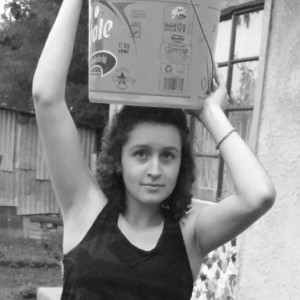 After my mother and I had returned home from the shop around 6pm, I either work on reports that are due to the FSD site team, or help with some household chore. Since I can’t cut the cabbage small enough, or slice the tomatoes as daftly as my host sister without the use of a cutting board, and don’t yet know how to milk the cow or work the cooking fire, I prefer pumping
 and carrying water from the bow hole in the yard. While I did that my sister would be cooking vegetables or rice in the top house on the gas cylinder, my mother would be in the house below assisting grandma at the fireplace to prepare lentils or fish whilst responding to cell phone repair needs and other business opportunities on her smart phone, and my mothers’ nieces would be helping cook or clean in the house below. My younger host sister would be enthusiastically screaming the poems and songs she learned from school to anyone or no one who would listen. If I am seated in one stationary place for any extended period of time she tries to braid my hair or rather twist it around itself. Once my host father returned home he will be cutting the grass or attending to some other part of the yard and then catching up with the latest news on the TV while simultaneously reading the newspaper with a flashlight as the fluorescent, uncovered lightbulbs on the ceiling didn’t lend themselves well to fine print. The sun sets by 7pm and everyone must be in by then.
 Codes of decorum are loyally upheld when held up to question is the decorum of codes. As a “third world country”, there is a keenly felt desire to be “better,” to grow, to try new and different and more endeavors, to question and improve the codes of governance and living, to develop. But development is an undertaking which requires much risk and audacity to confront the lack of a certainly identifiable best path forward. The certainty that is lacking in the realm of development is often compensated for in the realm of social expectations, no matter how limiting. When my mother saw a woman on the TV wearing a “mini skirt” (a skirt hanging just above the knees) she would chide “Aiii look how she is putting on! Here in Kenya that just can’t work.” And that was the end of that. When Obama was preparing to arrive in Kenya for the Global Entrepreneurship Summit and the media coverage primarily comprised his position on gay rights and the strife that that was causing many socially conservative Kenyans, she wanted to bring that conversation to an even shorter end.
 I still have yet to decide if when travelling in completely foreign places I should try to “fit in” out of respect for the surrounding culture, or be completely my own out of recognition of my own heritage. Both have their perks. Trying to dress in the style of a traditional African woman is fun and authentically demonstrates some sort of appreciation for their customs, especially to the older generations. At the same time it can look very awkward on a white girl. It even has the ability to attract some fantastic glares from girls closer your own age on the streets who are wearing the kind of western clothes you were told to leave at home. But dressing like I would in the states is a bit more comfortable and familiar, and makes me feel like I have better command of myself.
  This is especially important in a place when your every action is being carefully watched and seemingly scrutinized, and confidence is key. Also, as much as it is a learning experience for me to be living amongst a different culture, it is likely a learning experience for them to have me living with them, purely because of the difference that I embody. So then, why shouldn’t I appear as I would in the states so they can experience as authentic a foreigner as I desire to experience an authentic Kenyan? Trivial as dressing may seem, it consumed enough of my thoughts to receive a paragraph of recognition.
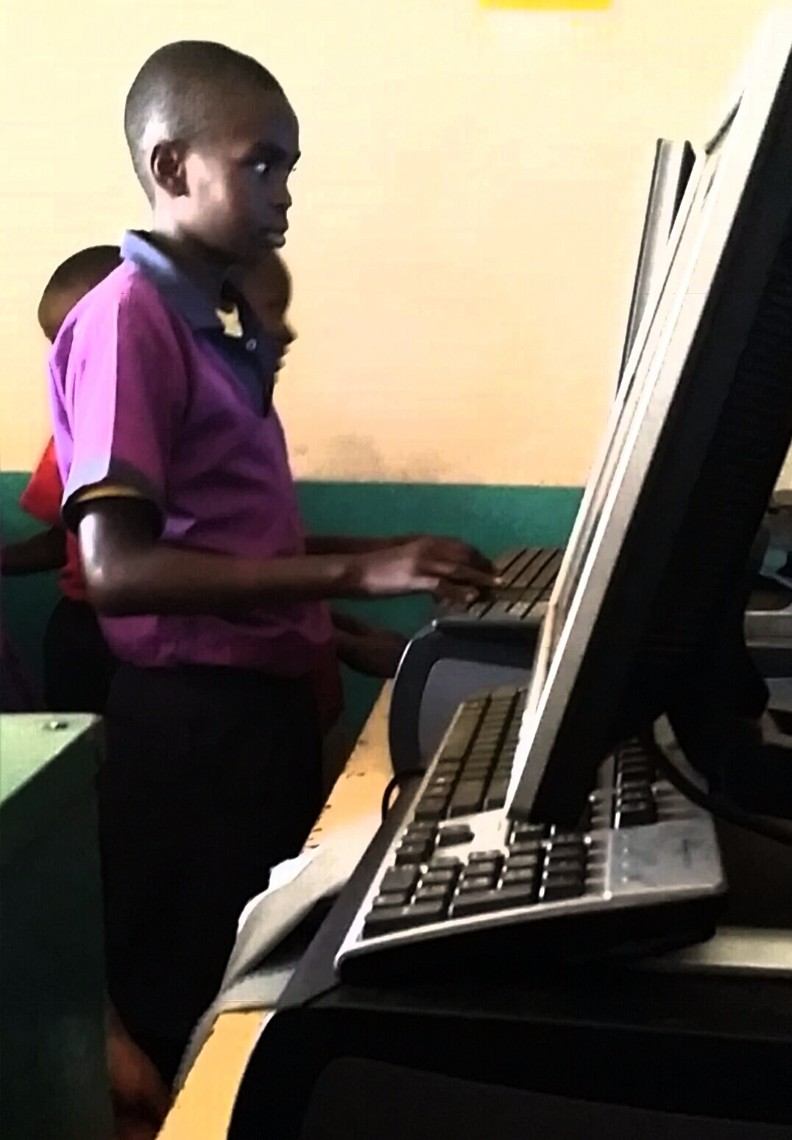
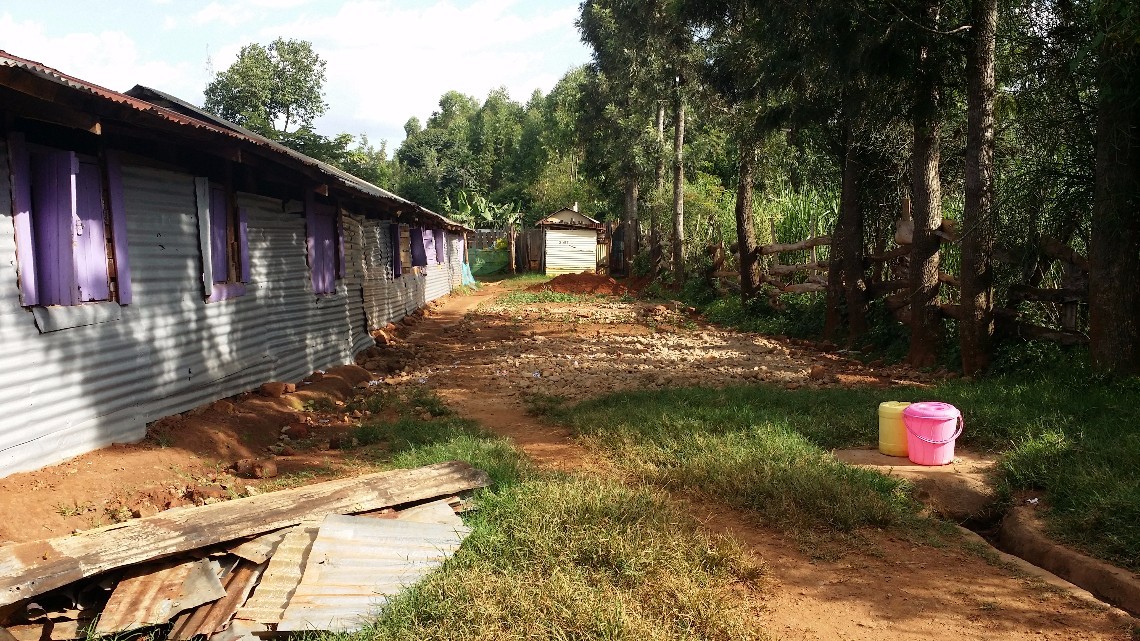
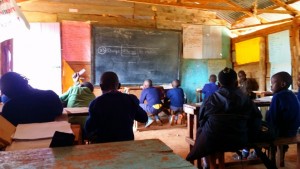 A lot of my work at the school is intended to address the learning focus. There is much focus on memorization, memorization, memoriza-? Zation, good. Classes are taught with more emphasis on students being attentive and aligning their answers with the textbook’s or the teacher’s than on the creative, independent thinking that has been so integrated in to my own education. When I said that American high school students only have six or seven subjects at once, my coworkers who must test in and pass 14 subjects in grade 12 liked to try and convince me that the Kenyan school system is much harder than the Ameri-? American, yes. In Class Eight (the age equivalent to the American Grade Eight), students take a national exam which is intended to determine which quality of high school they will attend, the national level schools being the most sought after. Typically students in the city schools perform better on this exam because of better funding, resources, and infra-? Infrastructure, yes good. The rural school at which I was working was a bit of an outlier in that its scores competed with some of the city school’s scores, despite the distance some students had to travel each morning and the lack of incredible buildings or materials.
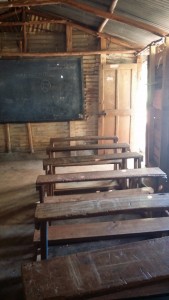 In part, good scores are encouraged through a public display of student ranking. Biweekly or sometimes even weekly, tests are given. Each test comprises five subjects which take about two hours each. Once the tests have been scored, summed, averaged, ranked on cell phone calculators, and then entered on red-pen lined sheets of graph paper, every student of every grade is called forward during morning assembly in order of their score with respect to their classmates. Good scores are considered the key to a successful future, and bad ones the equivalent of a slow and painful death. The road to hell was the metaphor used by the school’s director during one of the monthly teacher meetings to describe the students who needed more attention.
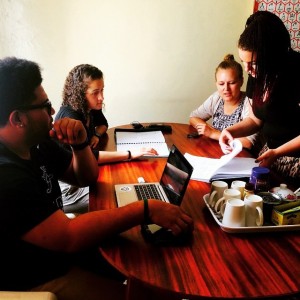 On these Saturdays I meet with the FSD site team and fellow intern(s). Here amidst white people I can talk as fast as I want and be understood without repeating myself even once. Sometimes even without finishing my sentence. If you want to talk about taking things for granted – this ease of communication would be one. No doubt the teachers at my school feel the same way, as they often have to repeat themselves in different ways until we understood each other. During FSD workshops we discuss topics such as grant writing, creative facilitation, and monitoring and evaluation. We review our current progress and discuss possible ideas for further work. One of the hardest parts about this type of work is the fact that the work to be done is very much undefined. It requires much initial innovation and then much continuing implementation. Altogether this demands lots of devoted energy.