• Skip to primary navigation
  • Skip to main content
  • Skip to primary sidebar

Moreau Center Social Justice Programs

  • Home
  • Immersions
    • Affordable Housing
    • Border Immersion
    • Civil Rights
    • Community Organizing and Resistance (CORE) Immersion
    • Environmental Justice
    • L’Arche Bologna
    • Nicaragua
    • North Portland Civil Rights
    • Rural
    • Tanzania
    • Urban
  • Service Plunge
    • Blog Updates
  • Interns for Justice
  • Donate
  • Archived

Civil Rights

3/8/24: Emmett Till

March 8, 2024 By Carrina

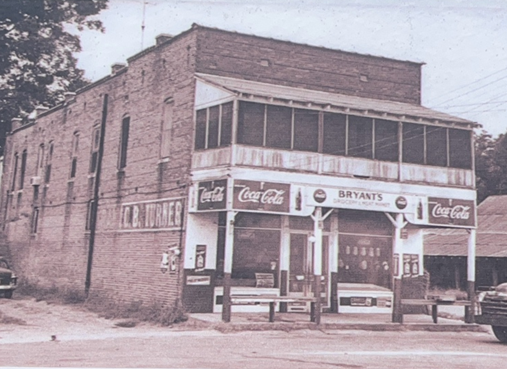
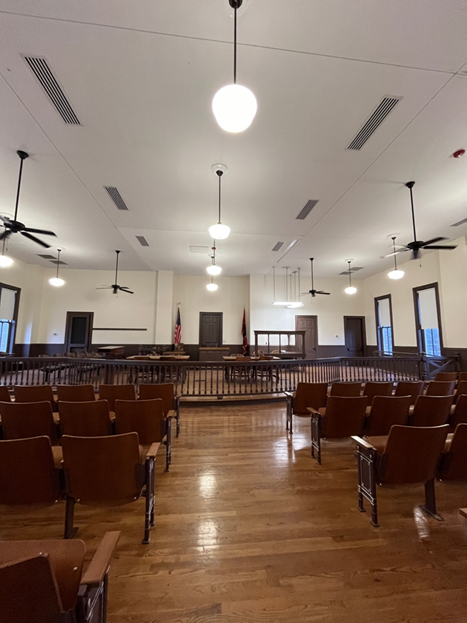
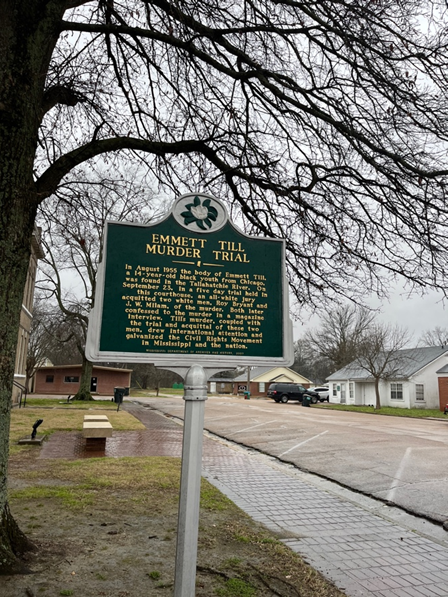
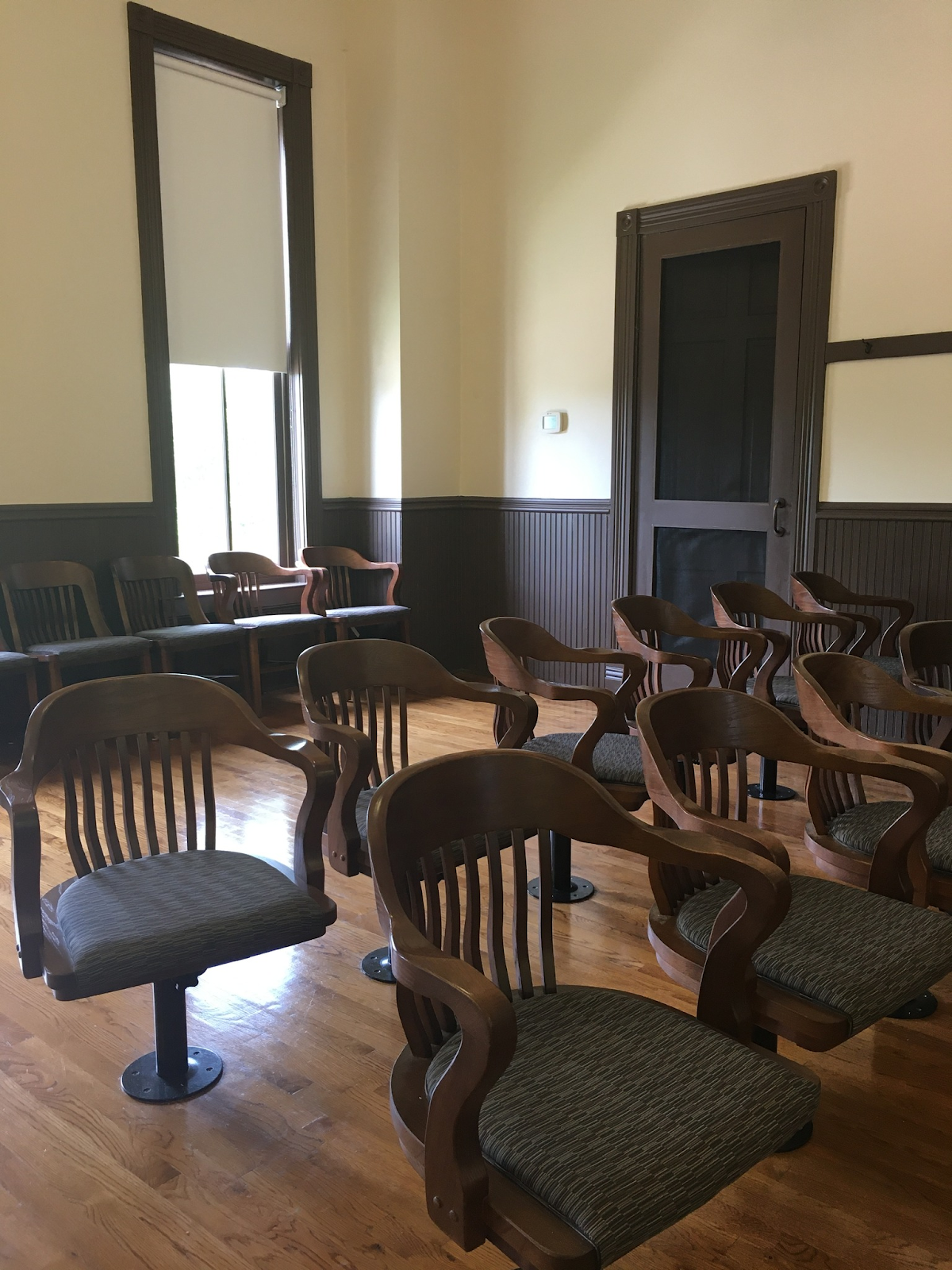
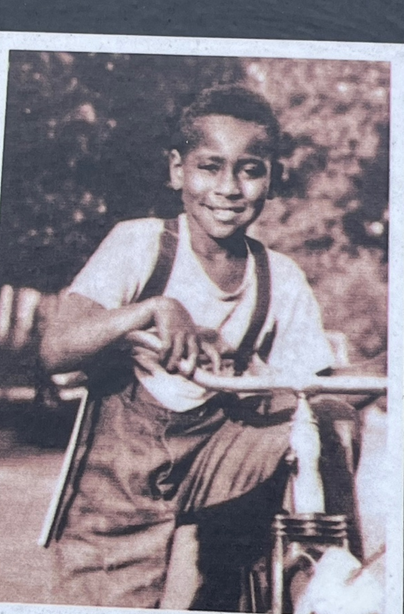
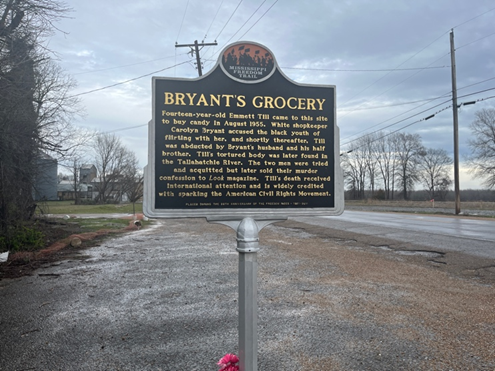
On Friday, March 8th, during the last day of the Civil Rights Immersion we had the privilege of visiting the Emmett Till pilgrimage in Greenwood/Glendora/Sumner, Mississippi. Emmett Till’s story inspired many social and justice activists, including Rosa Parks, who refused to give up her seat on the bus. In an immersive experience, we learned about Emmett Till’s story by visiting key places that played a significant role, such as Bryant’s Grocery & Meat Market, the Black Bayou Bridge, the Interpretative Center Museum, and the courthouse. Emmitt Till’s story is incredibly powerful and has left a lasting impact on my life by empowering me to stand up and advocate for those who are unheard and unjustly mistreated.

– Elena Mulul
Filed Under: Civil Rights, Civil Rights Immersion 2024 Tagged With: Black Bayou Bridge, Bryant Grocery, Emmett Till

3/6/24: “The only tired I was, was tired of giving in” – Rosa Parks

March 6, 2024 By Carrina

On Wednesday morning, we departed from Montgomery to visit the last of the three cities in Alabama, Birmingham.

Our first stop that day was the City Hall where we met with Mayor Woodfin’s department of Racial Equity and Social Justice. There we were greeted by a few of their staff that gave their time to talk to us about what they have worked on since the mayor created the division along with other staff who walked by to say hi to us. A few of the things they mentioned to us was the PEACE Act which focused on police accountability and creating a better connection with citizens, civic engagement classes that last for 7 weeks and collaborate with police departments, and Birmingham Promise which gives financial support to students to attend a university in Alabama. We also talked about how Redlining has been an issue for a long time. One side effect of these almost-century-old maps that might not be known are health implications. One way that these side effects have been shown in the community is by the fact that minority women have the highest maternal issues. Another issue that they have to navigate is the fact that Birmingham has Dillon Rule, bills have to pass through the state capitol, and that has been a barrier for progress. Something that I thought was really great on the mayor’s behalf was that he has his Thursdays free for anyone in the community to chat with him for 15 minutes about anything that they want to, and that showed to me how much he wants to listen to the people he impacts the most.

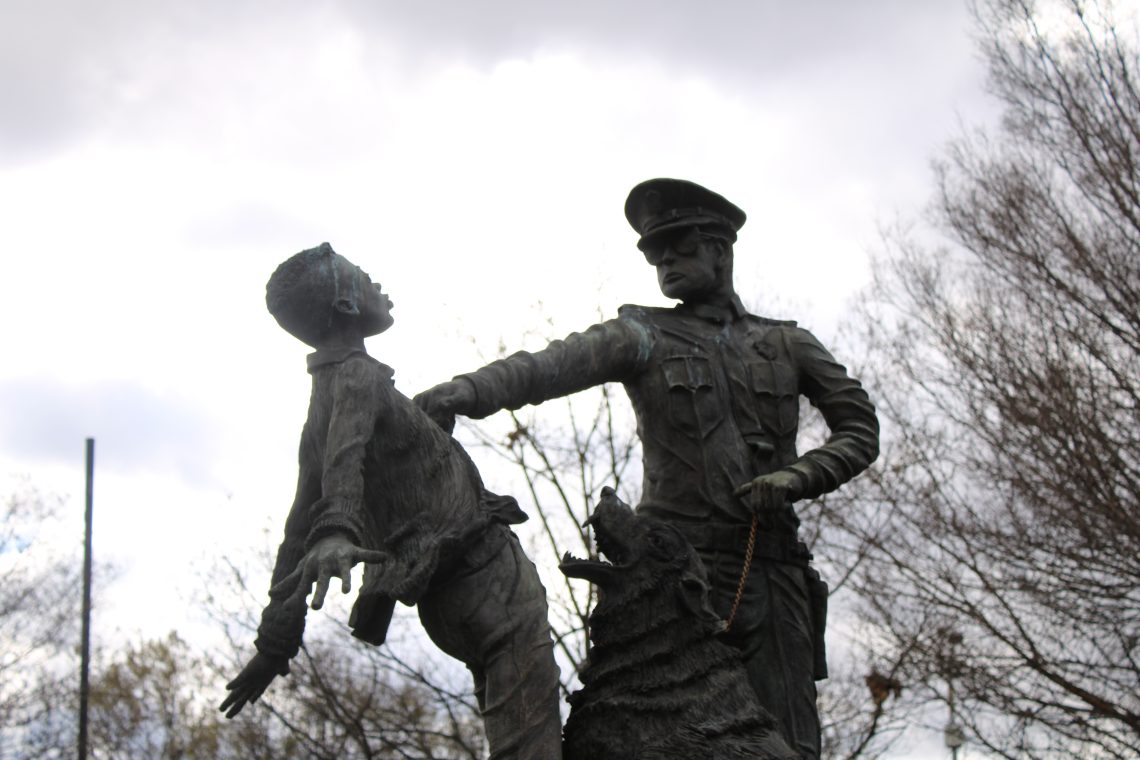
Next, we paid a visit to Kelly Ingram Park. There they had a listening tour that you could hear by calling the number provided. There were monuments and statues remembering the events that had occurred in the 60s. The bombing of 16th street church which killed 4 little girls, the children’s march which was attacked by dogs and fire hoses before arresting hundreds of children, racial discrimination in surrounding white owned businesses, and much more. The statues and monuments in the park had very animate expressions and it seemed surreal to me that we were standing in the same place where those events had happened only a few decades ago.

Our last stop in Birmingham was the Birmingham Civil Rights Institute. The experience felt like a story of black history in the United States that you could walk through. It gave an idea of what it was like to be a person of color during the Jim Crow era. There were exhibits visualizing standard of living differences, segregation practices of “colored” and “white” facilities, freedom riders’ bus replica, Civil Rights heroes especially Dr. Martin Luther King, Rosa Parks, Rev. Fred Shuttlesworth, and A.G. Gaston. There is so much to learn about when it comes to how the Civil Rights movement began and how necessity and courage fueled everyone’s drive for permanent change in the name of social justice.

– Cristopher Diaz

Filed Under: Civil Rights, Civil Rights Immersion 2024 Tagged With: Birmingham, civil rights, Jim Crow, Kelly Ingram Park, PEACE Act, Redlining, Rosa Parks

3/5/24: Selma

March 5, 2024 By Carrina

Upon arriving in Selma, we had anticipated a simple day of museum visits and learning about the historic Selma to Montgomery Marches of 1965. However, our experience surpassed expectations as we embarked on an immersive journey guided by our tour leader. Transported back to the years spanning 1526 to 1867, we were deeply moved as we attempted to walked in the shoes of individuals of color. This day, above all else, left a profound emotional impact on myself and my fellow travelers. Reflecting on our experience, words failed some, evoking feelings of disgust and anger, yet ultimately leaving us all motivated to confront the ongoing racism in our world.

Amelie Polk

Filed Under: Civil Rights, Civil Rights Immersion 2024 Tagged With: civil rights, Selma

3/2/24 – New Orleans

March 2, 2024 By Carrina

Care
Open
Volunteering
Emotional
Nonprofit
Assistance
Neighborly
Transformative

Helpful
Others-first
Understanding
Selfless
Empathy

We started off the day volunteering at Covenant House. This organization and location
specifically provides housing for New Orleans youth ages 16-22, no matter the reason. First, we
spent a couple hours going through the donated clothes and sorting out the ones to keep. After
sorting and folding the clothes, we got to take some to hang up in the clothing closet. Then we
got to walk around and do a mini-tour of the building and also discuss Covenant House’s
mission. What stuck with me the most is how open the doors to covenant house are. This place
has no waitlist whatsoever, and is not just a shelter but also a place that provides resources and
support for the youth staying there. For example, some of the things mentioned were job
searches/resume building, connecting with family, food and clothing, healthcare, parenting for
youth who are current or expecting parents, among many others.

Our next activity was visiting an exhibit called The Trail They Blazed. This was a traveling
exhibit that was at the library of the university we stayed with (University of Holy Cross) near
the New Orleans area. It covered multiple events and organizations during the civil rights
movement in New Orleans area from the 50s-70s. The Desire neighborhood at the time became a
hotbed for activism, which led to the formation of the National Committee to Combat Facism
(NCCF), which is associated with the Black Panther Party. The NCCF provided free breakfast
for school kids, political education classes, voting transportation, grocery shopping for elders,
and distributed the Black Panther Party’s newspaper. Another topic the exhibit covered was
boycotts, many of these led by college students my age. They organized sit-ins to desegregate
lunch counters, advertised and led consumer boycotts, despite the risk of expulsion from their university (which unfortunately occurred to many students). Their efforts eventually led to integrated dining and restrooms, fairer hiring practices, and appropriate accommodations being made. Being a college student, this exhibit made me realize how much power we have to make the changes we seek. Now more than ever, it is crucial that we use our voice to speak up for injustice, whether here or the other side of the planet.

Kaylee Gunderson

Filed Under: Civil Rights, Civil Rights Immersion 2024, Uncategorized

Serving and Talking with Birmingham’s Changemakers

June 1, 2022 By liwanag

On our first full day in Birmingham, we had the opportunity to meet with groups who are intimately aware of the issues their communities face and working to address them. We started our day at Build UP, a nonprofit designed to to address the failings of Memphis schools by providing low-income youth in the Ensley and Titusville communities career ready skills and education. The area BuildUP established was the first place in Alabama where African Americans could own land, but at Build UP’s founding, only 82% of residents were renters. Home ownership is one of the best ways to build equity and wealth, but intergenerational poverty, a history of racist policies, and income inequality has prevented many African Americans from entering the housing market. Build UP empowers youth by teaching them financial literacy and hands-on skills, while providing a robust education and paycheck. They learn practical skills by working on abandoned homes that Build UP acquires and turns into like-new duplexes that students take ownership of when they graduate with a zero percent interest loan. 

When we arrived, we were greeted by Build UP’s founder Mark Martin and toured the space. The school was just moved into this new location where they have a full workshop, many classrooms, and a shared space with another nonprofit, providing an athletic program. The building was still being finished, so we had the chance to help with projects needing to be done. The group split up to work on different projects around the building and we helped paint, garden, and hang ceiling tiles. I relished the chance to do some hands-on work and was glad to contribute, albeit only a little. After a few hours of work, we had lunch with the students and teachers who were working on a new community garden. 

After lunch, we went to City Hall and met with the Division of Social Justice and Racial Equity. This small but mighty team was established by Birmingham’s Mayor Randall Woodfin to ensure that the city’s operations, policies, and decision-making are equitable and just. This conversation was by far my favorite experience so far because we got to hear about the current efforts being made at the governmental level to address the lasting legacy of racism in Alabama. One of the most impressive pregrams they’ve established is called ACE, the Academy of Civic Engagement. The central goal of the initiative is getting residents directly involved and engaged with their local municipal government. They aim to bring everyday citizens together for a deeper understanding of how the City is working for them and prepare residents to go out into their communities to act, serve, and lead. Getting people aware and involved in local government is so important. Learning about the role that they have played in getting the people of Birmingham engaged has given me ideas for how we can implement similar efforts in Portland and other cities.

-Nicole Rooney

Filed Under: Civil Rights Immersion 2022

Reverence & Rejoicing

May 25, 2022 By liwanag

On our first full day in Memphis, TN (May 16th), we arrived at the Memphis Branch of the National Association for the Advancement of Colored People (NAACP) to meet with Ian Randolph, Chair of the Political Action Committee. Ian is committed to getting people to vote, and he highlighted his emphasis and focus on issues (e.g., voting rights) rather than candidates or parties. He also reminded us that voter disenfranchisement efforts persist to this day. Ian explained that Tennessee residents recently voted to require firemen, police officers, and emergency personnel to live within the county they serve, but the Tennessee state legislature overrode the decision in direct opposition to what the voting community wanted – a clear violation of democracy. This modern-day example illustrated how policy and ideology continue to work hand in hand; its connection to historic battles over ideology pertaining to the control of Black bodies was abundantly clear. After concluding our meeting with Ian at the NAACP, we spent much of the afternoon exploring the National Civil Rights Museum, built around the former Lorraine Motel, the site of the assassination of Martin Luther King Jr. on April 4, 1968.  

The next day (May 17th), our group drove to rural Mississippi to complete the Emmett Till Pilgrimage. We had the opportunity to speak with Benjamin Saulsberry, the Public Engagement and Museum Education Director at the Emmett Till Interpretive Center in Sumner, MS, and Mayor Johnny B. Thomas of the Emmett Till Historic Intrepid Center (E.T.H.I.C.) in Glendora, MS.  We strongly encourage readers to educate themselves about the brutal murder of 14-year-old Emmett Till, but in brief, our pilgrimage took us to the locations where two white men tossed Emmett Till’s body over the Black Bayou Bridge (Glendora, MS) and where the men were tried, but ultimately acquitted by an all-white, male jury (Sumner, MS).  

One recurring theme our group discussed was the importance of being present, intentional, and reverent when visiting and learning about key historical sites in the civil rights movement. Many of us expressed disappointment and frustration after observing other visitors who appeared to rush through the historical exhibits without any obvious attention to the featured content, or who thought it was appropriate to take “selfies” at significant assassination and murder sites.

Both of these two days presented heavy information, leading us to reflect on the injustices of the past and present. The end of each day however presented more joyful moments. After the National Civil Rights Museum, we took the time to explore Beale Street, a historic area known for a lively culture filled with energetic music, delicious food, and unique shops. The street was alive with energy as people walked all around, enjoying the warm sunny weather. Some sat down to enjoy the beats of live music or filled various buildings identified by their eye-catching neon light signs. We couldn’t help but be captured by the captivating energy that surrounded us. 

Similarly, following our pilgrimage to rural Mississippi to visit the Emmett Till Interpretive Center and Emmett Till Historic Intrepid Center, our group dined in Central BBQ, a top-rated spot for BBQ in Memphis. Surrounded by the rich smells of slow smoked Memphis-style BBQ, the talkative restaurant environment, and the company of one another, once again, we could not help but smile and enjoy the warm atmosphere while digging into a delicious plate of food. 

One might not think that the more joyful end to our days would have an immediate connection to the history we have learned about, and yet in some ways it is not so far removed from it. While visiting the Emmett Till Historic Intrepid Center, we learned about King’s Place Juke Joint. This space boasted a lively weekend life where Black people could escape racial discrimination and direct their energy to socialization, music, and joy. This is merely one example of a location that hosted many moments of celebration and community within an identity that was all too often devalued. In the context of living in a society that tells you your identity, culture, and personhood are not of value, moments of joy and celebration become personal acts of resistance. So, we take a moment to recognize that the same melting pot of Memphis music (delta-blues, jazz, rock ‘n’ roll, R&B and gospel) that spreads entertainment and jubilance to eager crowds walking down the street today has historical roots in expressions of melancholy, anguish, and defiance. These elements do not work against each other, but rather are linked to one another. 

While it is important to make time for deep reflection and painful history, we should remember that there is a time and place to find joy and celebration, sometimes even at the same time. Though there are still many battles being fought, stopping to rest and look back reveals hard earned progress. In describing his work with the NAACP, Ian had told us “keep your mind on the future…don’t expect the good things tomorrow” and so we add: take the time to enjoy the good things today.

~Cindy Garibay & Dr. Lauren Berger

Filed Under: Civil Rights Immersion 2022

Segregation cannot hold them down

May 16, 2022 By liwanag

Saturday, May 14, 2022

During our packed day of exploring and learning about the Civil Rights Movement, a common theme at the Birmingham Civil Rights Institute was the impacts and processes of dismantling segregation. The above quote, delivered to us via an intro video presented before entering the exhibits, explained the strength and power that black communities had during times of segregation. Black communities established community spaces, schools, and churches that were integral not only for building community with one another, but for planning civil rights protests and boycotts. As the video finished and the screen lifted, the beginning of the exhibit was revealed, starting with two water fountains labeled “colored” and “white”, giving us a very clear visual of what segregation was like for people living during this time. As each of us walked through the museum deeply reflecting on the images, words and exhibits that were presented to us, we discovered the intense level of planning, courage, and persistence each individual had in this process. 

For some of us, learning the role that kids had in the movement was deeply striking, considering that this tactic was deemed effective; the images of children being arrested and put into jail by police officers impacted the community on a different level. Another moving piece of history was learning about the children in Kelly Ingram Park who were peacefully protesting against segregation. They were viciously attacked with high pressure fire hoses and violent police dogs. The part of the exhibit that explained this event in history overlooked the park, which was our next stop. 

At the park, we saw statues dedicated to these children, showing us the fire hoses used against them, along with the fear and dedication in their faces. The dedication that these incredible young people had in this movement inspired us to continue to use our voices and stand against the injustices happening currently in our world. 

Next, we visited the 16th st. Baptist Church where a horrific bombing occurred on September 16 1963, killing 4 young girls; Addie Mae Collins, Carol Denise McNair, Carole Rosamond Robertson and Cynthia Dionne Wesley. Sarah Collins, a sister of one the victims, was also injured. It’s impossible to imagine the level of hatred and violence that an individual has to be able to bomb a church full of innocent people, but unfortunately this was a common occurrence across Birmingham. This occurrence was so common that Birmingham was called “Bombingham”.  

After the 16th street Baptist Church, we changed up the content of history by visiting a Queer History exhibit, put on by the Invisible Histories Project. This non profit works to preserve, collect, and make accessible the Queer and Trans history of the Deep South. The Gay Rights movement was connected to the civil rights movement by how individuals were inspired to use the same strategies of fighting for equality. There was even an overlap in activists who participated in both movements. This exhibit brought joy and laughter into our day after focusing on some heavy topics. As important as it is to sit with the heavy information it is just as equal to learn about the resilience and radical pride that communities had throughout history. 

We ended our day with some delicious local ice cream and an unexpected rainstorm which resulted in a very wet but energetic game of basketball back at home. 

As we stepped away from this emotion filled day we are taking with us how communities can rise to build resilience and not let acts of violence take their power away. 

-Sonya Slyapich and Sophia Riccardi

Filed Under: Civil Rights Immersion 2022

Slavery’s Legacy

May 16, 2022 By liwanag

Wednesday, May 11, 2022

The Legacy Museum provides a history of the United States with a focus on the legacy of slavery. From the Transatlantic and Domestic Slave Trade and Reconstruction, the museum provided not only a lot of history, but narratives and powerfully interactive content. Lynching, codified racial segregation, and the emergence of over-incarceration in the 20th century that continues today are connected with our country’s legacy of slavery in the museum as well as the Peace and Justice Memorial.

From the exhibit that begins with crashing waves and beautifully eerie music, we were quickly immersed in the historical truth we were about to be told. One of the first few rooms we walked through contained cages with silhouettes in them. These silhouettes turned into a projection of an enslaved person when you walked up to the bars of the cage. They told you a small piece of their story as they waited to be auctioned off. In one of the cages, two young children called for their mother, while in another, a woman sang a sad, soulful hymn.

Photo credit: Art Journal Open

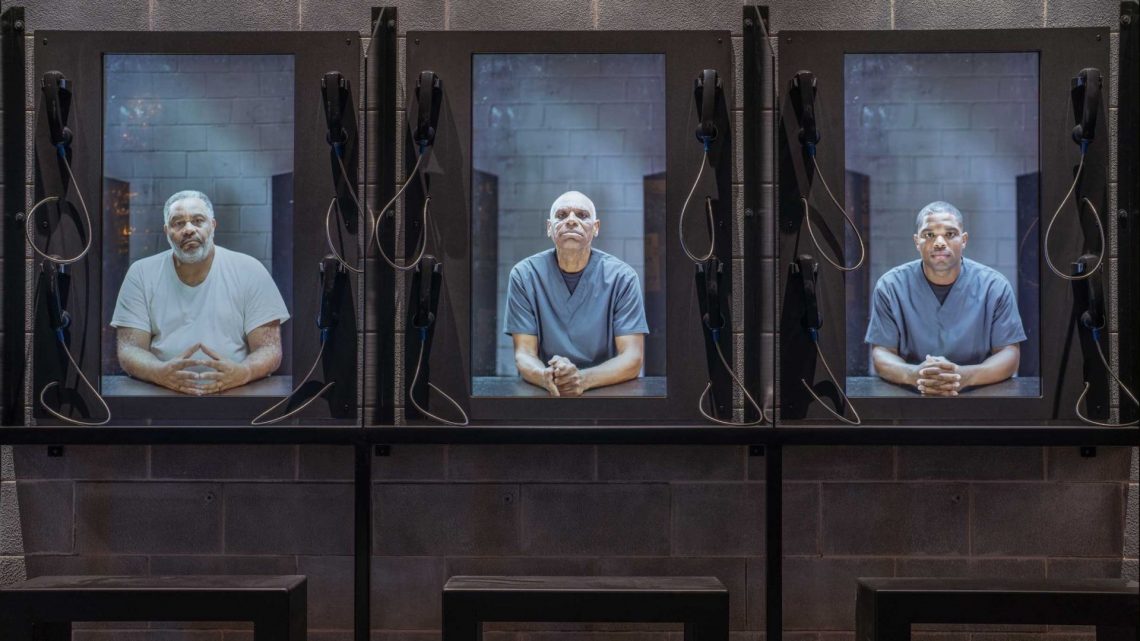
Towards the end of the museum is an exhibit on mass incarceration that features voices of people who have been wrongly condemned, unfairly sentenced, and unjustly treated in the American legal system. We saw stories of children prosecuted as adults and those suffering brutal conditions in some of our nation’s prisons and jails. There was a wall of letters from prison and a series of recorded video of actual people who had spent time in prison that were incredibly powerful. One letter was a person pleading for help for one of his fellow inmates who had life in prison without parole. Instead of asking for help for himself, he was only concerned with getting legal help for his fellow inmate. One of the the people in the videos talked about being falsely imprisoned as a 16 year old and the decade that he had lost in prison, all the lost experience and time with family and friends.

Photo credit: The Legacy Museum

These two exhibits amongst so much at this museum weighed heavily on our group. It conveyed to us the ways in which oppression and racism are interwoven into the fabric of America that is held together by white supremacy. A young man working for the Equal Justice Initiative named Solo said to us that Abraham Lincoln may have won the Civil War, but the ideological battle that occurred during the Reconstruction years was lost to white supremacy. The war that America faces today is an ideological one that activist groups and people who care for justice cannot lose again. The Equal Justice Initiative through their Legacy Museum, Peace and Justice Memorial and other educational outreach seek to educate Americans on the throughline between the history of slavery to where we are today. An honest reckoning with this history and legacy are necessary to create the racially just country we seek to see.

-Sav Baird and Tyler Wagner

Filed Under: Civil Rights Immersion 2022

Dexter Avenue King Memorial Baptist Church

May 16, 2022 By liwanag

Monday, May 9, 2022

Today, our group met a wonderfully kind and intelligent woman named Wanda at the Dexter Ave. King Memorial Baptist Church. During our time with Wanda, she created a safe space for us to learn and engage with one another at the very same church Dr. King once preached at. 

One thing she said stuck out to me as I sat there, soaking in all the history, memories, and knowledge that Wanda shared with us. She had been discussing activism and social justice when she told us that you have to ask yourself is the cause great enough to accept the cost. She told us how Dr. King experienced heavy costs from constant high levels of stress to internal and external pressures for the cause of civil rights. Despite what ended up costing him his life, Dr. King was dedicated to equal rights and to achieving these rights through nonviolent means despite the constant violence he and the Black community faced every day.

I suppose you have to ask yourself if you can handle everything that comes with stepping out into the limelight and speaking your mind. Dr. King was willing to accept the cost, can we?


-Sav Baird

Filed Under: Civil Rights Immersion 2022

Growing up amidst the Civil Rights Movement

May 13, 2022 By liwanag

Tuesday, May 10, 2022

A special treat of our time in Montgomery is a dinner hosted by our Resurrection Catholic Mission hosts with current leaders in the work for racial and social justice in Montgomery and people who are veterans of the Civil Rights movement of the 50s and 60s. It’s a gift to hear from people like Mr. Nelson Malden, Dr King’s barber and friend, and Deacon Williams, one of many people who became drivers for the thousands of African-Americans in Montgomery during the 1955 bus boycott.

I had the opportunity to sit at a table with Mary and Jeffrey Reese. Mary shared growing up in Montgomery during the 60s and how much of the history of marches, meetings, and civil rights victories, as well as segregation and intimidation from white supremacists felt almost normal since it was just what she knew growing up in that place and time. The day of the famous Selma to Montgomery march for voting rights, she and her mom walked out the door of their home and joined the crowd of 25,000. It was hard to hear Dr King speak in that large of a crowd but she was there as a 9-year old girl for a moment that I was learning about in museums and in past history textbooks. She also told us about her sister who was in college at Alabama State at the time, getting involved in some of the student organizing for civil rights. She was at a church for a meeting one night when the students got news that they may be in danger from a white mob. They had to lock themselves in the church and hide in the basement, but luckily the attack didn’t end up happening. Reading about the number of church and home bombings and killings of organizers of the time, I was awed at the calmness that Mary shared this story. Her sister and her family understood the risk but that it was what happened at the time. She expressed that while to me this was history, to her, it was her reality of growing up and the only one she knew. 

I have been pausing to reflect since then about where I might be walking in steps of future history. Where if I walk out my front door, I could walk into a movement for justice. Where I could accept the risks, different from the 60s but risk of some form, and accept those for the work that must be done. The civil rights movement was not just one or two powerful leaders but a movement of ordinary people doing extraordinary things in community. There is much left to be done and that can begin, as it did for Mary, walking out into a community of people fighting for justice.

-Tyler Wagner

Filed Under: Civil Rights Immersion 2022

  • Go to page 1
  • Go to page 2
  • Go to page 3
  • Interim pages omitted …
  • Go to page 5
  • Go to Next Page »

Primary Sidebar

  • Facebook
  • Instagram
  • Twitter

Contact Us

Moreau Center
St. Mary's Student Center, MSC 162
5000 N. Willamette Blvd.
Portland OR 97203

T: (503) 943-7132
E: moreaucenter@up.edu

Hours: 8:30am-4:30pm
Monday-Friday

Copyright © 2025 · News Pro with Full Header On Genesis Framework · WordPress · Log in