• Skip to primary navigation
  • Skip to main content
  • Skip to primary sidebar

Moreau Center Social Justice Programs

  • Home
  • Immersions
    • Affordable Housing
    • Border Immersion
    • Civil Rights
    • Community Organizing and Resistance (CORE) Immersion
    • Environmental Justice
    • L’Arche Bologna
    • Nicaragua
    • North Portland Civil Rights
    • Rural
    • Tanzania
    • Urban
  • Service Plunge
    • Blog Updates
  • Interns for Justice
  • Donate
  • Archived

Tyler

May 16 and 17, 2022

November 10, 2022 By Tyler

5/16 – 

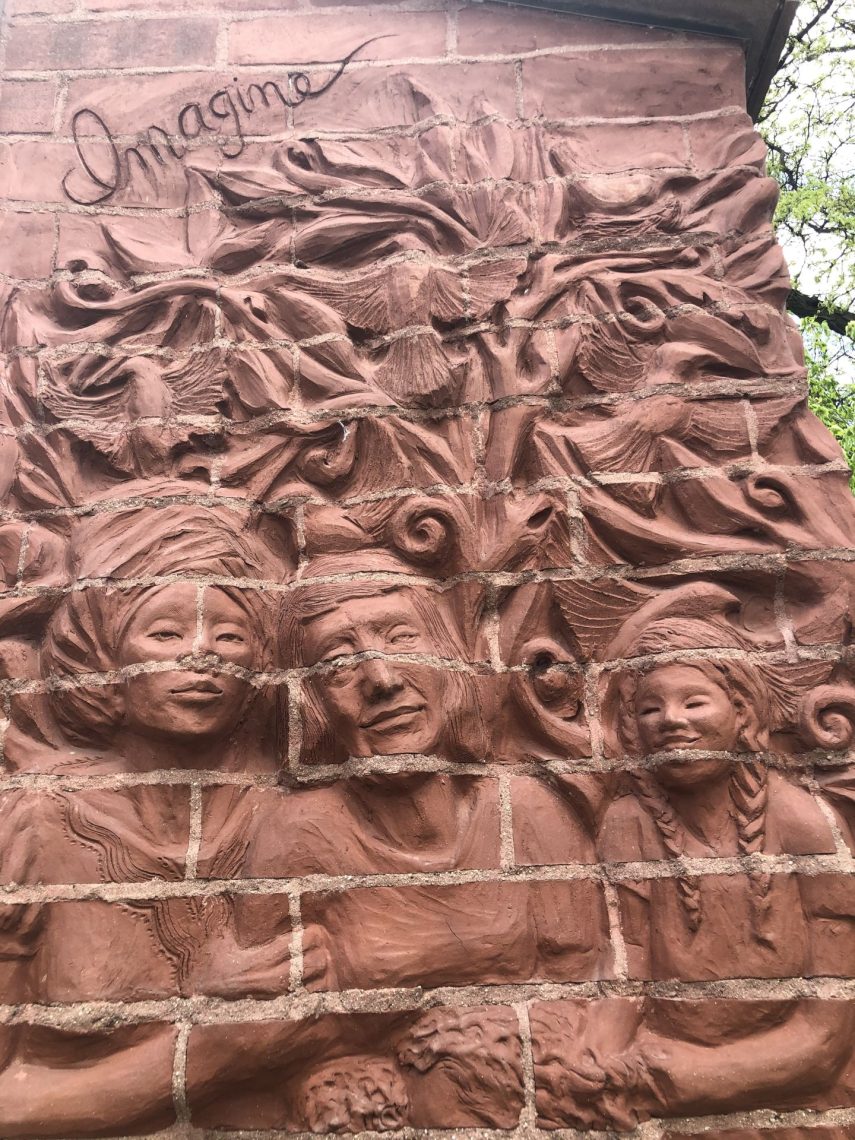
Today we started our morning taking the “L” (train) to downtown Chicago. We had a couple of hours to roam around and explore the city. We walked along the river to the Starbucks roastery. It is 5 stories high making it the largest Starbucks in the world!! After a couple of hours, we all met back at THE FAMOUS BEAN in Millenium Park! We took the “L” back and made our way to meet IMAN leaders at the Martin Luther King Jr. Living Memorial located in Marquette Park. The memorial was dedicated on August 5, 2016, marking the 50th anniversary of Dr. King’s march through Marquette Park. It highlights historical leaders as well as current leaders that serve in the surrounding community today! The memorial was created by hand in IMAN’s ceramics studio. 
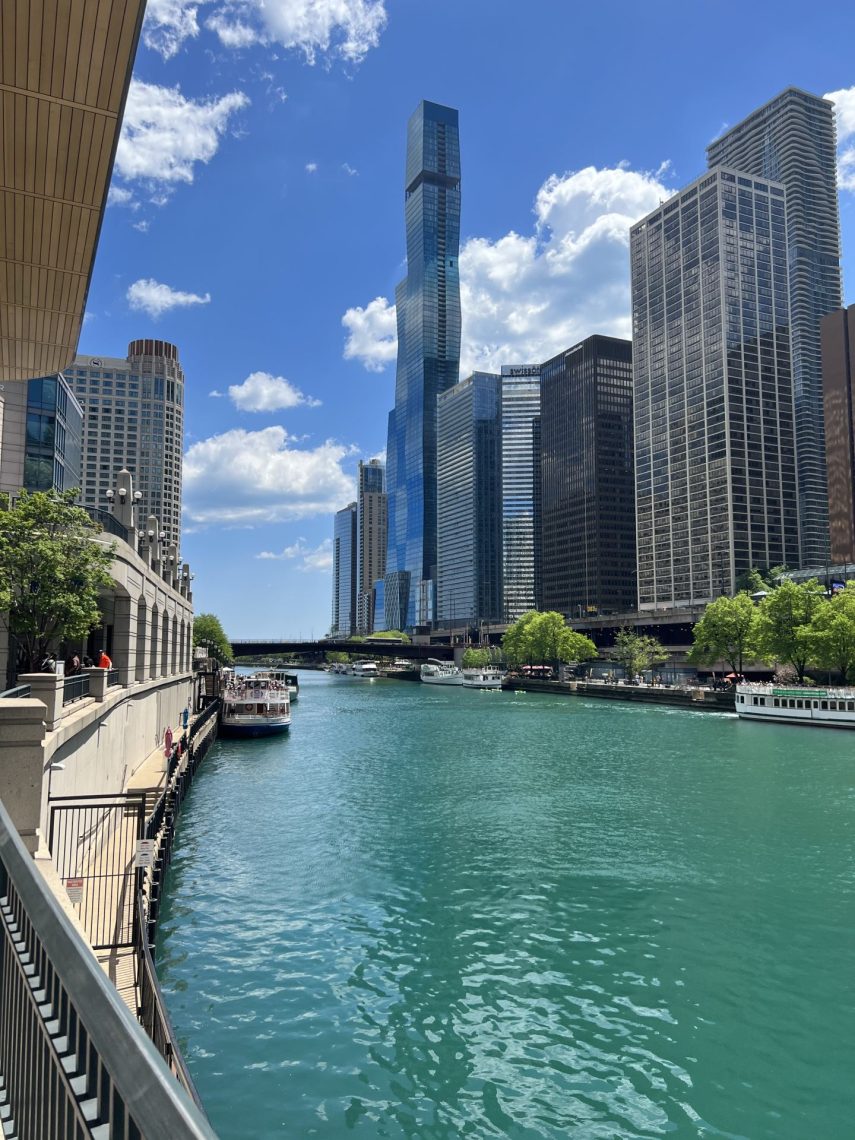
Chicago river walk
Marquette Park

5/17 – 

Our last day in Chicago started with a trip to The University of Chicago to learn about Organic Oneness. We then met with leaders at IMAN to engage in an organizing training. We were split into two groups and were given the task to draw 2 worlds, one about what the world looks like today, and the other about what we would like to see in our future world. We ended our trip off with a Kitchen table talk where we discussed issues around food justice in the surrounding communities. We had an amazing dinner cooked by Fatima Abueid the founder of SANAD Social Services and pantry. She prepared a Palestinian dish called Maqluba.

-Cara O’Sullivan
Filed Under: CORE, CORE Immersion 2022

Indulging

October 24, 2022 By Tyler

By Oswaldo Martinez, Raychel Brown and Rochus Sison

Today, we went back to Nuestra Casa and we indulged. The students and staff of Nuestra Casa gathered for a potluck. We witnessed the community come together to bring food and laughter around the table.

As the clatter of dishes being put away faded in the background, we gravitated towards Sister Mary Rita – the founder of Nuestra Casa. However, this isn’t her only achievement. She indulged us with stories about her life and her impact on the global community. Sister Mary Rita was part of the founding of Heritage University (which we visited yesterday), spearheaded a low income housing program in Lake Oswego, took part in social justice missions in Nicaragua and across Africa, started a Spanish-language program at a local university, and continues to serve as an educator in the valley.

Seeing the work Sister Mary Rita has done in social justice and activism has shown us that one person really can make a sustainable impact. Listening to the stories of people like Sister Mary Rita and the people of Nuestra Casa has enriched our education and expanded our perspectives. We are forever thankful for this experience that we have been allowed to participate in. 🙂 <3 xoxo

Filed Under: Rural, Rural 2022

Heritage University: educating the community

October 20, 2022 By Tyler

By Kevin Figueroa-Rangel

After having visited the Alvarez pepper farm, we visited Heritage University. We were introduced to Isaias, the student life director at the University. He went over the various programs that the institution offers, as well as the resources they provide the students with to help them succeed academically. He mentioned that the university, with the help of generous donors and other grants, covers 90% of the cost for nearly every student. Moreover, he mentioned that most students will actually find themselves attending without having to pay a single dime in tuition.  Given that the cost of attending college is increasing each year, it was nice to see that there are institutions that are prioritizing the education of their students. Towards the end of the visit, we were given the opportunity to speak with several students who currently attend Heritage. The biggest takeaway from the short QnA session was that most of the student body, after eventually completing their degree and graduating from Heritage, is interested in staying near the institution in order to give back to the community. This truly helped emphasize how strong of a community Heritage has and will continue to build as time passes.

Filed Under: Rural, Rural 2022

Northwest Justice Project and Jesuit Volunteers

October 20, 2022 By Tyler

By Brooke Niemer

Yesterday afternoon we visited Northwest Justice Project (NJP) where we listened to a presentation about what NJP does and specific details about the H2A program. The H2A program for migrant farmworkers is something that has been discussed throughout our time so far on the immersion, but we still had a lot of unknowns. This presentation provided the specifics of what it covered, how it worked, and who it was intended for. One thing that stood out to me is when they showed an example of an H2A visa which explicitly stated the dates of when they would be considered documented within the U.S. This stood out to me because the effects of their labor will have a much longer effect than their time for this particular visa since they are helping provide fresh produce to people which will have a positive effect on their health. One of the presenters is a Jesuit Volunteer, and we continued our time together during dinner.

After we visited NJP, we walked over to the Yakima house for the Jesuit Volunteer Corps NW and had a community dinner with them. Four people who we had never met before invited us into their house and community for dinner and a lively conversation. One thing that stood out to me was their passion for making connections and community. We were able to hear about how they chose JVC, their service placements and what their role is, the history of the JVC house, and the fun things that they engage in. They also asked very thought-provoking questions about our immersion and what brought us here, which made me feel very welcomed in their community. Their generosity and kindness are something that I will always remember.

Filed Under: Rural, Rural 2022

Instant Community

October 20, 2022 By Tyler

By Gus Smith

Yesterday (Tuesday), our group sat in on a class for native Spanish speakers who were learning English, run by an organization called Nuestra Casa. Leading up to our visit, I was nervous. I’d practiced Spanish with native speakers very sporadically, and feared that I wouldn’t be able to understand or keep up with the things they might say to me. Upon our arrival to the church building that houses Nuestra Casa’s classrooms and offices, that fear started to disappear. Those I met inside were some of the most caring and friendly people I’ve ever had the pleasure of interacting with. The immediacy and energy with which they welcomed us broke any ice there might have been and allowed us to feel the level of relaxation necessary to form real connections. All of that happened before we even entered the classroom, but  continued inside. The students, who were full grown adults, many with children, had a passion for learning and a desire to engage with us that made it really easy to give help when it was asked for, or offer it when it appeared necessary. That mix of factors created an instant community between all of us that I’ve rarely seen anywhere else. Everyone was appreciated, recognized, and included, and I’m very excited to return to Nuestra Casa tomorrow for our next class.

Filed Under: Rural, Rural 2022

Inaba Farms

October 20, 2022 By Tyler

By Oswaldo Martinez, Raychel Brown and Rochus Sison       

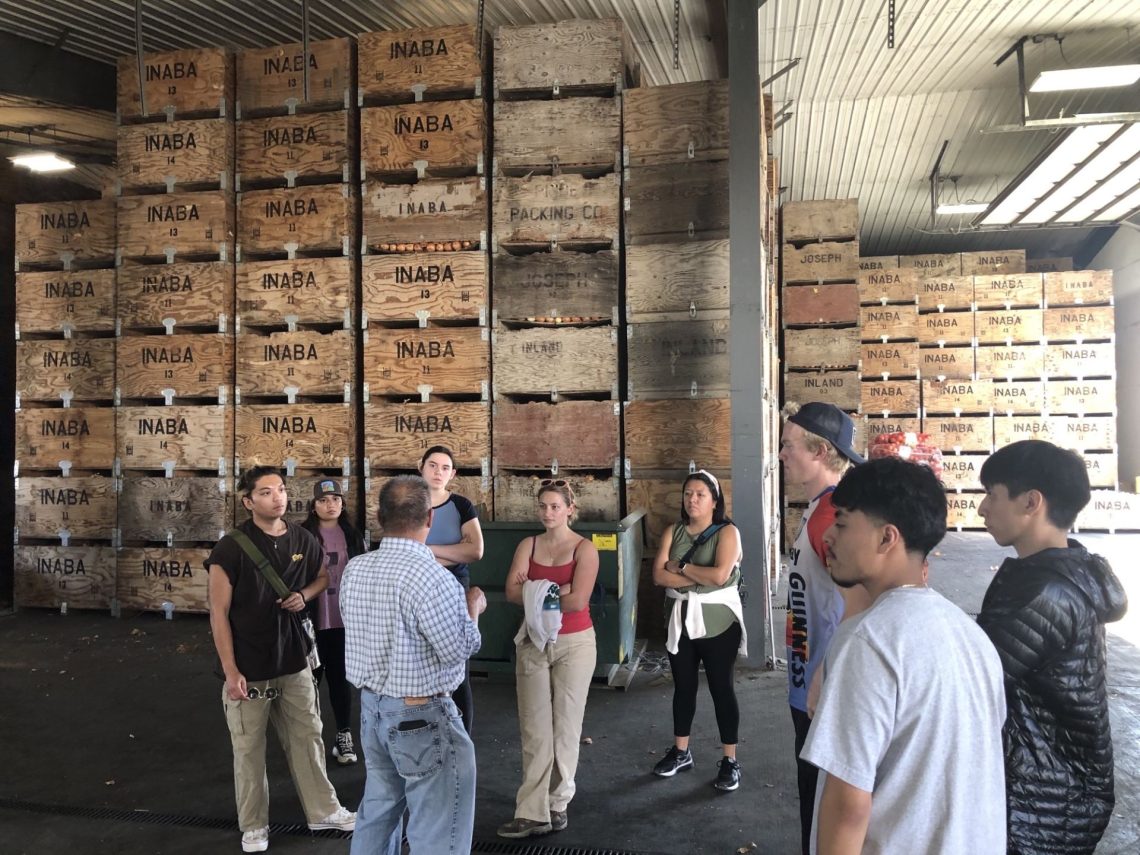
     Today we visited Inaba Farms and talked to Lon Inaba. His family has owned this farm for three generations, but now he is selling it to the Yakama Nation. This will be a big step for the farm and the indigenous people reclaiming the land. He touched briefly on how chain grocery stores negatively impact the ‘growers’ – also known as the farmers. If produce is too big, too small, scuffed, or misshaped, they get thrown away because grocery stores don’t want them. The chains’ selectivity and idolization of the “perfect” produce leads to an accumulation of food waste.

Rural Immersion participants listen to Lon Inaba while in one of the buildings storing produce like squash.

         We saw a perfectly good crate of green bell peppers all being donated to an organization because they didn’t fit the criteria of the superstores, which leads to growers having more cautions when picking and shipping produce. This gave us the ability to pick some ‘imperfect’ food of our own. We were able to pick our own bell peppers and squash to take back to the farm we are staying at.

  Mr. Inaba believes to help fix this system we need to make sure to support local farmers by buying from local farms. He referred to this as being a “selective consumer”. This means knowing where your produce comes from and knowing the impact your purchase has on the food system.

Filed Under: Rural, Rural 2022

Worldly Women in the Workforce

March 2, 2022 By Tyler

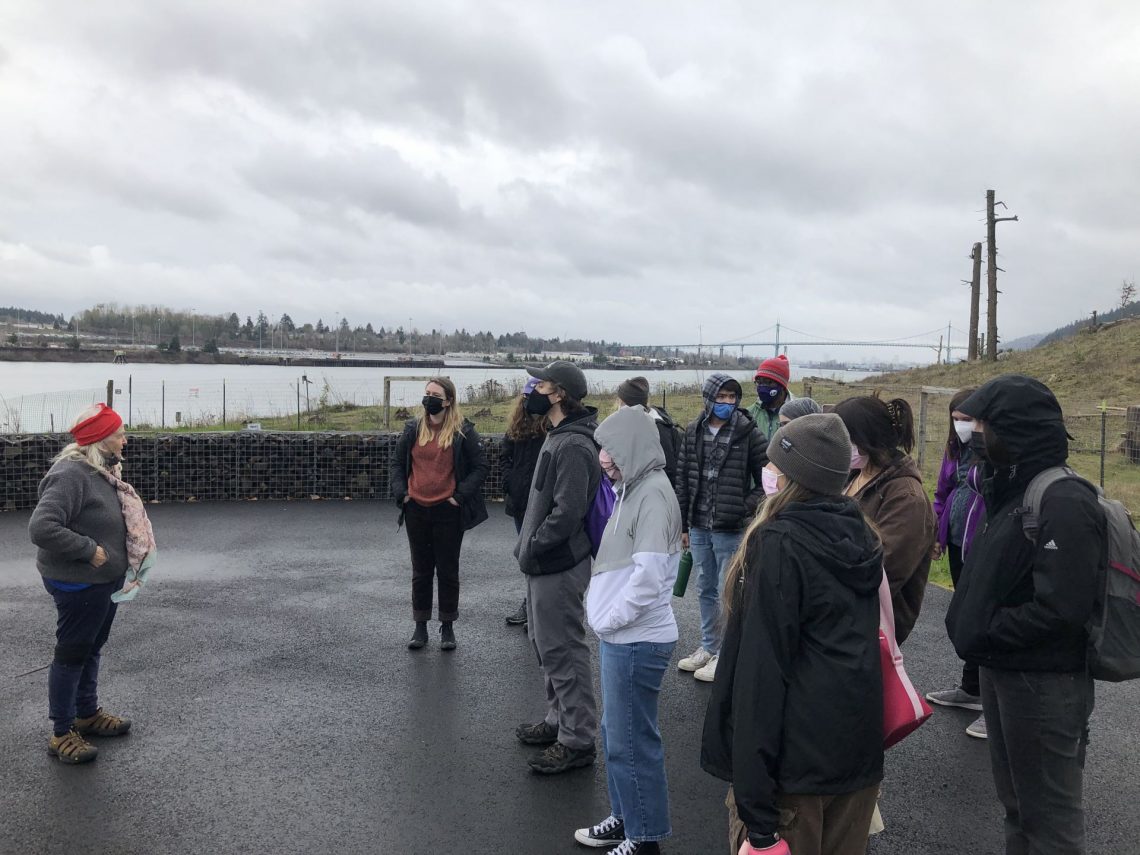
This morning we went on a walking tour around Northwest Portland. Roaming the industrial area between the Willamette River and Forest Park, Sarah Taylor taught us the history of the land. Focusing on this area alone, we learned about the intersectionality of air pollution, health, social justice, and racism. Since the Industrial Revolution, the people of this area – historically people of color – have been put at risk of health impacts related to air pollution from oil transport. Here, trains and trucks load and unload from Zenith Energy’s fuel storage facility. It was insane to learn how many tons of flammable crude oil were being stored next to the tree line of Forest Park. What made this storage location even more fascinating was that it was located on a fault line. If not moved, the next major earthquake will cause a massive oil spill and/or explosion.

Our group with tour guide, Sarah Taylor, with the Cathedral Bridge in the background.

This afternoon we planned to meet a few members of the Portland Harbor Community Coalition (PHCC) to learn about the superfund site – area of mass pollution — along the Willamette River. When we arrived at Cathedral Park, two women were waiting for us. By the time we finished introducing ourselves, there were a total of seven who came to meet with us from various organizations! As a senior and aspiring environmental activist, it was extremely powerful to hear from so many women in the environmental field. They explained the history of Superfunds as they were established under the Comprehensive Environmental Response, Compensation, and Liability Act that was created in 1980. Most pollution associated with these Superfund Sites resulted from World War II ship-making before any environmental protections were adopted. As a result, we are forced to play catch-up to remediate both historical and more recent sources of pollution.

Talking individually with the women from the Portland Bureau of Environmental Services, Oregon Department of Environmental Quality, and PHCC, I appreciated their excitement not just for their work but about helping us be able to join them in their efforts. Their enthusiasm made me excited to join the work force!

–By Julia Weinand

Filed Under: Environmental Justice

Small Efforts Lead to Great Contributions

March 7, 2020 By Tyler

 Reflection by Meg Bender and Brittany D’Souza

             It was our last full day on immersion and we spent our day today in the Columbia River Gorge. Mayor Arlene Burns and Peter from the Friends of the Gorge were our guides for the day. It started with a presentation, then they took us to Mosier. Mosier was the location of an oil car derailment in June of 2016. Luckily nobody was hurt but it opened their eyes to what could’ve been. This tragedy also became a focusing event for the community to become further engaged in climate activism. Mayor Burns taught us that small actions can have large positive outcomes. Her position as mayor is a volunteer position and she has devoted it to improving her community. Mosier has been represented in global conferences, including a gathering of mayors from major cities, such as Los Angeles and Houston, around the world in Chicago to commit their cities to the goals of the Paris Climate Agreement. While Mosier with a population of 430 doesn’t scream major city, Mayor Burns has taken the hand that they’ve been dealt to the world stage. Proving that no matter how small you believe your contribution may be, it adds to a global effort.

Walking beside the train tracks where the oil train derailed

              Later in the day, we took the time to get outside and explore the Gorge a bit more. We ended up on a hike at Horse Thief Butte, which provided amazing views of Mount Hood and the river below. As we rested after climbing up the Butte, we reflected on all the knowledge shared with us about the amazing body of water coursing below.

Hiking at Horsethief Butte with Mt. Hood in the background

              Finally, we ended our day by meeting with a group of activists from the local high school. The student activists testified before their city council and eventually approved the plan. This provided experience around the difficulties in getting policy approved and challenges they faced as young advocates. Overall, they provided us hope and reminded us of the fire many of us carried as younger adults. The passion that they have is evident and we were inspired to have the courage to advocate in any possible way going forward.

In gratitude,

Brittany and Meg

Filed Under: Environmental Justice, Environmental Justice 2020, Uncategorized

Getting to Know the River

March 6, 2020 By Tyler

Reflection by Cindy Garibay and Molly Grimshaw

             Today was our last morning in Portland. Although our wakeup time was the earliest so far, everyone was eager to get on the move. Over the past three days, we had heard from seven different organizations who shared their stories of environmental justice and advocacy in an urban setting. Although their perspectives were impactful, we felt as though there was a piece missing in the narrative. In search of this missing component, we traveled an hour east to Hood River, and could finally put a setting to the stories we had just learned about.

              We began our day with an introduction to the Colombia River Inter-Tribal Fish Commission (CRITFC). Their headquarters was located along the river, with gorgeous views of the Washington side of the gorge and the pristine water below. CRITFC is an organization that not only focuses on fish, but also community. They provide both technology and management to the four major tribal nations of the Columbia River: the Yakama, Warm Springs, Umatilla, and Nez Perce. The Executive Director of CRITC, Jaime Pinkham, emphasized the importance of recognizing the sovereignty of these nations, something we all tend to forget. This acknowledgement of their presence is directly connected to outsider activities in the river. Many of the livelihoods of the indigenous river peoples have been disrupted and destroyed by these activities, which in turn has been a direct threat to the core values of their culture. The construction of dams and railroads, as well as the seizing of native homelands, are some of the most impactful instances of these persisting problems. This was the perfect set-up for the rest of our day, where we continued to learn about the environmental and cultural impact of unwanted government intervention, as well as the deep connection the river has to the tribal nations.

              Continuing our journey, we drove along the river to some different river access sites used by the tribal citizens. We learned about their fishing systems and the role CRITCF has in the processing stage of the operation. Our first stop also had gorgeous views of the river and the gorge, which further contextualized the information communicated to us throughout the week. Several of us had not previously viewed the river as anything other than a body of water, but this quickly changed when we got an up-close view. Standing at the edge of the bluff presented a vast, breathtaking view of the land, but a closer look revealed the details often overlooked by the common passerby. Scattered alongside the riverside were several fishing platforms, exposing the historical and persisting reliance of the tribal nations on the Columbia River. It was an eye-opening, yet peaceful moment for our entire group, which helped us transition into our final leg of the day’s adventure.

              We arrived at the Celilo Village mid-afternoon. Jaime, who had been leading us on our jaunt around the Columbia River Gorge, introduced us to a community who had been living along the banks of the river for thousands of years. We were escorted into the village’s longhouse, their central meeting place for all important events. Inside, we met four generations of tribal citizens who shared the history of their society, as well as their individual testimonies about what life was like growing up removed from the modern world. Family, we learned, is the core of what they believe in. Their children are raised in the traditions of their ancestors, and it is expected of them to continue their way of life. When reflecting on this, our group became aware of the prevalence of individualism in American culture, and the stark contrast in ideologies that are taught to us by our society. However, for this tribal community, the preservation of their customs is crucial to their survival. Language also plays an important role in the safeguarding of their identity. The chief of Celilo Village explained to our group that there was so much more to what he was teaching us, but the lack of direct translation from their native language to English made it impossible to fully encapsulate its true meaning. With this in mind, we more clearly understood the significance of preserving their culture, and the dire consequences if it was lost. After listening intently for three hours, we were all feeling the effects of a long day, but one of the elder women, Gloria, sent us on our way with a piece of uplifting knowledge. She explained that, in her native language, there was no direct translation for the word “goodbye”. Instead, they part ways with a word meaning “I love you”. This was a simple but highly profound way to form a connection between us and them, and a really nice end to our long day. With our hearts full of knowledge and our bellies full of salmon, we went on our way, reflecting on what we had been taught, and our understanding of the role we play in this ongoing story.

                                           In community,

                                                          Cindy and Molly

Filed Under: Environmental Justice, Environmental Justice 2020

From the Columbia to the Capitol

March 6, 2020 By Tyler

Reflection by Molly Lowney and Trudi Timperman            

              This morning we met with Columbia Riverkeeper, an organization focused on the overall health of the Columbia River with the goal to maintain the wellbeing of the communities that depend on it. One point that was emphasized was viewing the river as a community member. By understanding the river as a living being and system, we can better understand its intersections in different areas of environmental justice. Through organizing, advocacy and litigation, Columbia Riverkeeper has been able to block several polluting fossil fuel industries from creating industrial areas along the banks of the river.

              We also learned about how salmon run numbers have drastically fallen over the past years because of rising river temperatures, hazardous waste pollution and dams blocking traditional migration routes. Salmon are the livelihood of Columbia River communities and ecosystems. They provide a healthy source of protein for rural and indigenous communities and are also a source of income for fishing communities. From an ecological perspective, salmon are important species in the ecosystem and are a food source for both sea lions and southern resident orca whales.

Columbia Riverkeeper also works specifically with the Latino community on environmental justice issues and education. They have a radio show called Conoce tu Columbia where they speak in both English and Spanish about environmentalism in communities of color. Here is the final thought that Columbia Riverkeeper left with us: The earth is our mother and the rivers are her veins.

              After finishing up with Columbia Riverkeeper, we hopped in the vans and headed down to Salem and the state of Oregon’s capitol building. Most of us had never been to the capitol building before, so we were filled with a sense of awe at the magnificence of the building itself. We immediately went inside to begin our meeting with Renew Oregon – a state-wide advocacy group campaigning to pass Senate Bill 1530 in the Senate. This bill (more commonly known as cap-and-trade or Clean Energy Jobs) would require large polluters in the state of Oregon to pay a tax if they exceed a certain carbon emissions limit. The money from this tax would then be reinvested back into the local economy to create jobs in the clean energy sector. This bill has been proposed in the Senate multiple times, and every time it has been met with harsh opposition. When we were at the capitol, the atmosphere was contentious because the Republicans had walked out, thus preventing the quorum necessary to vote on the bill. After Renew finished giving us the background on the bill and their campaign, we had the opportunity to meet with the state Senator for our district, Lew Frederick, who has been a large proponent for the bill and other environmental legislation. He immediately voiced his disappointment and frustration with the current situation. We asked him a couple of questions and by the end of our brief thirty-minute interaction, we were all incredibly inspired. He highlighted the importance of understanding an issue from both sides, which can only be achieved by including a diversity of perspectives. I think this was an important takeaway for us as individuals interested in environmental justice. As we have been learning from other organizations, it is easy to become blinded to certain aspects of the movement when we are only viewing it from a single perspective. By involving multiple voices, we can create a more robust story that actually addresses the root of the problem.

              Finally, we asked Senator Frederick how he remains hopeful in today’s often discouraging political climate. He told us his story of growing up in the South as a young black man, being tear-gassed as an eight-year-old, and desegregating his high school in Atlanta, Georgia. Despite the hardships he has faced, he remains hopeful because he has seen the bad times get better. He urged us to never stop learning, and educate ourselves on as many topics as we can to become as well-rounded and informed as possible so that we may truly have a significant impact in ameliorating problems we care about.

              We ended our day by joining a Jesuit Volunteer Corps Northwest (JVCNW) house for dinner. JVCNW is a service program centered around simple-living, community, spirituality, and environmental and social justice. The house we visited consisted of eight volunteers living together and working at various non-profits throughout Portland. Interestingly enough, one of the volunteers was our very own program manager’s little brother – Joe Wagner. The volunteers were all incredibly welcoming and eager to both share their experience with JVC and learn about our immersion so far. I was inspired by their commitment to simple-living, which went so far as rarely heating their house, not having wifi, and subsisting on a very limited stipend. This showed us what our lives might look like if we are one day forced to abide by stricter regulatory limits due to climate change. Overall, it was exciting to meet people our age so devoted to service.

Filed Under: Environmental Justice, Environmental Justice 2020

  • « Go to Previous Page
  • Go to page 1
  • Go to page 2
  • Go to page 3
  • Go to page 4
  • Interim pages omitted …
  • Go to page 6
  • Go to Next Page »

Primary Sidebar

  • Facebook
  • Instagram
  • Twitter

Contact Us

Moreau Center
St. Mary's Student Center, MSC 162
5000 N. Willamette Blvd.
Portland OR 97203

T: (503) 943-7132
E: moreaucenter@up.edu

Hours: 8:30am-4:30pm
Monday-Friday

Copyright © 2026 · News Pro with Full Header On Genesis Framework · WordPress · Log in