• Skip to main content

Portland

The University of Portland Magazine

  • About
    • Portland Magazine
    • Brian Doyle
    • Contact
  • Articles & Essays
  • Photo Galleries
  • Magazine Issues

Parker

The Angle of Mursey

May 15, 2016 By Parker

Many of the men were so badly wounded they were flown directly from the battlefield in Vietnam to the hospital, and the nurse would clean battlefield dirt from their wounds. The men were Marines. Many of the men had lost hands and feet and legs and arms. The men would ask the nurse to scratch their missing limbs and she would do so, her fingers scrabbling in the hollow air, and they would lean back pleased and grateful.
Nurse


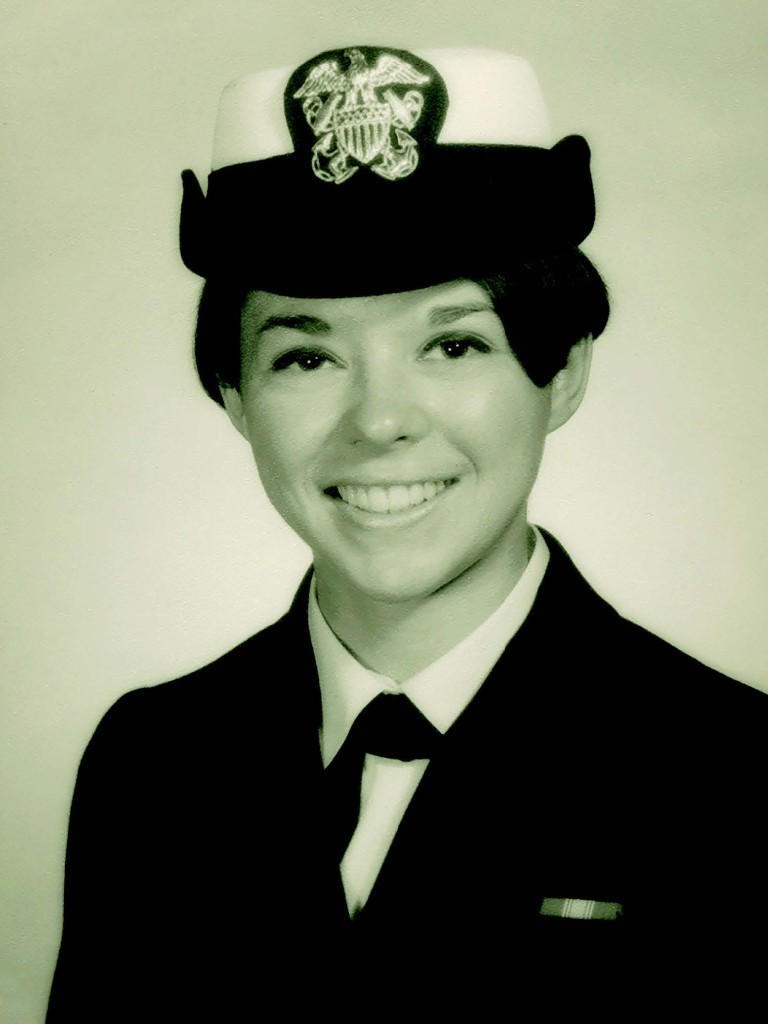
She was 22 years old. She had just graduated from the University of Portland with her nursing degree, and passed her nursing boards, and gone through Officers School, and earned her rank, and been assigned to the Naval Hospital. She is the beam ing child on the next page. Sometimes all 120 beds in the ward were filled and she would be the only nurse on night duty with a few Navy corpsmen as assistants.

Did they give you grief sometimes, you being the only woman, and so young?

No, she says, smiling but firm. I was their officer. They called me ma’am or they called me Miss Randles.

Did you ever break down and cry and despair at such carnage among such tall children?

There were days I sobbed, sure, she says, not smiling, but that was more fatigue than despair. The shifts were long. There were hard hours but they were proud men and I was proud of them and we were too busy to despair. I wanted to treat them like the strong, handsome Marines they were. You’re not just your arms and legs. You’re not just your injuries, your missing parts. People recover. People heal. People are people, not just parts. I was always fascinated by recovery. I loved working in stroke units and with amputees. I thought about being a surgeon but nursing seemed more fun, more intimate.

Infection was the great enemy, she continues. You get blown up, you’re in dirt, you’re easily infected —that’s the enemy. We watched like hawks for necrotic tissue. We fought temperatures all night long. The men were fitted with prosthetics and we would help them get used to their new parts. I heard a lot of swearing. Mostly I heard banter and byplay and jokes and humor and teasing. A lot of music. Not many visitors—none of the men were in their hometowns there. They got mail and cookies and blankets from home. There would be a celebration when a guy left for home.

They’d all go outside and see him off. Wheelchair guys would all roll outside too. It was pretty much one in and one out every day. A lot of guys came in during the Tet Offensive.

None of my men died, she says. Not one. We cared for maybe two thousand men in two years. I can still see most of their faces. I can still smell vinegar and bleach and infection. Infection has a sickly sweet smell. I got paid $300 a month. Sometimes my car ran out of gas because I was too tired to remember to fill the tank. We never talked politics. They did talk about where they had been, and where they’d been blown up, and about their buddies back in the war. Remember that these were volunteers, not draftees. They were proud of their service. They were proud that they didn’t let their buddies down. Part of them was still in the war: a bedpan fell off a bed with a crash, and they’d all dive for cover. They were heroes to me, she says. Heroes, do you understand? They were so brave, so tough, so cheerful, so enduring. They deserved respect, and I did my very best to deliver them respect.

She doesn’t say anything for a while and then she opens her scrapbook and shows me a letter. Summer, 1969. Handwritten, painstakingly, by the man at left, whose right hand and both legs are still in Vietnam.

“All Wounded Marines,” wrote the corporal, “dig Ward M, for here we have an Angle of Mursey. She has a Smile for you and me, and no wonder we are all Doing so well. Here is Truly Heaven’s Greatest Angle of Mursey, so Please Angle, never leave us, for we couldn’t live without you. You see, we built our whole World around your smile, Miss Randles, and We all love You.”

Right about here a normal magazine article would go on to explain how Ensign Susan Randles was going to rotate to a hospital ship, but instead she fell in love (with the officer who ran the brig!) and got married, and earned her doctorate, and returned to The Bluff to be a beloved professor and dean, but let’s not go there today. Let’s stop right here with Susan Randles Moscato holding her friend Tony’s letter in her hand, and her hand is shaking a little, and no one says anything for a while, and then she says, quietly, fiercely, heroes, do you understand?

Yes. Yes, we do.
Filed Under: Essays

Unconditional Surrender

May 15, 2016 By Parker

The routines and habits of celebrated writers provide a subject of perpetual fascination. Readers hunger for the preferably wretched details of artistic creation. If idiosyncrasy is good (John Cheever typing in his underwear, Vladimir Nabokov standing up to shuffle a deck of index cards into Lolita, Truman Capote lying down with coffee and a cigarette), stamina, duress, and deprivation are better (Jean-Paul Marat scratching out revolution atop a box beside the bathtub in which he cooled his scorching psoriasis, the visually impaired James Joyce wearing a white jacket better to illuminate the page, Mavis Gallant pawning her typewriter and starving in Madrid while her agent hoarded her New Yorker checks).

robert


Perhaps what we admire most in writers is their ability to vanquish the noise of life—from the low hum of the quotidian to the high whine of crisis—by achieving a state of deep concentration that seals them, in the most extreme cases from physical or emotional pain, but more often simply from the insistent, contrary rhythms of responsibility. Consider the case of the prolific novelist Anthony Trollope, who arose at 5:30 every morning to write steadily for three hours before breakfasting and heading off to a day’s work as a postal surveyor.

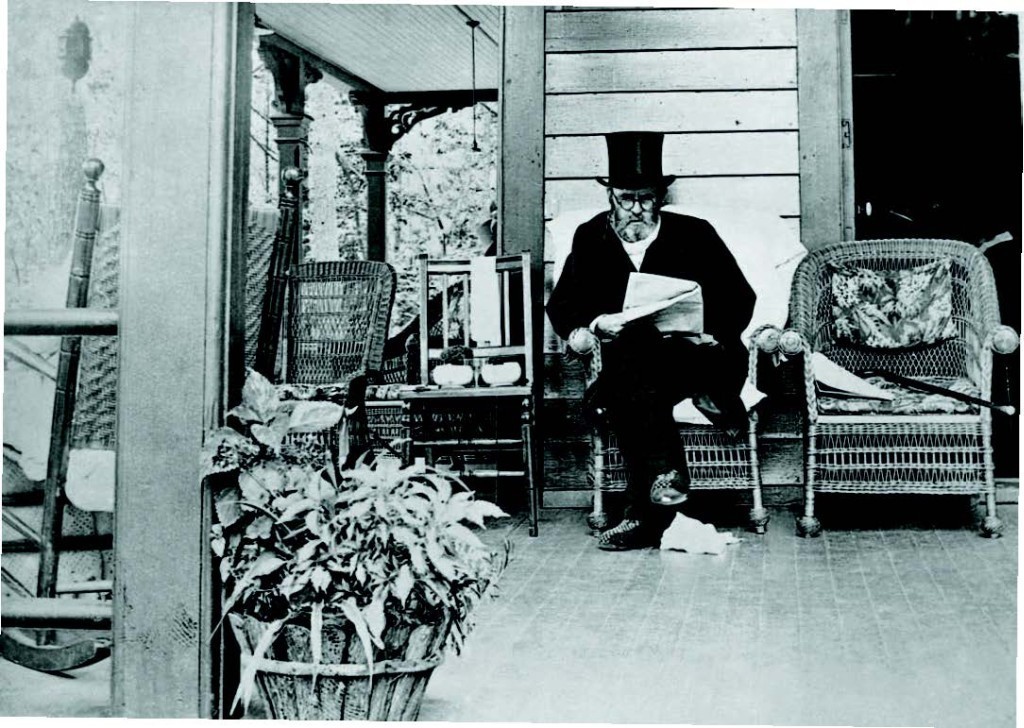
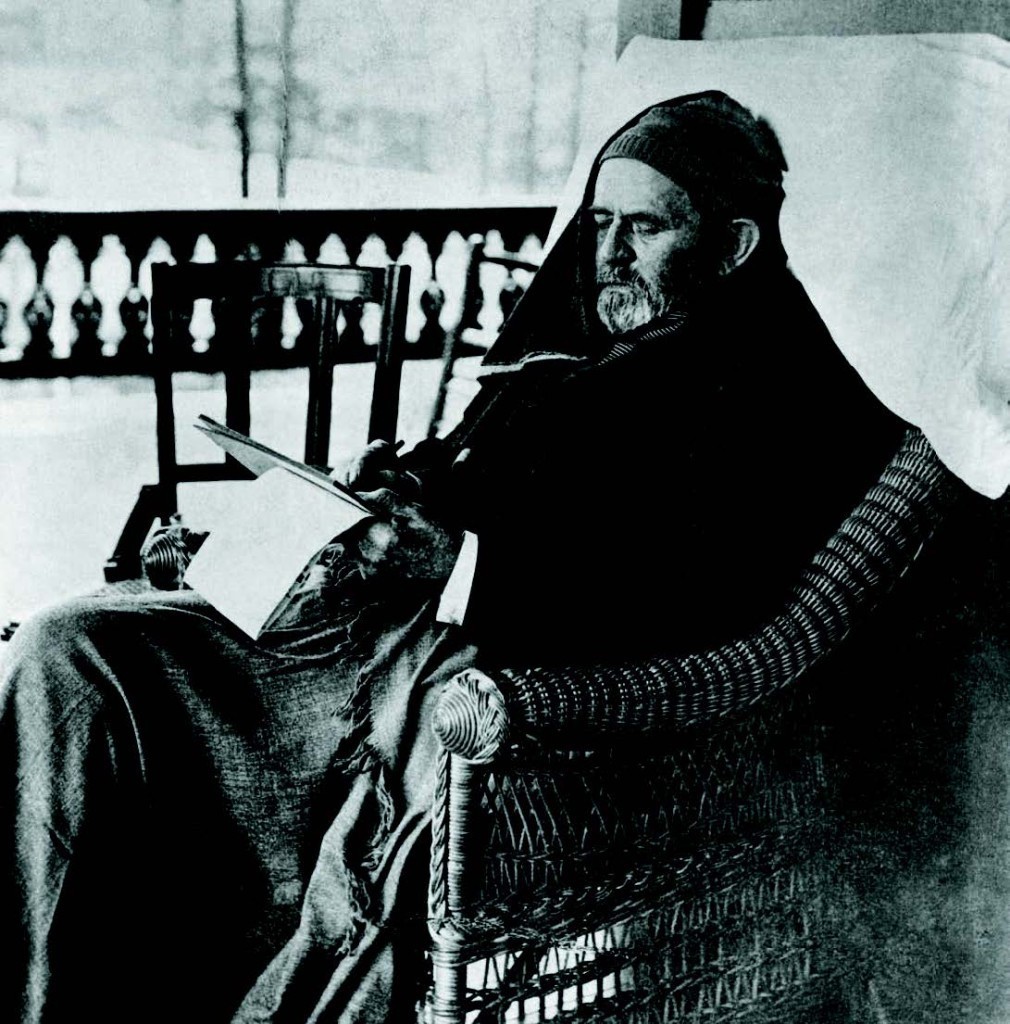
A world that celebrates the hyperattention technology abets tends to regard the sort of deep attention still required for not just the writing life and but all those lives that demand the solving of difficult problems as rather antiquated and unfashionable. Despite the warnings of cognitive scientists about important limitations to our multitasking capacity, and about the overconfidence multitasking breeds, our commitment to it seems only to grow. Perhaps there is no better test of deep attention than the ability to write while the bombs are falling; and the most persuasive exemplar of such determined focus I know is Ulysses S. Grant.

Grant earned his nickname— “Unconditional Surrender” Grant— from his refusal to offer any concessions to the Confederates at Tennessee’s Fort Donelson, which he attacked in 1862. “No terms,” Grant informed his adversary and old acquaintance, Simon Bolivar Buckner, “except an unconditional and immediate surrender can be accepted. I propose to move immediately upon your works.” Unconditional surrendermight equally well describe Grant’s approach to writing, an enterprise to which he gave himself over with single-minded focus. Horace Porter, a member of the general’s staff, offers a portrait of his commander at work: His powers of concentration … were often shown by the circumstances under which he wrote. Nothing that went on around him, upon the field or in his quarters, could distract his attention or interrupt him. Sometimes, when his tent was filled with officers, talking and laughing at the top of their voices, he would turn to his table and write the most important communications. There would then be an immediate “Hush!” and abundant excuses offered by the company; but he always insisted upon the conversation going on, and after a while his officers came … to learn that noise was apparently The routines and habits of celebrated writers provide a subject of perpetual fascination. Readers hunger for the preferably wretched details of artistic creation. If idiosyncrasy is good (John Cheever typing in his underwear, Vladimir Nabokov standing up to shuffle a deck of index cards into Lolita, Truman Capote lying down with coffee and a cigarette), stamina, duress, and deprivation are better (Jean-Paul Marat scratching out revolution atop a box beside the bathtub in which he cooled his scorching psoriasis, the visually impaired James Joyce wearing a white jacket better to illuminate the page, Mavis Gallant pawning her typewriter and starving in Madrid while her agent hoarded her New Yorker checks). Perhaps what we admire most in writers is their ability to vanquish the noise of life—from the low hum of the quotidian to the high whine of crisis—by achieving a state of deep concentration that seals them, in the most extreme cases from physical or emotional pain, but more often simply from the insistent, contrary rhythms of responsibility. Consider the case of the prolific novelist Anthony Trollope, who arose at 5:30 every morning to write steadily for three hours before breakfasting and heading off to a day’s work as a postal surveyor. A world that celebrates the hyperattention technology abets tends to regard the sort of deep attention still required for not just the writing life and but all those lives that demand the solving of difficult problems as rather antiquated and unfashionable. Despite the warnings of cognitive scientists about important limitations to our multitasking capacity, and about the overconfidence multitasking breeds, our commitment to it seems only to grow. Perhaps there is no better test of deep attention than the ability to write while the bombs are falling; and the most persuasive exemplar of such determined focus I know is Ulysses S. Grant. Grant earned his nickname— “Unconditional Surrender” Grant— from his refusal to offer any concessions to the Confederates at Tennessee’s Fort Donelson, which he attacked in 1862. “No terms,” Grant informed his adversary and old acquaintance, Simon Bolivar Buckner, “except an unconditional and immediate surrender can be accepted. I propose to move immediately upon your works.” Unconditional surrendermight equally well describe Grant’s approach to writing, an enterprise to which he gave himself over with single-minded focus. Horace Porter, a member of the general’s staff, offers a portrait of his commander at work:

His powers of concentration … were often shown by the circumstances under which he wrote. Nothing that went on around him, upon the field or in his quarters, could distract his attention or interrupt him. Sometimes, when his tent was filled with officers, talking and laughing at the top of their voices, he would turn to his table and write the most important communications. There would then be an immediate “Hush!” and abundant excuses offered by the company; but he always insisted upon the conversation going on, and after a while his officers came … to learn that noise was apparently a stimulus rather than a check to his flow of ideas, and to realize that nothing sort of a general attack along the whole line could divert his thoughts from the subject upon which his mind was concentrated.

On the road Grant never liked to retrace his steps. When lost, he would carry right on rather than turning around. He seemed to have had the same superstition about his prose, which he crafted, as Porter documents, with relentless efficiency:

His work was performed swiftly and uninterruptedly, but without any marked display of nervous energy. His thoughts flowed as freely from his mind as the ink from his pen; he was never at a loss for an expression, and seldom interlined a word or made a material correction. He sat with his head bent low over the table, and when he had occasion to step to another table or desk to get a paper he wanted, he would glide rapidly across the room without straightening him-self, and return to his seat with his body still bent over at about the same angle at which he had been sitting when he left his chair.

Fastidious about language, Grant was indifferent to tools and surroundings alike. Nothing could distract him. In the field “he wrote with the first pen he happened to pick up,” sharp or blunt, “good or bad” His desk “was always in a delirious state of confusion” —a “literary geography,” Porter tells us, that baffled everyone except Grant, who could find a document he wanted “even in the dark.” The unshakeable concentration that Grant exhibited in the field also enabled him to complete his memoirs as he was dying of throat cancer two decades later, all the while convinced that each word he wrote hammered “another nail” in his coffin. The style of the memoirs, like that of the wartime writings, is distinguished by economy and precision.

Our current discourse about war veers from euphemism—kinetic operations, persistent low-intensity conflict, hearts and minds—to a deeply romanticized, unreflective rhetoric about heroes and values, to the equally and paradoxically romantic language of knowingness, cynicism, and disaffection inherited from pop-culture depictions of Vietnam (“Apocalypse Now speak,” one might call this last category). It is all or nothing; there is no room for ambiguity.

Caught between gauzy nostalgia for a “good war” and the current realities of a dubious one, today’s discussions are too often muddied by a reluctance to acknowledge that the deaths of good people in bankrupt causes do nothing to ameliorate those causes, or that armies serving just ends comprise soldiers with a wild variety of motives. Americans seem constitutionally incapable of accepting that even a “good war” is never fought for a single good cause alone nor ever won without brutal methods.

Grant fought in two wars, the Mexican War and the Civil War. The latter he believed a war of principle, the former “one of the most unjust ever waged by a stronger against a weaker nation.” But he never allowed the fact that brave men died in Mexico to distort his opinion of its politics, nor did he permit his belief in the cause of union to gild the waste of human life that secured it. More than a century has passed since Grant’s death, and we are at war again, or still. His writing reveals another way to talk about war.

Robert2


To his wife on his first battle:

There is no great sport in having bullets flying about one in evry direction but I find they have much less horror when among them than when in anticipation. menced with such vengence I am in hopes my Dear Julia that we will soon be able to end it.

On his second:

[T]he battle of Resaca de la Palma would have been won, just as it was, if I had not been there.

On his first mission in command during the Civil War:

I would have given anything then to have been back in Illinois, but I had not the moral courage to call a halt and consider what to do; I kept right on.

On the character of Zachary Taylor:

No soldier could face either danger or responsibility more calmly than he. These are qualities more rarely found than genius or physical courage.

On the surrender of Robert E. Lee:

That much talked of surrendering of Lee’s sword and my handing it back, this and much more that has been said about it is the purest romance.

Perhaps Grant’s philosophy of composition is best expressed in his description of the letter he sent to Lee accepting the latter’s surrender: “When I put my pen to the paper I did not know the first word that I should make use of in writing the terms. I only knew what was in my mind, and I wished to express it clearly, so that there could be no mistaking it.” Grant loves that final phrase. He repeats it several times in theMemoirs to describe both his own prose style and that of his hero Taylor.

A friend likes to tease me that there is no conversation into which I cannot smuggle a mention of Grant. When it happens—when my mind works itself around from an apparently unrelated subject to the Civil War general—she’ll say, “Ah, Grant!” as if he’s a mutual acquaintance she hasn’t heard news of in a while: “There he is. It was only a matter of time.” She’s right, of course: Grant is my idée fixe. (How many people can say that?) I’ll drop his name at what may seem the most unlikely moment. It just seems to me the right connection to make in so many circumstances, especially in recent years, when we have taken to talking about war in ways that differ profoundly from the clear-sighted, plain-speaking mode that was second nature to him.

Not infrequently, on a Sunday afternoon, as the church bells sound through Morningside Heights, I make my way uptown for a visit to the General Grant National Memorial, a.k.a. “Grant’s Tomb.” Dedicated in 1897, this massive granite pile was modeled after Mausolus’s at Hali carnassus. Groucho Marx long ago turned the tomb into a joke by asking who was buried there, and the memorial’s neglect has periodically provoked Grant’s relatives to threaten to remove his remains to Ohio. On a recent trip I overheard one tourist say to another: “I didn’t even know we had a president named Grant, did you?” When I visit, I think chiefly of Grant the writer rather than of the president or even the general. He would have found the place far too quiet: no bombs falling, nothing more than the occasional whispered conversation to stimulate his deep attention

Filed Under: Essays

Under Water

April 15, 2015 By Parker

I was an impatient child who disliked obstructions: traffic jams, clogged bathtub drains, catsup bottles you had to bang. I liked to drop twigs into the stream that ran through our backyard and watch them float downstream, coaxed around rocks and branches by the distant pull of the ocean. If they hit a snag, I freed them.

water


When I was eighteen, rushing through life as fast as I could, I was a student on a month-long wilderness program in western Wyoming. On the third day of the course we went canoeing on the Green River, a tributary of the Colorado that begins in the glaciers of the Wind River range that flows south across the sagebrush plains. Swollen by warm-weather runoff from an unusually deep snowpack, the Green was higher and swifter that month—June of 1972— than it had been in forty years. A river at flood stage can have strange currents. There is not enough room in the channel for the water to move downstream in an orderly fashion, so it collides with itself and forms whirlpools and boils and souse-holes. Our instructors decided to stick to their itinerary nevertheless, but they put in at a relatively easy section of the Green, one that the flood had merely upgraded, in the international system of whitewater classification, from Class I to Class II. There are six levels of difficulty, and Class II was not an unreasonable challenge for novice paddlers.

The Green River did not seem dangerous to me. It seemed magnificently unobstructed. Impediments to progress—the rocks and stranded trees that under normal conditions would protrude above the surface— were mostly submerged. The river carried our aluminum canoe high and lightly, like a child on a pair of broad shoulders. We could rest our paddles on the gunwales and let the water do our work. The sun was bright and hot. Every few minutes I dipped my bandanna in the river, draped it over my head, and let an ounce or two of melted glacier run down my neck.

I was in the bow of the third canoe. We rounded a bend and saw, fifty feet ahead, a standing wave in the wake of a large black boulder. The students in the lead canoe were attempting to avoid the boulder by back-ferrying, slipping crabwise across the current by angling their boat diagonally and stroking backward. Done right, back-ferrying allows paddlers to hover midstream and carefully plan their course instead of surrendering to the water’s impetuous pace. But if they lean upstream— a natural inclination, as few people choose to lean toward the difficulties that lie ahead—the current can overflow the lowered gunwale and flip the boat. And that is what happened to the lead canoe.

I wasn’t worried when I saw it go over. Knowing that we might capsize in the fast water, our instructors had arranged to have our gear trucked to our next campsite. The packs were safe. The water was little more than waist-deep, and the paddlers were both wearing life jackets. They would be fine. One was already scrambling onto the right-hand bank.

But where was the second paddler? Gary, a local boy from Rawlins a year or two younger than I, seemed to be hung up on something. He was standing at a strange angle in the middle of the river, just downstream from the boulder. Gary was the only student on the course who had not brought sneakers, and one of his mountaineering boots had become wedged between two rocks. The instructors would come around the bend in a moment and pluck him out, like a twig from a snag.

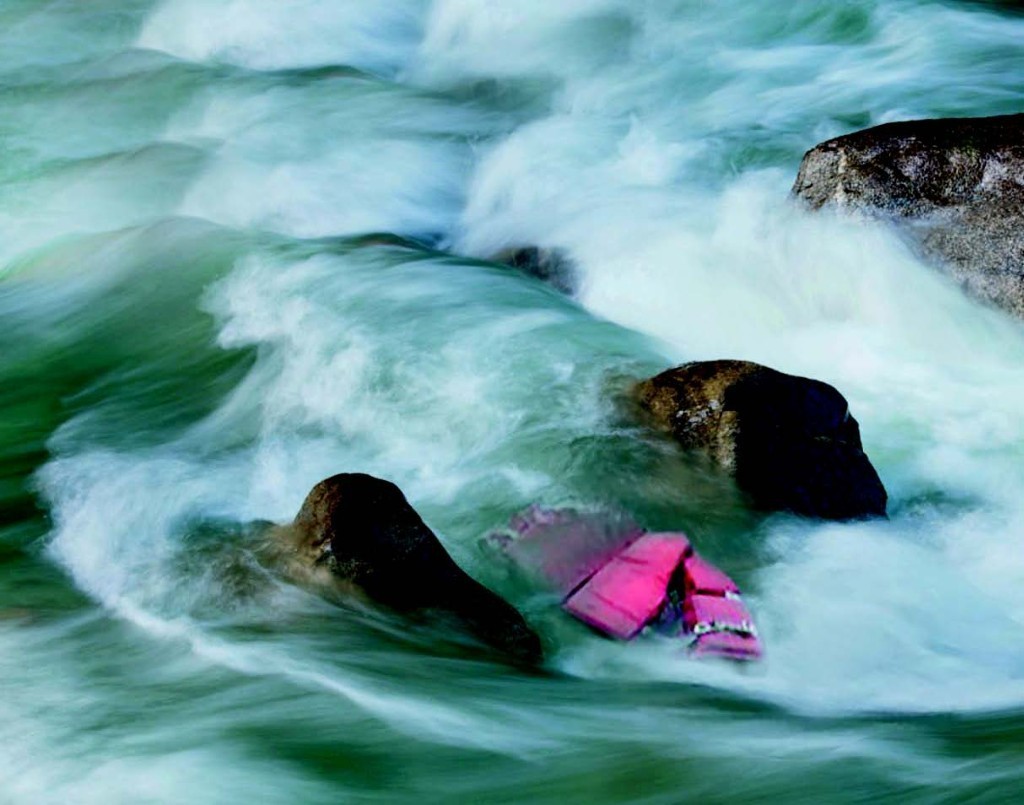
But they didn’t come. The second canoe pulled over to the bank and ours followed. Thirty seconds passed, maybe a minute. Then we saw the standing wave bend Gary’s body for- ward at the waist, push his face underwater, stretch his arms in front of him, and slip his orange life jacket off his shoulders. The life jacket lingered for a moment at his wrists before it floated downstream, its long white straps twisting in the current. His shirtless torso was pale and undulating, and it changed shape as hills and valleys of water flowed over him, altering the curve of the liquid lens through which we watched him. I thought: He looks like the flayed skin of St. Bartholomew in the Sistine Chapel. As soon as I had the thought, I knew that it was dishonorable. To think about anything outside the moment, outside Gary, was a crime of inattention. I swallowed a small, sour piece of self-knowledge: I was the sort of person who, instead of weeping or shouting or praying during a crisis, thought about something from a textbook (H. W. Janson’s History of Art, page 360).

Once the flayed man had come, I could not stop the stream of images: Gary looked like a piece of seaweed. Gary looked like a waving handkerchief, Gary looked like a hula dancer. Each simile was a way to avoid thinking about what Gary was, a drowning boy. To remember these things is dishonorable, too, for I have long since forgotten Gary’s last name and the color of his hair and the sound of his voice.

I do not remember a single word that anyone said. Somehow we got into one of the canoes, all five of us and tried to ferry the twenty feet or so to the middle of the river. The current was so strong, and we were so incompetent, that we never even got close. Then we tried it on foot, linking arms to form a chain. The water was so cold that it stung. And it was noisy, not the roar and crash of whitewater but a groan, a terrible bass grumble, from the stones that were rolling and leaping down the riverbed. When we got close to Gary, we couldn’t see him. All we could see was the reflection of the sky. A couple of times, groping blindly, one of us touched him, but he was slippery as soap. Then our knees buckled, and our elbows unlocked, and we rolled downstream, like the stones. The river’s rocky load, moving invisibly beneath its smooth surface, pounded and scraped us. Eventually the current heaved us, blue-lipped and panting, onto the bank. In that other world above the water, the only sounds were the buzzing of bees and flies. Our wet sneakers kicked up red dust. The air smelled of sage and rabbitbrush and sunbaked earth.

We tried again and again, back and forth between the worlds. Wet, dry, cold, hot, turbulent, still. At first I assumed that we would save him. He would lie on the bank and the sun would warm him while we administered mouth-to-mouth resuscitation. If we couldn’t get him out, we would hold him upright in the river; maybe he could still breathe. But the Green River was flowing at nearly three thousand cubic feet— about ninety tons—per second. At that rate, water can wrap a canoe around a boulder like tinfoil. Water can uproot a tree. Water can squeeze the air out of a boy’s lungs, undo knots, drag off a life jacket, lever a boot so tightly into the riverbed that even if we had had ropes—the ropes that were in the packs that were in the trucks— we never could have budged him.

We kept going in, not because we had any hope of saving Gary after the first ten minutes but because we needed to save face. It would have been humiliating if the instructors had come around the bend and found us sitting in the sagebrush, a docile row of five with no hypothermia and no skinned knees. Eventually, they did come. The boats had been delayed because one of them had nearly capsized, and the instructors had made the students stop and practice backferrying until they learned not to lean upstream. Even though Gary had already drowned, the instructors did all the same things we had done, more competently but no more effectively, because they, too, would have been humiliated if they hadn’t skinned their knees. Men in wetsuits, belayed with ropes, pried the body out the next morning.

Twenty-seven years have passed. My life seems too fast now, so obstructions bother me less than they once did. I am no longer in a hurry to see what is around the next bend. I find myself wanting to back-ferry, to hover midstream, suspended. If I could do that, I might avoid many things: harsh words, foolish decisions, moments of inattention, regrets that wash over me, like water.

Filed Under: Essays

Francis

April 15, 2015 By Parker

It’s pouring rain. He wakes up very early, as usual. Today is March 12; it’s four o’clock in the morning and still dark outside. Kneeling with his eyes closed, concentrating, he prays silently. He asks Saint Joseph and Saint Thérèse of Lisieux to enlighten him. He asks God to forgive him his sins. He asks Jesus to allow him to be his instrument.

It’s a special day. This afternoon the conclave that is to elect a successor to Pope Benedict XVI is to start. And he is one of the 115 electors who will be locked in the Sistine Chapel to carry out this mission.

It’s cold. From his big room in the Casa Internazionale del Clero Paolo VI, a Vatican guesthouse for priests, on Via della Scrofa, where he usually stays when he is in Rome, he can hear the rain falling on the cobblestones. The people here know him; he has been here several times during the past ten years, and they always book the same room for him, No. 203.

Although he doesn’t like coming to the Vatican—where one risks losing one’s faith with all that intrigue, pomp, and circumstance—he feels at ease in this room, with its high ceilings and period furniture and damask upholstery.

He’s an organized man, careful, methodical—he “doesn’t take a step without thinking about it first,” as the people who know him say—and the night before he had prepared a small suitcase. He won’t take much with him to the Casa Santa Marta, the Vatican guesthouse where he is to lodge with the other cardinals for the duration of the conclave. A conclave that will not last long, he hopes. As in 2005, when he took part in the election to choose John Paul II’s successor, he is convinced that a long election, one lasting more than two days, would give the impression of a divided Church. That is why, at the 2005 conclave, when he happened to be the second most-voted-for Cardinal after Joseph Ratzinger, he took a step back, so as not to impede Ratzinger’s election. After John Paul II’s nearly 27 years as pontiff, it was not easy to replace a giant like him, charismatic until the end. The candidacy of Ratzinger, the former right-hand man of the pope, had been the easiest card to play.

That time, the conclave had been not only a new experience—the first time in Jorge Bergoglio’s life that he had entered the Sistine Chapel to elect the successor of St. Peter—but also a somewhat traumatic one. A conclave is a very secret event, but messages, emotions, and even information always leak out, and the cardinals who had taken part in the 2005 election had seen, during the first vote count, Cardinal Jorge Mario Bergoglio, Archbishop of Buenos Aires, age sixty-eight at the time, nearly distraught as he gradually gained vote after vote. He had even surpassed Cardinal Carlo Maria Martini, like hima Jesuit and very papabile, the candidate of the progressives but no longer a possibility because of illness.

Padre Jorge, as he prefers being called, finishes putting away his things in his room on Via della Scrofa. Eight years have passed since that first conclave, when, thanks be to God, “he had got off,” as he said.

Because of the rain and his suitcase, he won’t be able to walk to the Vatican, as he usually does when in Rome. It’s a walk that relaxes him; as he walks, he prays and admires the beautiful little alleys of the Eternal City, passing through Via dei Coronari with its antique shops. Further on he never fails to stop and pray to the Madonna dell’Archetto in an old passageway that leads to the Via dell’Arco dei Banchi. Here this splendid fresco of the Virgin is painted on the wall, a special image among the thousands to be found in Rome. After praying there, Padre Jorge, like any passerby (he doesn’t like showing off his scarlet cardinal’s robes, which he hides under a black coat) crosses the Vittorio Emanuele II bridge over the Tiber River and presses on toward the Vatican.

He has taken this walk many times, peaceably, alone, because, even though he has thousands of friends, he is essentially a solitary man. Every step thinking and praying, thinking and praying, something he never stops doing.

He goes down to the reception desk. There he greets the people behind the counter with a shy smile. It’s a quarter to seven in the morning. “Good luck, Your Eminence,” they wish him very courteously, escorting him to his taxi with an umbrella. “See you soon,” the Argentine Cardinal salutes them.

His room at the Casa di Santa Marta is 207. It was assigned to him by lot the day before, during the last general congregation of cardinals before the conclave. It is a small, simple room, furnished only with what is strictly necessary—a bed, a chest of drawers, a desk, a crucifix on the wall, a bathroom— the way he likes it. It’s eight o’- clock in the morning. Although strictly speaking the seclusion cum clave (with a key) has not yet begun, isolation has already started. No more phone calls, no more reading of the daily papers, no more contact with the outside world—only with the other 114 cardinals from the five continents, who have the tremendous responsibility of electing the new pope at a truly turbulent time in the history of the Catholic Church.

As laid down by ancient ritual, the cardinals move in procession from the Pauline Chapel to the Sistine Chapel. With their scarlet vestments, in an atmosphere of great solemnity, they advance singing “Veni Creator Spiritus,” the hymn that invokes the help of the Holy Spirit for the crucial election. They take their places behind the long tables under the awesome images of Michelangelo’s Last Judgment. And then, one by one, readinga Latin text, their right hands resting on the Gospels placed on a lectern in the middle of the chapel, they swear to maintain absolute secrecy with respect to everything regarding the election of the pope.

At 34 minutes past five, the master of pontifical liturgical ceremonies, Monsignor Guido Marini, announces in an almost shy voice the extra omnes —“everyone out”—which decrees the departure from the Sistine Chapel of everybody who is not taking part in this most secret election. Under the frescoes the silence is interrupted by the sound of the pens now touching the elegant sheet of paper that every cardinal has in front of him. For the first time, the 115 cardinals write on their sheets of paper the name of the person they believe to be the right one to succeed Benedict XVI. They write on the line beneath the words: Eligo in Summum Pontificem (“I elect as Supreme Pontiff ”).

As the Cardinal scrutineer reads out, one by one, the written names, expectation in the Sistine Chapel is overwhelming. The acoustics are not good, but as he hears his first and last name over and over again, Jorge Mario Bergoglio—serious, his eyes attentive —begins to realize that the intuition he has never taken seriously is being fulfilled. It is true; he is in danger of being elected pope.

7:41 in the evening. From the chimney of the Sistine Chapel— fitful spurts of black smoke. None of the 115 cardinalelectors has obtained the seventyseven required votes, equal to a twothirds majority, to be elected successor to Benedict XVI and the 266th head of the Catholic Church. More than ten names came up in this scattered first round of voting. Bergoglio is second only to the Italian Cardinal Angelo Scola. Bergoglio: 25 to 30 votes. Perceived as one of the great intellectuals of the Catholic Church, Scola is the son of a socialist truck driver, a member of the Com – munion and Liberation movement (a lay Catholic movement founded by an Italian priest, don Luigi Giussani after the Second Vatican Council), and has been friends with Joseph Ratzinger since 1971, when they helped start the high-profile theological journal Communio. He was formerly the rector of the Pontifical Lateran University and in 2004 started the Oasis International Foundation, which seeks to foster understanding between Christians and Muslims. He was the patriarch of Venice for several years before Benedict XVI designated him Archbishop of Milan, the largest diocese in Europe. This was a signal, experts said, that Scola was Benedict’s chosen successor.

I interviewed Scola once, at the spectacular Patriarchal Palace in Venice, next to St. Mark’s Basilica, and he said “Anyone who has inside experience of a conclave, will realize that predictions melt into thin air when you’re actually in the room. It’s true that the pope is chosen by the Holy Spirit. I really think that the Holy Spirit guides the Church and puts human pettiness—I mean the cordate and controcordate [ factions and counterfactions]—to good use. At the end of the day, the Church’s wisdom stretches back two thousand years. So many factors have to come together for a pope to be elected that no one can appreciate them all in advance. That’s where the Holy Spirit steps in and makes the choice.”

Two other firm favorites, the Brazilian Odilo Pedro Scherer and the Canadian Marc Ouellet, also reap votes, but so does the American Cardinal Seán O’Malley. The atmosphere is tense. The cardinals acting as scrutineers are sitting at a table in front of the altar. After the vote, the first thing they do is shuffle the ballots. They go on to count them, to check if there are as many votes as cardinals present. Then the first scrutineer draws a ballot, unfolds it, looks at the name written on it, and passes it to the second scrutineer. That Cardinal verifies the name and passes it to the third, who reads it aloud so that the cardinal-electors can note down the results themselves.

When all the ballots have been counted, the scrutineers add up the votes for each candidate and make note of them on a separate piece of paper. As the last of the scrutineers reads each ballot, he makes a small hole in each by punching through the word Eligo witha needle and threads them together to keep them safe. When all the names have been read out, the two ends of the thread are tied together, and the ballots, thus joined, are placed in an empty container on one side of the table. This is followed by the third and final stage, also known as post-scrutiny, which includes recounting the votes, checking them, and burning the ballots. The scrutineers tally the votes for each candidate, and if no candidate has reached a twothirds majority, there is no new pope. After being checked, all the ballots are burned by the scrutineers. Two furnaces are used: one for the fire and the other for the chemicals that are used to color the smoke black or white, depending on the result. Some of the smoke during the 2005 conclave was a confusing grayish color, but this time they use an electronic cartridge containing five nontoxic chemicals, harmless to both Michelangelo’s frescoes and the cardinals themselves, while leaving no doubt as to the outcome.

That first count is the only one held that afternoon. Once the first vote is over, the 115 cardinals say vespers.

On Wednesday, March 13, the cardinals celebrate Mass in the Pauline Chapel. Half an hour later the second vote begins. The cardinals write the names of their chosen candidates on their ballots before getting up from their tables in the order assigned to them in the College of Cardinals. Catching one another’s eyes, ballots in hand, they make their way toward a ballot box standing opposite the altar, beneath the Last Judgment. The suspense is enormous.

After two counts, at 11:39 a.m., black smoke billows from the chimney for the second time. No one has reached the magic number of 77 votes. Bergoglio, however, has taken the lead. In both the second and third ballots of voting that morning, he has received more votes than any of the other papabili—more than fifty in the third ballot. It’s clear that Scola is no longer a likely candidate. Nor are the chances picking up for the Canadian Ouellet, the American O’Malley, or the Brazilian Scherer, whom Vatican insiders indicated was the favorite of the anti-reform block.

The fourth round of voting begins at 4:50 p.m. Bergoglio remembers a friend reminding him of John Paul II’s Universi Dominici Gregis, which addresses the vacancy of the Apostolic See and the election of a new Roman pontiff: “I also ask the one who is elected not to refuse, for fear of its weight, the office to which he has been called, but to submit humbly to the design of the divine will. God who imposes the burden will sustain him with his hand, so that he will be able to bear it. In conferring the heavy task upon him, God will also help him to accomplish it and, in giving him the dignity, he will grant him the strength not to be overwhelmed by the weight of his office.”

The first man to embrace Padre Jorge when his vote count goes over 77 is the friend sitting next to him, Brazilian Cardinal Cláudio Hummes, who whispers Don’t forget the poor.

As required by ritual, Cardinal Giovanni Battista Re asks him: “Do you accept your canonical election as Supreme Pontiff?”

“I am a great sinner, but trusting in themercy and patience ofGod, with suffering, I accept,” Padre Jorge replies. “What name do you take?”

“Francis.”

The acoustics in the Sistine Chapel are not very good. Some cardinals have not heard the name. “Did he say Francis?” others ask. The faces of many of the cardinals reveal more than many words would. No one had ever dared to pick a name like that, a name containing a firm, clear, and direct message, a plan of government even.

Although some think the name is a homage to Francis Xavier, a Jesuit missionary who traveled to Asia, those who really know Bergoglio—the priest who always visited Argentina’s slums, who has always been on the side of the poor, and who renounced all luxuries—realize that he is thinking of Francis of Assisi, known as Il Poverello, the poor friar who dared to criticize the luxuries of the Roman Church during the Middle Ages.

Accompanied by the master of ceremonies, Bergoglio shuts himself away in the “Room of Tears” (stanza delle lacrime), the small sacristy of the Sistine Chapel. The famous papal tailor, Gammarelli, has made three full-length habits in different sizes. Bergoglio chooses the medium one. When he emerges dressed as pope, all in white, the cardinals are once again astonished because he’s wearing his usual cross and silver ring and has turned down the gold papal pectoral cross. Nor does he put on the red mozzetta that his predecessors have used to greet the world for the first time. “No, thank you,” Bergoglio says to the assistant who is helping him dress. Nor does he let them take off his black shoes.

The first thing the new pope does is go straight to talk to a Cardinal who is in very bad health, confined to a wheelchair, and who has taken part in the conclave with some difficulty: Ivan Dias, Archbishop Emeritus of Bombay/Mumbai. The cardinals then file by, one by one, to offer Francis their obedience. When the cardinals fromVietnamand China, seventy-nine- year-old Jean-Baptiste Pham Minh Man and seventy-twoyear- old John Tong Hon, try to kiss his ring, he stops them, and he, Francis, kisses their hands. Tong presents him a gift: a small bronze statue of Our Lady of Sheshan, whose shrine is on the outskirts of Shanghai.

Then the cardinals sing the “Te Deum,” a hymn of thanks. Francis steps alone into the Pauline Chapel to pray.

It is 8:12 p.m. The Cardinal in charge of protocol, the Frenchman Jean-Louis Tauran, appears on the balcony. He reads a Latin phrase that will go down in history for the faithful the world over, and particularly for Argentines: Annuntio vobis gaudium magnum; habemus papam: eminentissimum ac reverendissimum Dominum, Dominum Georgium Marium Sanctae Romanae Ecclesiae Cardinalem Bergoglio qui sibi nomen imposuit Franciscum.

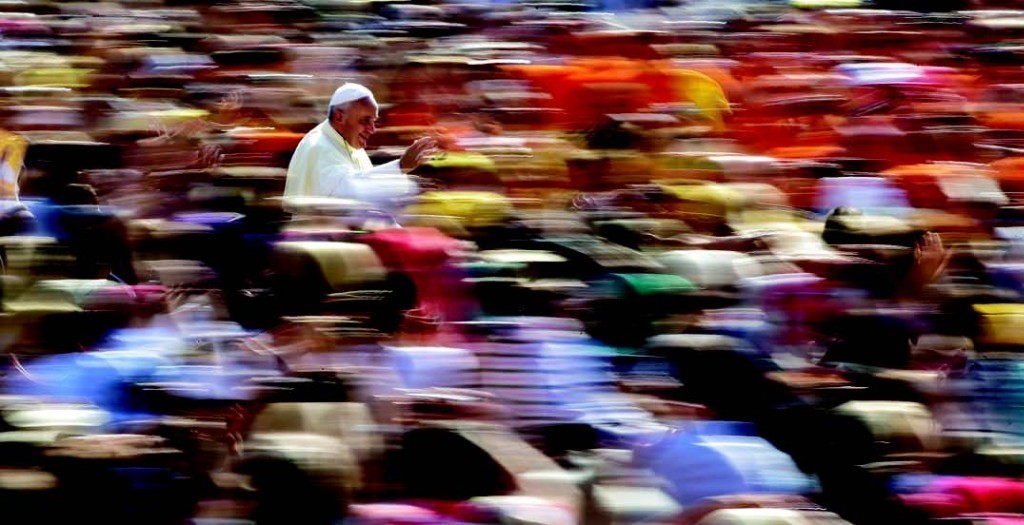
Ten minutes later, Padre Jorge, dressed in white, comes out onto the balcony. He looks astonished. “Brothers and sisters,” he says, in Italian, “buona sera. You know that the duty of the conclave was to provide Rome with a Bishop. It seems my brother cardinals went to the end of the world to fetch him! But here we are!”

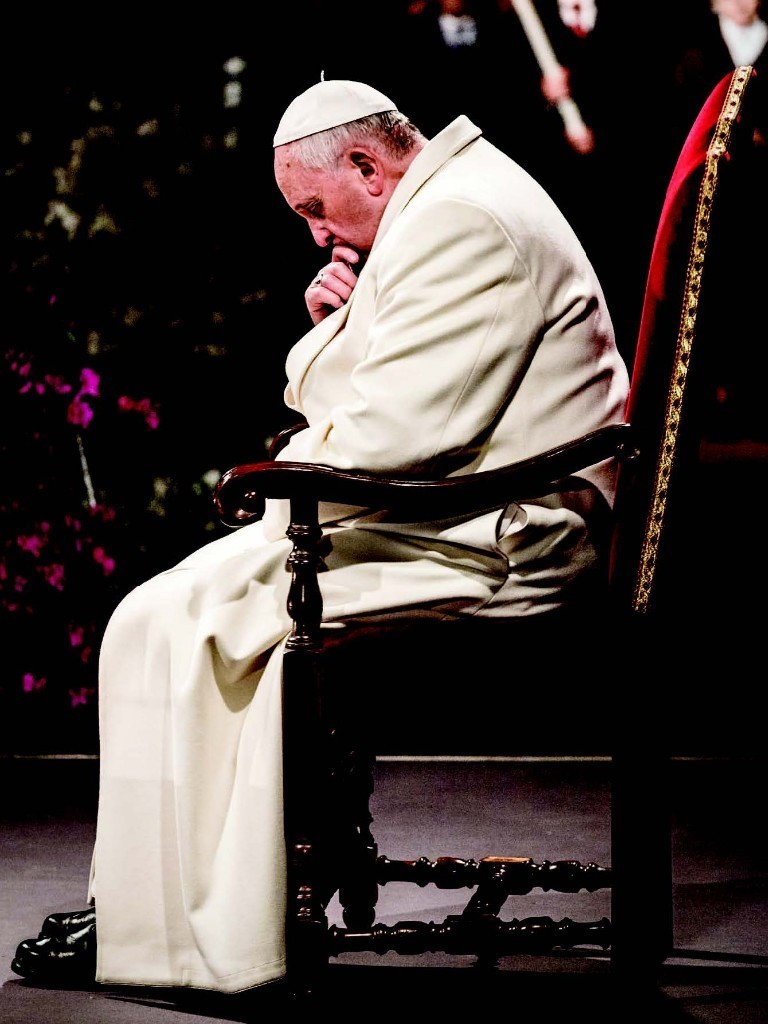
He pays eloquent homage to his predecessor, and then he leads the crowd in praying the Our Father and the Hail Mary, and then he talks for a moment about how “…we set off on this journey together, a journey of brotherhood, love, and trust…” And then, before he offers his first blessing to the world as pope, he does a beautifully Bergoglio thing, a classic Padre Jorge thing, an astonishing thing, a humble thing: he bows his head and asks the crowd to pray for him.

Filed Under: Essays

PITTER & DRENCH

March 31, 2015 By Parker

Question from prospective student’s mother, asked of me as we stand by the chapel on the most beautiful crisp sunlit October day you ever saw in your life: Does it rain here?

Rain

Does it rain here? Is the pope Jesuit? Is the ocean salty? Do swallows return in the spring? Are there still trees bigger than your house in the remote ravines of the dense moist forests of Cascadia? How do you think those trees got to be so epic? Did you know that those huge trees can drink water right out of the air? Do you think that a tree could get its water from the air without there being a lot of water in the air?
Does it rain here? Come back on All Souls Day, when the Rains begin with an indescribable gentle firm authority, so that you know, even before you are fully awake, that this is the Day, this is the beginning of the Wet, for the rain is thorough and relentless and inarguable, and this is not a shower, or a scatter, or a passing cloudburst, or a storm, but the opening bars of a very long song, the first chapter of a book that will take the next three seasons to read, the first minutes of a very long game, during which you will huddle under an umbrella, and thrash in the closet for your raincoat, and rub mink oil into your shoes yet again, and put that ratty old towel on the porch, so that when the dog wants to come in, some poor child has to kneel and wipe his muddy paws so he does not trot runes upon the floor I just this minute finished sweeping.

Does it rain here? Look about you, woman. Gaze long and lovingly on the lushness of the grass, and the vault of the trees, and the tangled insistence of the bushes, and the startling prevalence of moss, and the little swale near the chapel that is always moist so matter how hot and dry the weather, and tell me if you think that perhaps yes, a drop doth fall here and there, and then another, and then a thousand and million and uncountable zillions from November right through June, so that summer here is accounted from July through October, after which the Rains begin, and neither they do not cease, day after day after day of mist and rain and fog and drizzle and pitter and drench! Gaze about you piercingly at the endless ranks and shades of green across the river, and tell me if you think the long thicketed flank of the Tualatin Mountains is perhaps the product of uncountable years of the steadiest rain you could ever imagine! Gaze down upon the broad muscle of the river, and consider whence came all that water, which does not cease though the sun be bright, and almost doubles its serpentine girth in spring, when months of rain and weeks of snowmelt send a rush and roar of immense proportions to the sea, the Water from which all things came, including, in a sense, us!

Does it rain here? Madame, it does. But rather than groan and moan about it, let us consider it an extraordinary gift from the One: falling free and fresh from the sky every blessed day here on the bluff is clean water, untouched and untrammeled by the greedy hand of man; and so let us step inside the chapel, and thank that which once called itself I Am Who Am, Who giveth us profligately the sweet and savory rain; and so amen.

Filed Under: Essays

Copyright © 2026 · News Pro with Full Header On Genesis Framework · WordPress · Log in