• Skip to primary navigation
  • Skip to main content
  • Skip to primary sidebar

University of Portland Museum

  • Home
  • About
  • List of Entries

School History

Roots and Growth: from 1905

July 3, 2025 By Carolyn

1905 Commencement ceremony program
1905 Commencement Exercises

The 2025 Alumni Reunion is a part of a venerable tradition of the extended UP Community gathering on campus to remember, reconnect, and renew. And because this action has had many forms during the years, formal and informal– Homecoming, Campus Day, Reunion — it is difficult to assign a Series Number to the 2025 Reunion.

We do not have the same obstacles when it comes to Commencements and Graduations. Now at Reunions we direct special attention to those celebrating ‘Cardinal Numbers’, like the 25th and 50th classes. This year, members of the Classes of 1975 (389 degree recipients, The Beacon 23 April 1975, p. 1) and graduates from 2000 (623 diplomas received, The Beacon 20 April 2000, p. 3) are our special guests.

The 2025 Commencement brought an additional 720 degree recipients into the Alumni community this year; they and indeed all alumni are welcome at Reunion.

Enrollment ;  1904-05 = 114;   1974-75 = 2,147;    1999-2000 = 2,847

However, in this article, we take special notice of a special class with a special anniversary. Here we celebrate the Class of 1905 on the occasion of their 120th anniversary of the Commencement Exercises held on Wednesday, June Fourteenth, Nineteen Hundred and Five. Not only is 120 a milestone year for the 10 diploma grads of 1905, but they also stand out on their own as pioneers in UP history. Because the Class of ‘Aught-Five marked the first commencement of the youthful school. Four of these men were enrolled among the 52 students who were there at the beginning in 1901. And it was the ten students listed above — hailing from Oregon, Washington, and Alaska — who were the first to cross the finish line, successfully completing work in Academic, Scientific, and Commercial Programs in the high school division of Columbia University.

The Columbiad Valedictory address by Ignatius E. McNamee.
The Columbiad, June 1905, pp. 139-140
Formal class photograph of nine boys in suits holding rolled up diplomas.
Graduating Class of 1905, unidentified, one missing; Courtesy, Fred Weber, ’42,
Portland Magazine (Winter, 1985, p. 23)

Related articles:

Columbia University Valedictory Address, 1905 (the address continues on the next page)

Blanchet Gold Medal Award, 1905

Filed Under: School History, School History 1 Leave a Comment

Faith and Citizenship

November 7, 2024 By Carolyn

One of University of Portland’s legacy stories of faith and character begins with a letter written 80 years ago by Corporal Charles Edward (Eddie) McChrystal, ’43 on November 12, 1944 while sitting on a hillside in Italy during World War II. The letter, meant for Corporal McChrystal’s parents, went first to his parish priest in Utah with instructions to deliver it to his parents in the event of his death.

Charles Edward McChrystal with mortarboard cap.
Charles Edward McChrystal, 1943 Log

In the early months of 1943, McChrystal and many of his UP classmates were called up for service in World War II as members of the Army Enlisted Reserves Corps (E.R.C.). Because a large contingent received instructions to report for Ft. Lewis, Washington on March 15, 1943, the UP community and families of the enlisted were able to organize a send-off at the train depot in Portland — complete with speeches, choir and school band. Any senior in that group — including McChrystal who was the class valedictorian — would, of course, not return to complete the year at college.

Philosophy Club Members
Philosophy Club, 1943 Log

Who was Eddie McChrystal, 1943 Valedictorian? He arrived on the Bluff in 1939 from his native Utah. A student focused on academics and faith as evidenced by his memberships in the Philosophy Club (officer) and Honor Society; and Sanctuary Knights (service group, Mass server, officer) and Holy Name Society (respect and reverence of the Holy Name). Eddie was also a member of the Boarders’ Club (for students who resided on campus) and choir. McChrystal valued a “Catholic college education” and recalled his years at UP were “happy ones”. He believed his UP education helped “provide a fuller view of life and instill an appreciation for the good and noble.” McChrystal’s enlistment in the E.R.C. was his way of “doing his part” for the War effort.

After receiving training stateside, Corporal McChrystal served with an infantry division in Europe. He was killed in France on Christmas Day 1944 — six weeks after sending the letter — while on a special mission for the intelligence department. His parish priest delivered Eddie’s letter to his parents. The letter was later published in A Point of Pride: The University of Portland Story.

Read the letter here.

White marble sculpture of hands folded in prayer with bricks in the background.
Praying Hands Memorial, Portland Magazine, Autumn 2009, p. 9

The Praying Hands Memorial on the east quad remembers the students and alumni who were injured or lost their lives in World War II. The class gift of the 1948 seniors. Charles (Eddie) McChrystal’s in one of the sixty-nine names etched in the bricks commemorating the war dead.

Related articles:
Call to Service, The Beacon, January 8, 1943, p. 1
Call to Service, The Beacon, January 8, 1943, p 4

Veteran’s Day Ceremony: The Beacon, November 14, 2013

Reservists’ Send-Off, PortLog, March 2014

Veterans’ Day Observance, PortLog, November 2014

Broken Wall Memorial, PortLog, November 2015

Filed Under: School History, School History 1 1 Comment

One-hundred-and-twenty years, and continuing

September 1, 2022 By Carolyn

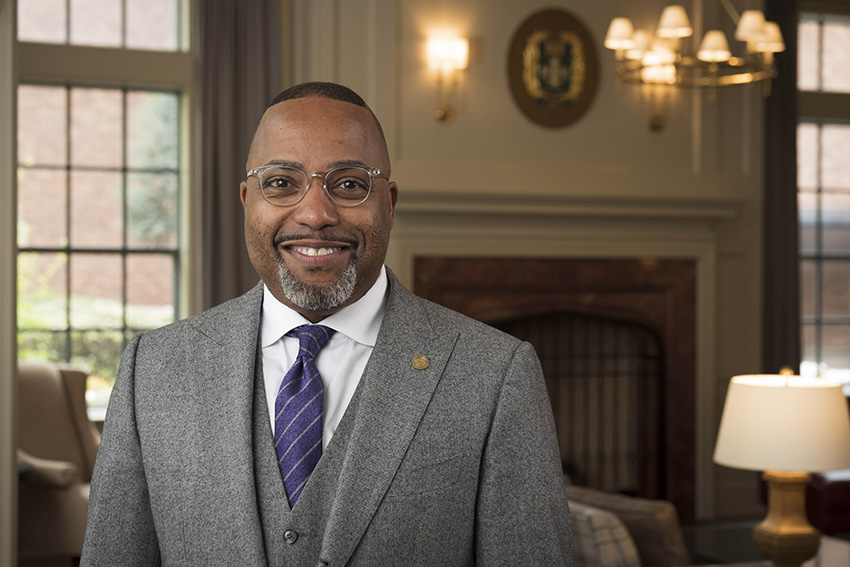
color photo of Dr. Robert Kelly
Dr. Robert Kelly, 21st President of the University of Portland (Marketing and Communications Photo)

Dr. Robert Kelly has been named the Twenty-first President of the University of Portland.  He is the first person to hold that office who has not been a Holy Cross Religious at some point earlier in his life.  (Trivia point: our first president, Rev. Edward Patrick Murphy, began his clerical career as a Holy Cross priest, and had even been president of a Holy Cross school, St. Edward’s College in Austin, Texas, before Archbishop Alexander Christie appointed him president of Columbia University for one-year in 1901.) 

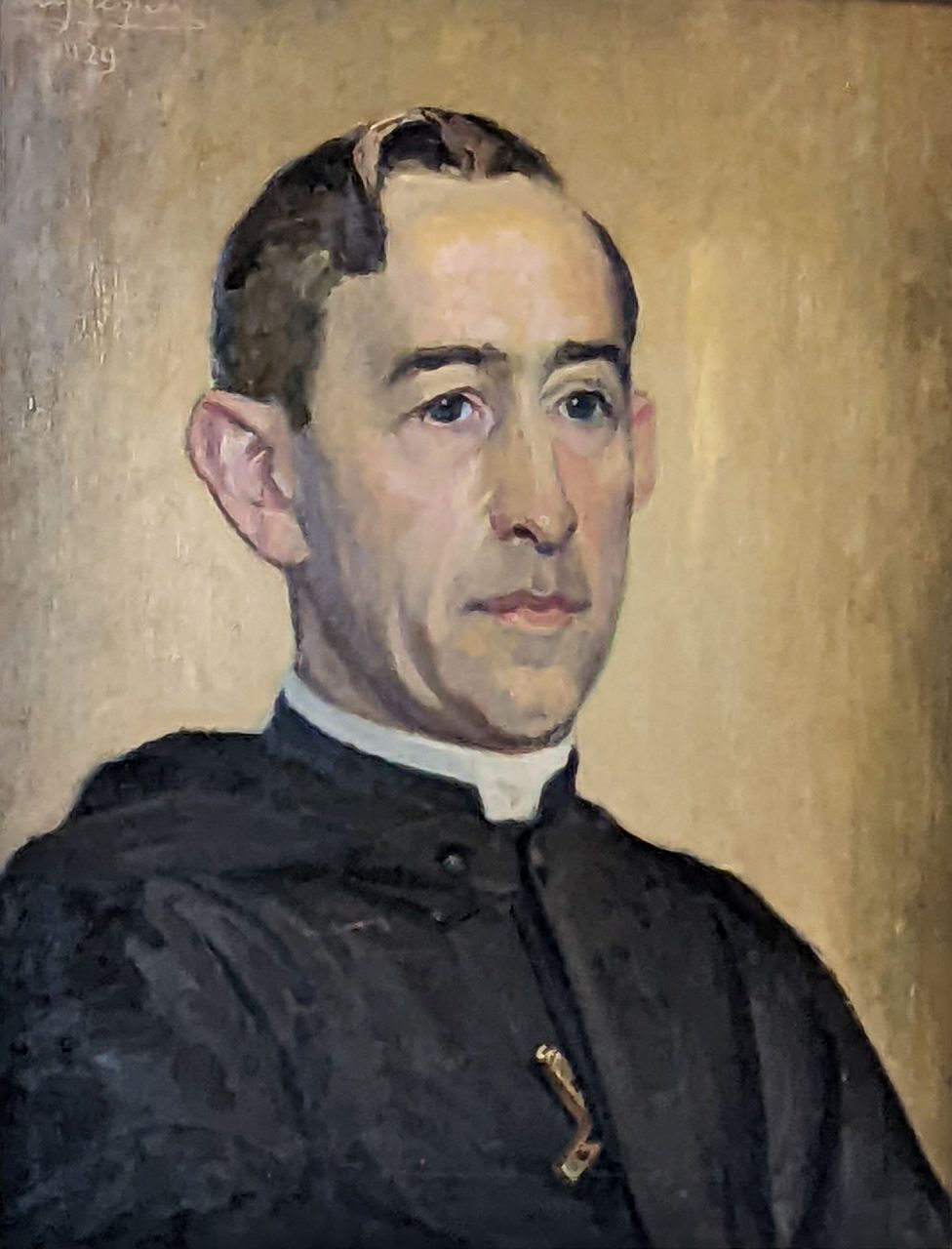
color photograph of a painting of Rev. Louis Kelley
Rev. Louis Kelley, C.S.C., 7th President, photograph of painting by Emil Jacques, 1929

But Dr. Kelly is not our first President Kell(e)y.

The name of the 21st President is now joined beside that of Rev. Louis Kelley, C.S.C.; the Seventh President (1928-1934).  Both of these educators—as indeed all of the presidents—assuming the role in a time of transition.  Between 1928-1934, we grew from junior college status to a fully accredited 4-year university program, and merged into full partnership with St. Vincent Hospital to form the School of Nursing. The school’s development during these years was so significant as to lead to altering our name to describe the new reality, Archbishop Christie’s Columbia University becoming the University of Portland in 1935.  Now entering our 121’s year, President Kelly’s time — and our time– promising a period of new growth and potential for the years ahead.

Filed Under: School History, School History 1 1 Comment

Benchmarks: Spanish flu 1918

March 2, 2022 By Carolyn

The 1918 Spanish Influenza and Columbia University: what happened back then? Our long months of Covid-19 protocols and precautions has made the pandemic a century ago into a FAQ (frequently asked question) today. This arises in the context – at different points in recent semesters – of daily operations at the University of Portland experiencing MAJOR disruptions due to the 2020 Covid-19 pandemic: from remote teaching to cancelled events.  And so, as we move step-by-step towards new patterns of 21st century interaction, here is some data about how the Spanish Flu was felt in the University community back in 1918. The short answer turns out to be boring, lacking excitement, and, is maybe, reassuring? The very few mentions found in our sources propose the totally undramatic conclusion that the Spanish Flu had little to no impact on classes or campus life.

Now, the longer answer.  First, from 1901-1935 we operated under a different name and different circumstances.  During the years of the Spanish flu pandemic enrollment was low (and those staying for degrees even fewer), with a mix of Boarders and commuters (Day-Dodgers). Today, a century later, enrollment is 3990+, anticipating, many, many earned diplomas in May. The 1920s comparative numbers follow:

  • 1916-17 — — — 154 (26 diplomas)
  • 1917-18 — — — 193 (17 diplomas)
  • 1918-19 — — — 206 (15 diplomas)
  • 1919-20 — — — 260 (18 diplomas)

The aim was learning. The degree-program was secondary. Students pursued a course of studies that included high school and college course work, but the degrees earned during those years were limited to the high school division (until 1924).  College work and credit could be transferred, but often served simply as professional preparation; with students leaving campus and entering the work-force upon completing the course of commercial studies on campus.

William Allen Casey Obituary, Columbiad Oct 1918, XVII.1, p. 20 (click to enlarge)
Scouring the pages of The Columbiad, a monthly student publication, there is only one recorded death in the University family attributed to the Spanish Influenza; Wm. Allen Casey (died, October 17, 1918).  He received a Science Diploma, graduating in 1917; of the twenty-six graduates, five missed the ceremony having already entered military service.  Casey was the valedictorian and distinguished himself in debate while at school.  He enlisted the following year and contracted the Spanish flu when stationed at the military training camp in Fort Monroe, Virginia.  His name is on the Broken Wall Memorial commemorated there as one of three University World War I deaths.
An alumnus, but his death from the Spanish flu occurred a year later and across the continent.

As to disruptions of classes or activities.  The 1918 fall football season was delayed and shortened because our league opponents cancelled school for a period of six weeks. It does not appear that classes were interrupted on the Bluff.

23 members of the 1917 class; Wm. Allen Casey in the second column, left
Columbiad XV.8, p. 220 (click to enlarge)
Then there is this poem, found in the Columbiad (January 1919, p. 45)
A Boarder’s Lament

The ‘flu’ may come and ‘flu’ may go.
But we go on forever.
The dance may stop and the picture slow,
We struggle on forever.
Day Dodgers loaf and make big dough,
We bone and bone forever
–Charles Lake, Diploma in English, 1920

p.s. Day-Dodgers refers to commuter students, used as a Boarder’s derisive / affectionate term of on-going envy and rivalry.  Here the word ‘flu’ cannot be taken as a secure connection between the poem and the 1918 global epidemic.  The poet may simply have found the word more amenable to versification than, say, mononucleosis or measles.

In an earlier post we showed that, from 1907-1934, the University advertised the campus as a wholesome and healthy garden spot outside Portland’s urban sprawl.
https://sites.up.edu/museum/spires-of-learning-reach-up-to-the-sky/

Citations:
The Columbiad, vol. XV.8 (June 1917), vol. XVII.1 (October 1918), vol. XVII.2 (January 1919).


Filed Under: School History, School History 1 Leave a Comment

Find it in the Archives!

October 18, 2021 By Carolyn

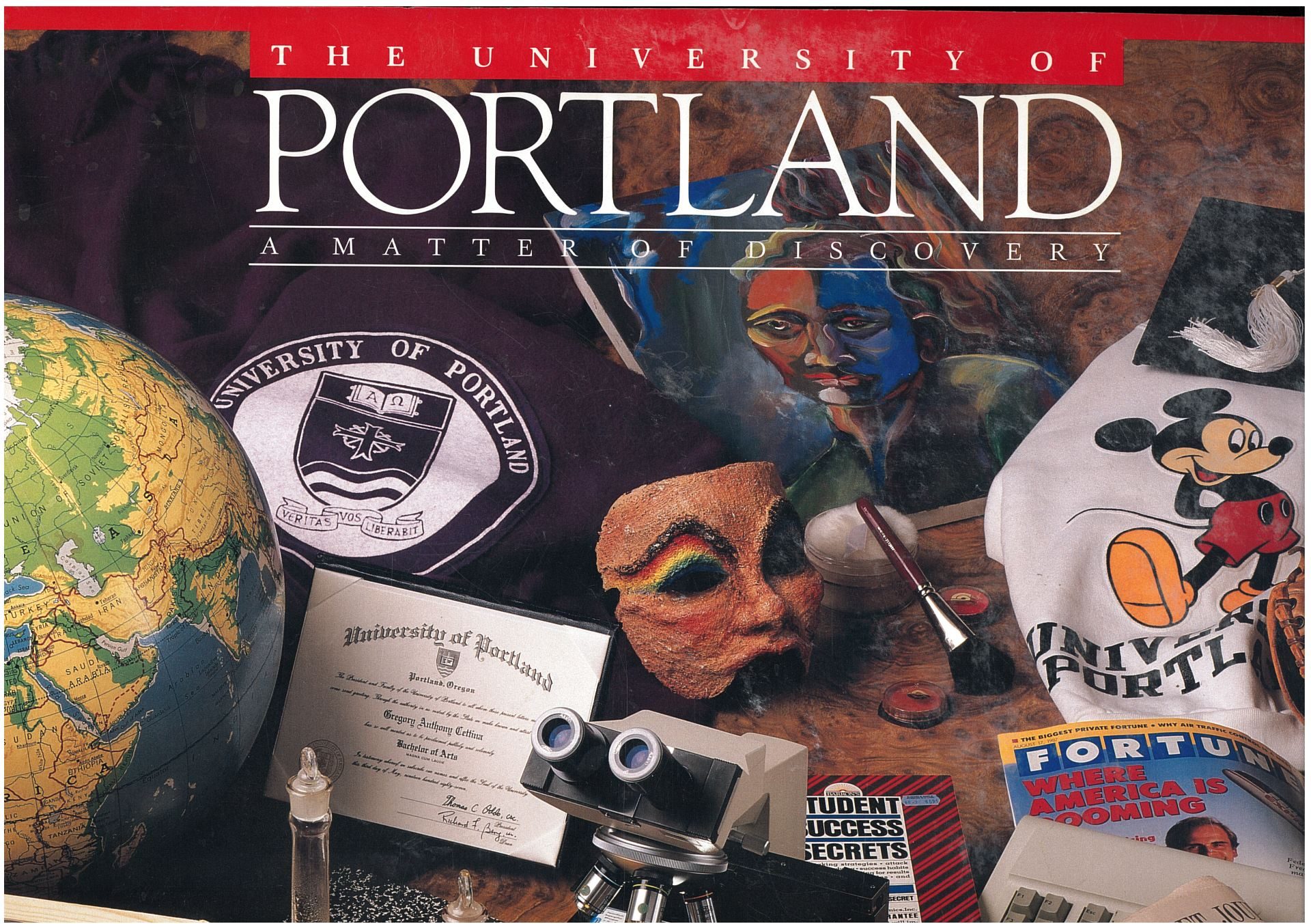
Color collage representing education and social life at University of Portland
Admissions poster, part of the Archives collection

Hidden within Shipstad Hall, along the underground east corridor, is the home of the University of Portland Archives, adjacent to the Heritage Room which houses the University Museum. The contents of the Archives and Museum are the story of the University — its history, people, and events. On shelves– yearbooks, graduate theses, catalogs & bulletins, student guides & handbooks, student publications such as issues of the Log, The Beacon, Writers Magazine (yearbook, newspaper, creative writing annual). In file drawers– photographs of people, buildings, events, maps and blueprints; arranged by subject topics. On office computers– databases of archival holdings; recorded in files & finding-lists; ready reference information for questions both obscure and for frequently asked questions.

Three University of Portland brochures
Fast-Facts brochures, part of the Archives collection

In recent years, some areas of the Archives collections are now within reach for seekers and users from anywhere in the world thanks to the efforts of digitization staff at the Clark Library combined with metadata and historical information from the archives and museum. The Log, The Beacon, (and the earlier The Columbiad) can be searched via full-text through the Digital Collections hub. Admirers of the visual arts can view the Art on Campus collection online. UP history buffs will enjoy browsing through the University History section. Those interested in campus landscape and its buildings will appreciate these collections: Campus Aerial Views and Maps and University Buildings.

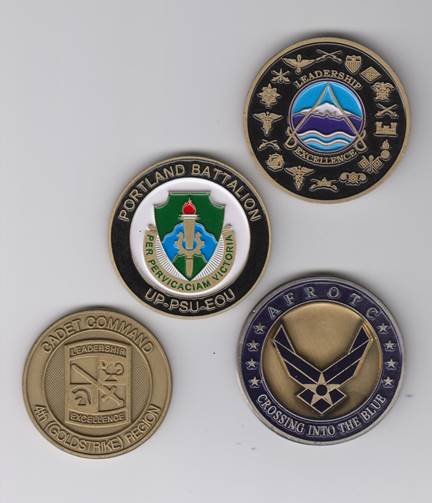
Four round tokens
ROTC participation tokens, part of the Archives collection

Archives and Museum staff use in-house and online archives and museum resources and memorabilia to research and write the posts which appear on these pages. Our most interesting or frequently asked questions serve as the basis for some post topics.

What would you like to know about UP?

Send us your questions and we’ll find the answers in the Archives.

Filed Under: School History, School History 1 Leave a Comment

On the Bluff: looking out, looking up

July 9, 2020 By Carolyn

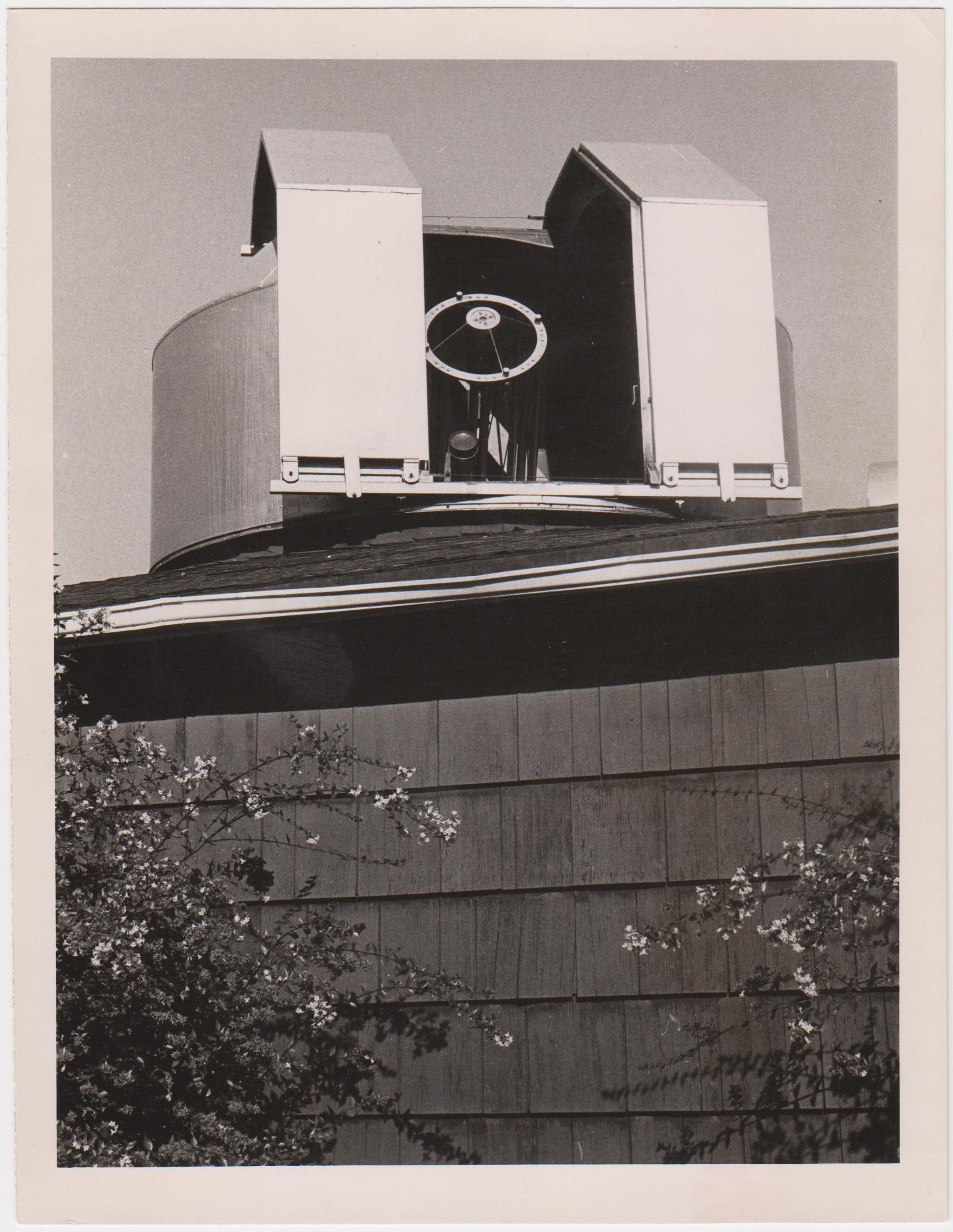
Observatory, 1977 (click to enlarge)

Once upon a time in a quiet corner of the campus, UP had a Starr Observatory.  That is, an actual astronomical observatory with a twenty-inch computer-operated telescope for looking at stars in the night sky.  The all-too-appropriate name was bestowed in 1985, honoring Professor Merle Starr at his retirement after years of teaching astronomy in the observatory shed.

The Observatory was the 1952 Class Gift; and in actual fact, members of the graduating class worked together with faculty to build it after Br. Godfrey Vassallo, C.S.C., secured the gift of the 20-inch instrument for campus (see, Dr. James Covert, A Point of Pride.) The 1952 installation of the telescope is documented as a campus-highlight page-filler in the 1959 Log.

Through its first twenty-five years stories labelling the Observatory as a hidden-treasure-on-campus featured as an almost annual feature in the pages of The Beacon (14 stories and notices).  The building came down in 2009, making room for the addition of the Quiet-Side of the expanded Bauccio Commons.  The real doom of the observatory, however, was urban growth and the increased ambient light which washes out the night sky.

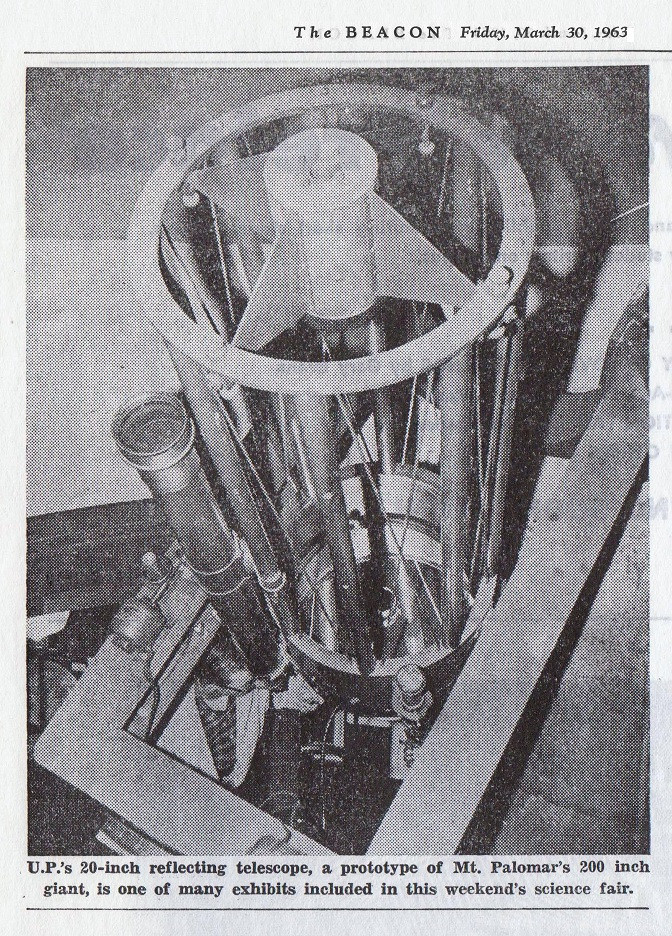
The Beacon, March 30, 1963, pg. 4
(click to enlarge)

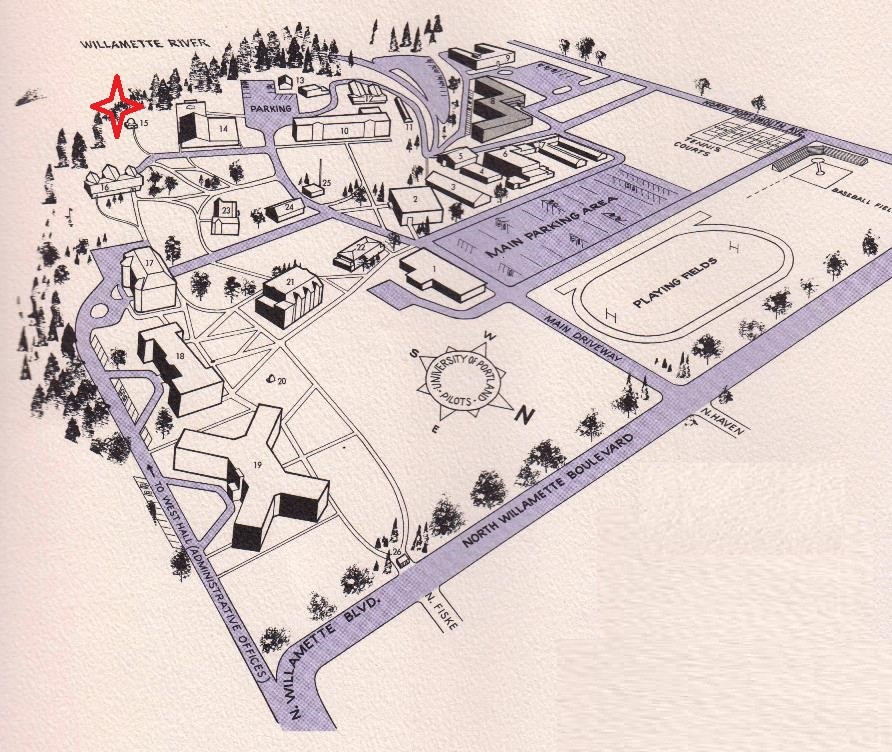
The building was not indicated on campus maps until 1958 (number 15).  The lens and refractor (which was created as a prototype for the 200-inch Mt. Palomar Observatory in California) is currently in the care of the Environment Studies faculty.

Campus Map with Observatory marked, The Bulletin, 1959 (click to enlarge)

Filed Under: School History, School History 1 2 Comments

Extraordinary Measures: 1948 Graduation

May 1, 2020 By Carolyn

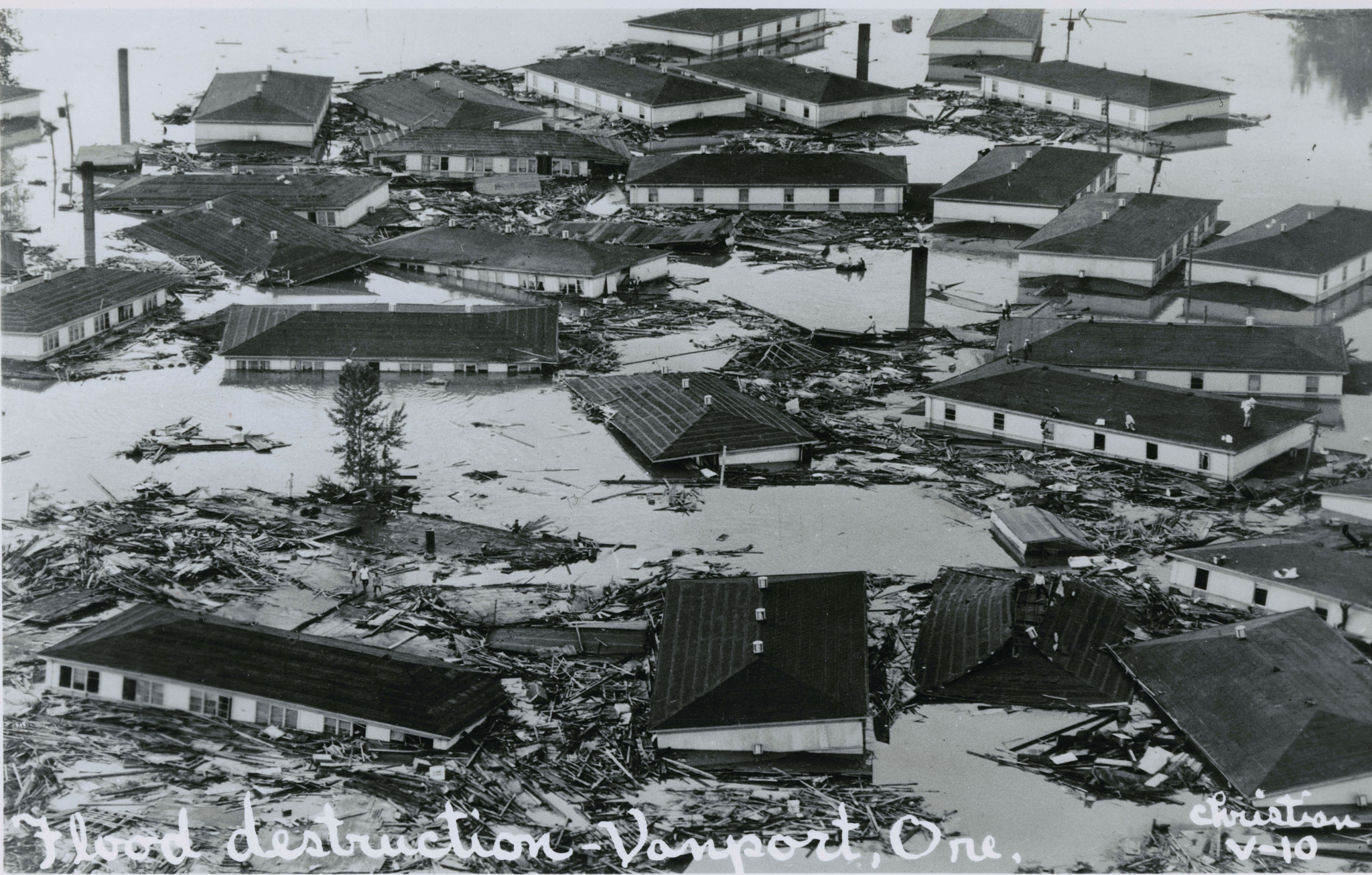
During WWII the Port of Portland built ships.  The surge of shipyard workers was met by a surge of public housing. Built in 1942, Vanport grew up rapidly on the site of present day Delta Park and was the largest wartime housing project in the U.S.  By 1944 the Vanport area was home to 40,000 people: making it Oregon’s second largest city at the time.  As the war ended and many workers left the area, returning veterans and their families moved in.

City of Portland (OR) Archives, View of flood at Vanport with overturned cars. A2001-083, 1948.

On Memorial Day, Sunday, May 30, 1948, during the University of Portland commencement exercises, president Rev. Theodore Mehling, C.S.C. announced to those in attendance the emergency news that the Vanport dike had broken and Vanport City stood flooded. Fr. Mehling urged those concerned to leave immediately. At least two seniors and a number of guests at the ceremony lived in Vanport.

By evening, the whole of Vanport City was underwater and destroyed. Two residents, Emmett Barrett, (UP ’41), and his wife, were on campus that day to celebrate Eugene Barrett’s graduation (Emmett’s brother). When they returned to Vanport a month later, their apartment house was still standing but the inside was covered in mud.

Emmett Barrett, ’41, Letterman’s Sweater, 1948

Emmett earned his monogram playing football for UP from 1938-1940 (he had also distinguished himself by playing center for the NFL’s New York Giants for the 1942 season). All that he was able to salvage from the flood wreckage was his University of Portland letterman’s sweater (pictured) and letterman’s blanket. An insurance agent, hopefully Mr. Barrett’s losses beyond the monogram mementos were covered.

Flooded apartments during the Vanport flood, Oregon Historical Society, Library

References:
Portland Magazine, Spring 1988, p. 9-10

Flooded apartments during the Vanport flood. Camera Art Studio. Oregon Historical Society, Library. OrgLot131_014. Accessed April 27, 2020 from Oregon Historical Society, Library https://digitalcollections.ohs.org/flooded-apartments-during-the-vanport-flood-2 . In Copyright – Rights-holder(s) Unlocatable or Unidentifiable

Related:
UP Alma Mater (audio file)

Filed Under: School History, School History 1 2 Comments

Blanchet Gold Medal Award

April 28, 2020 By Carolyn

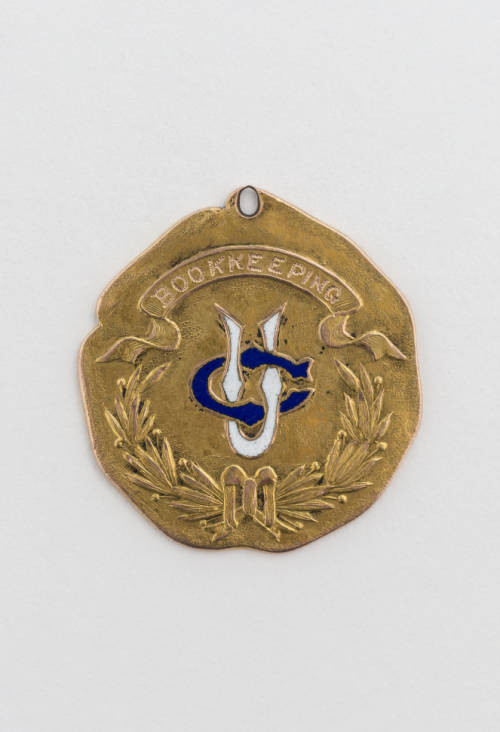
round gold medal with C U in the center
Blanchet Gold Medal for Bookkeeping

Among the awards and distinctions conferred at the Columbia University commencement exercises on June 14, 1905 was the Blanchet Gold Medal for outstanding bookkeeping student. This academic award is one of the earliest objects in the University’s museum collection and was named for its donor, Monsignor F. X. Blanchet, who was also present for the occasion.

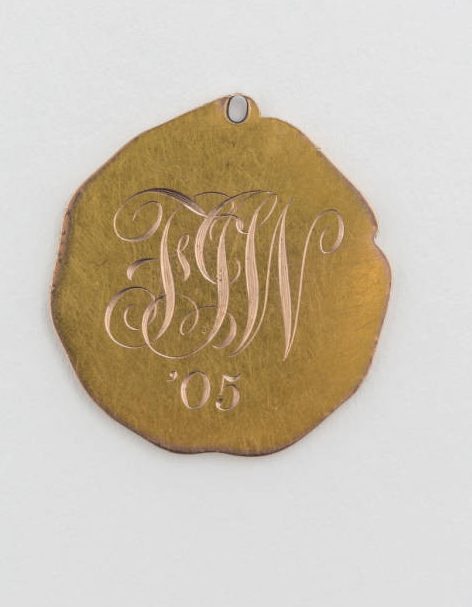
Reverse, with monogram of the recipient

The Blanchet Gold Medal was presented to Frederick L. Weber. One of a class of ten graduates. Mr. Weber was awarded a Commercial Diploma. Archbishop Alexander Christie, founder of the University, was in attendance and addressed the members of the graduating class. Mr. Ignatius McNamee delivered the valedictory.

The medal was only awarded twice, 1905 and 1906.  These academic honors were, as it were, personal gifts by the sponsors to the student-recipient.  And Monsignor Blanchet died in 1906. 

Columbia University was the precursor to today’s University of Portland, existing from 1901-1935. The ten diplomas awarded in 1905 were in the high school division.

Reference:
The Columbiad, June 1905, vol. 3, no. 9

Filed Under: School History, School History 1 Leave a Comment

Women’s First: Engineering

March 25, 2020 By Carolyn

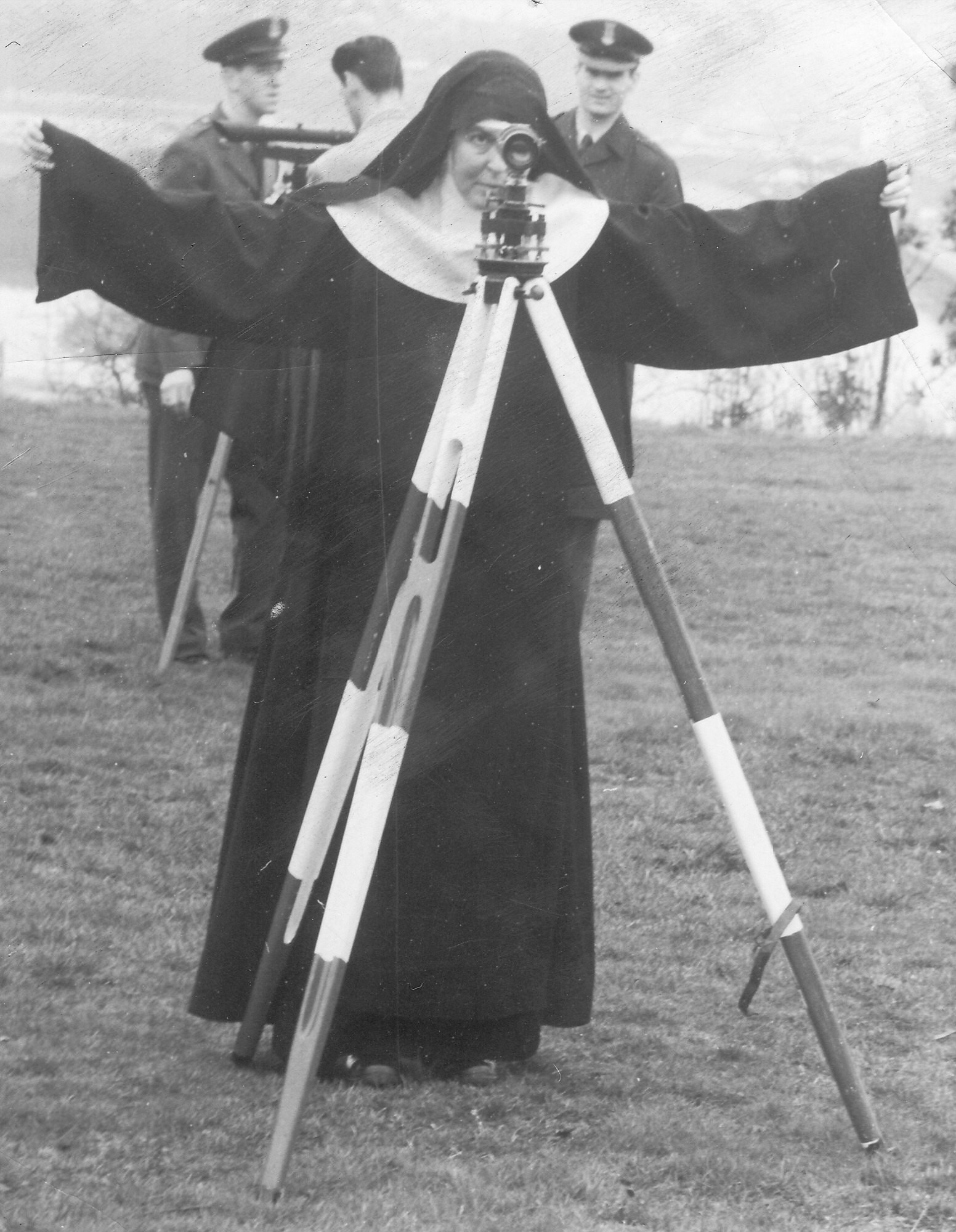
Nun in black habit using surveying equipment
Sr. M. Hildegarde, O.S.B., 1957

One picturesque, often employed image used by the University Museum shows a nun in full habit posed behind surveying equipment, with the caption “First woman to enroll in the School of Engineering”.

The juxtaposition claims a viewer’s attention. Who is this nun? And what brought her to UP?

She is Sr. M. Hildegarde, O.S.B. (Order of St. Benedict), enrolled as a student in the School of Engineering from the Fall of 1956. Beacon reporter Linda Wright profiled Sr. M. Hildegarde for an article published April 5, 1957. Originally from New Zealand, Sr. Hildegarde obtained a master’s degree in history there and then went on.  And on.  Around the globe.

There is a list of places, but not of whens in this life-story: the article mentions that she studied at several universities, located in Canada, the United States, London, France. Her home convent is in Normandy, France, though she studied art and was trained as a teacher in Australia.

For a three-month period during World War II, Sr. Hildegarde was detained by German forces as an enemy alien on French soil.  She was soon released because she carried an Australian passport.

After the war, appearing here in 1956; that is, sometime during those ten years Sr. Hildegarde made her way from her Normandy convent to the western United States, to Portland and her enrollment at UP, to pursue a degree in architecture which involved a surveying class (and the photo above!), as well as other coursework.

The picture is great; and likely too colorful and too perfect.  Taken together with the backstory of a New Zealand, MA (History), French, Benedictine, Australian concentration-camp-survivor, art-teacher, engineer-architect nun, the whole story appears almost too good and too complicated to be true.  The gaps in Hildegarde’s itinerary suggest how both the picture and the biography have been posed, partially staged for effect.  But as a marketing photo-op—still irresistible!

Asked her own opinion about her possible publicity-function, Sr. Hildegard is nun-ishly modest, telling The Beacon how she “didn’t care for it because it distinguishes me from the others.”  And yet, on the contrary, The Beacon reporter concludes: we think she is a remarkable credit and most interesting figure, deserving of recognition on our campus.

Filed Under: School History, School History 1 2 Comments

The Walls Came Tumbling Down

September 8, 2017 By Carolyn

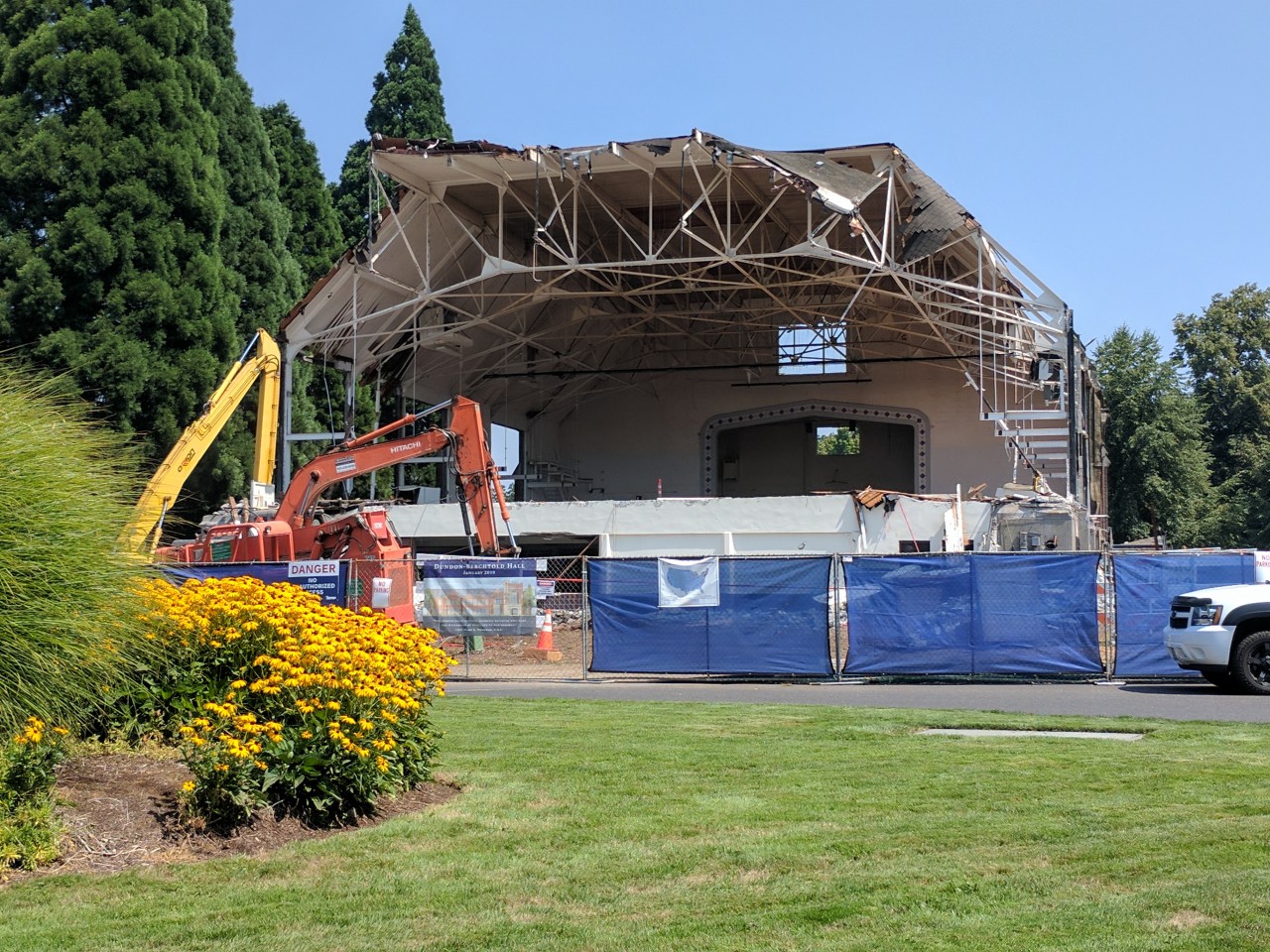
Taking Down Howard Hall, August 4, 2017 (Carolyn Connolly photo)

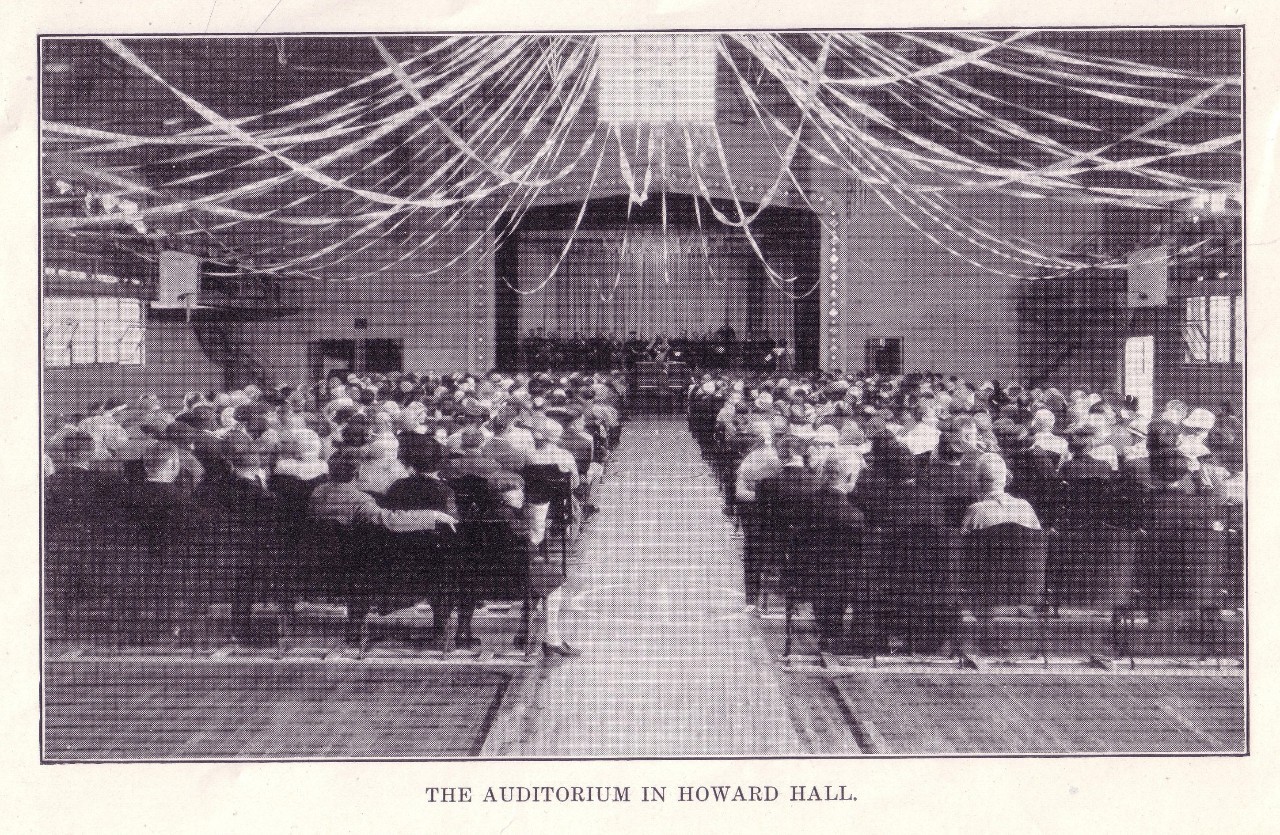
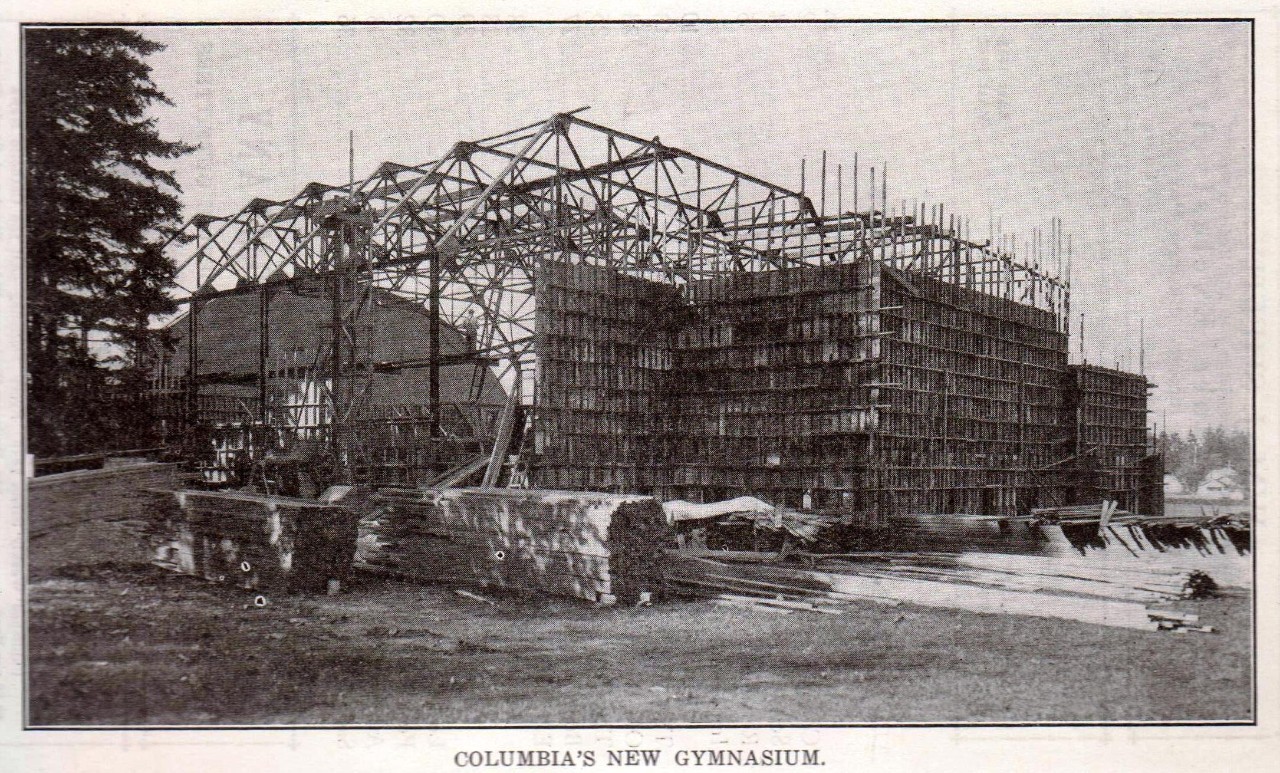
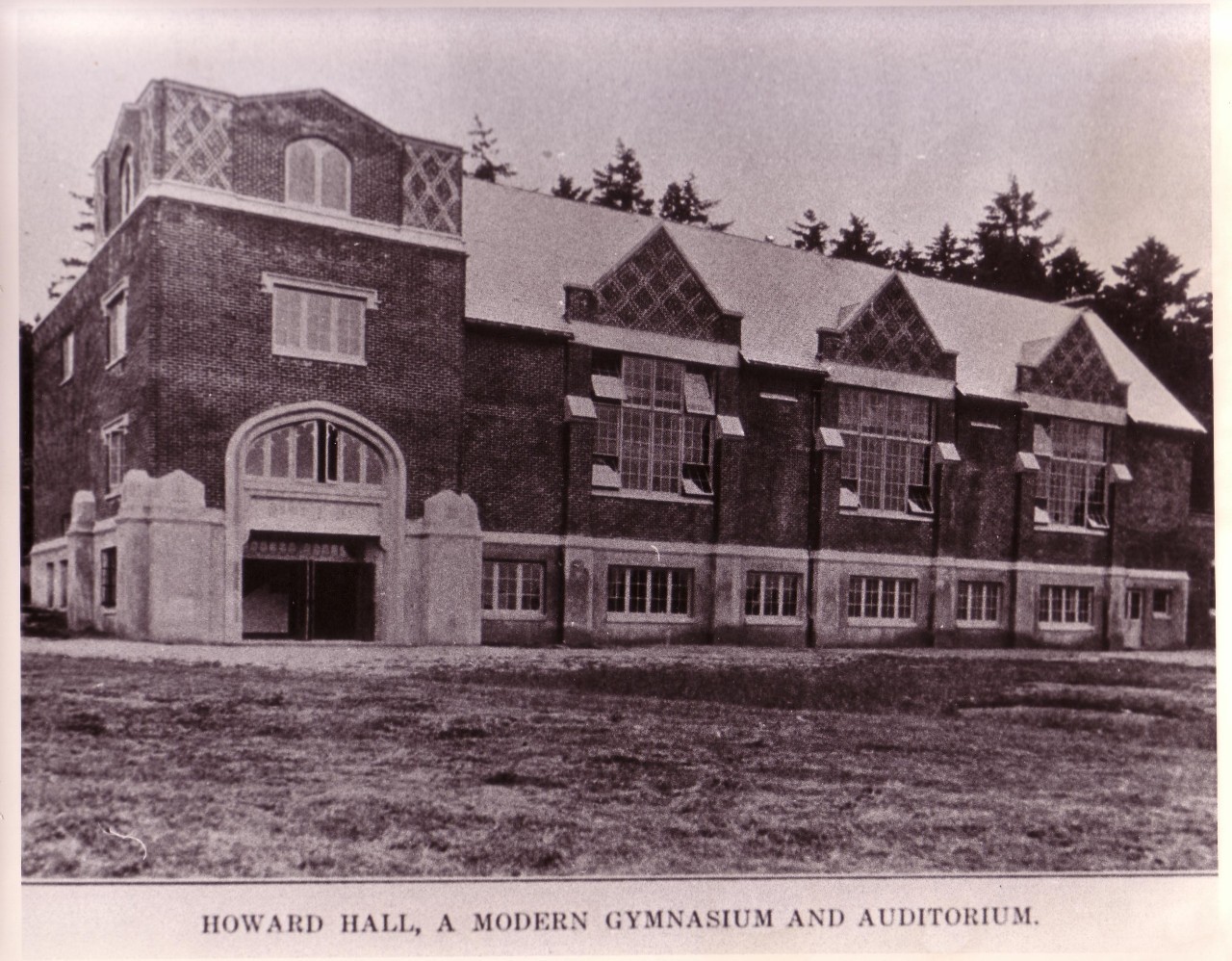
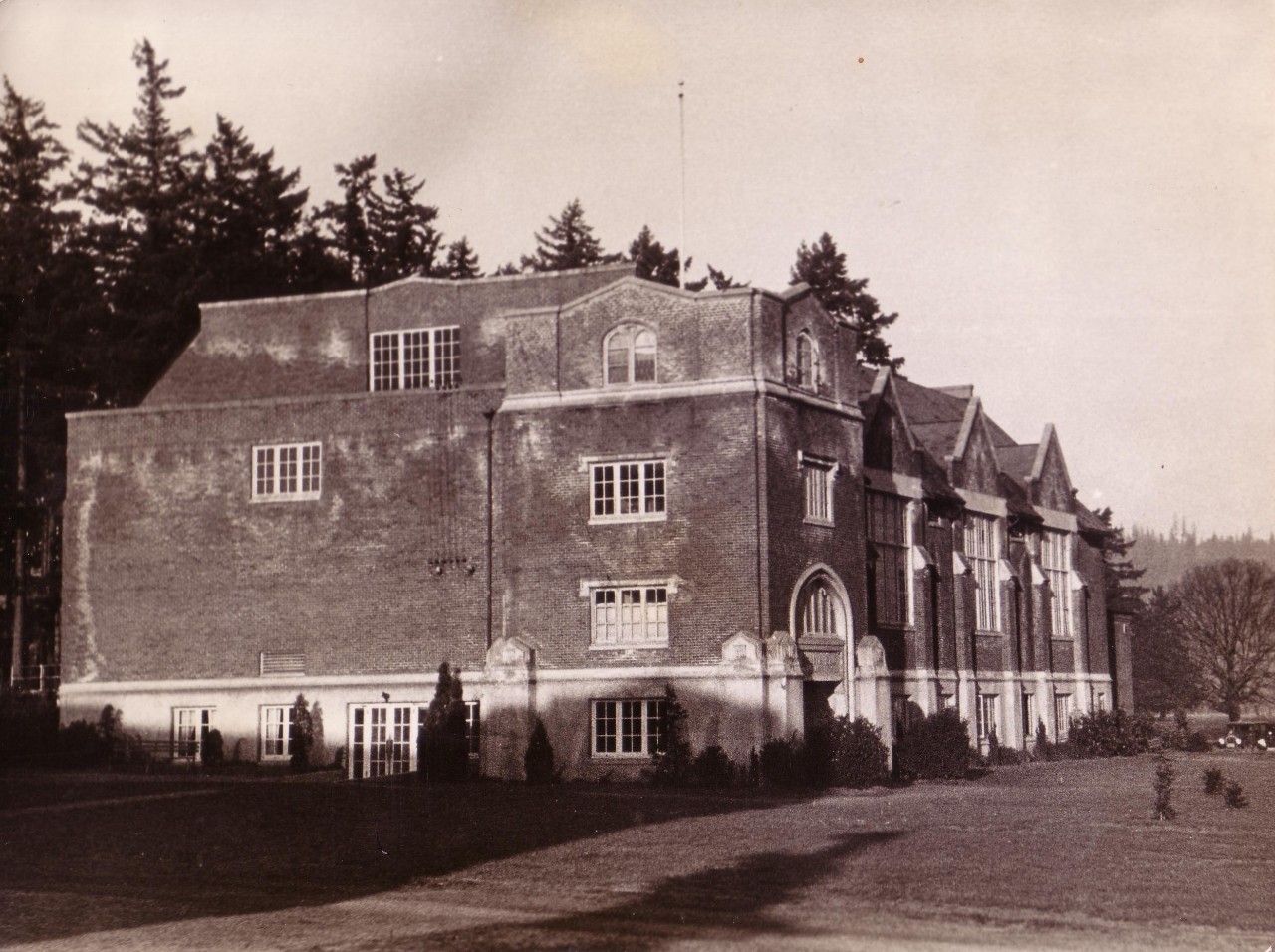
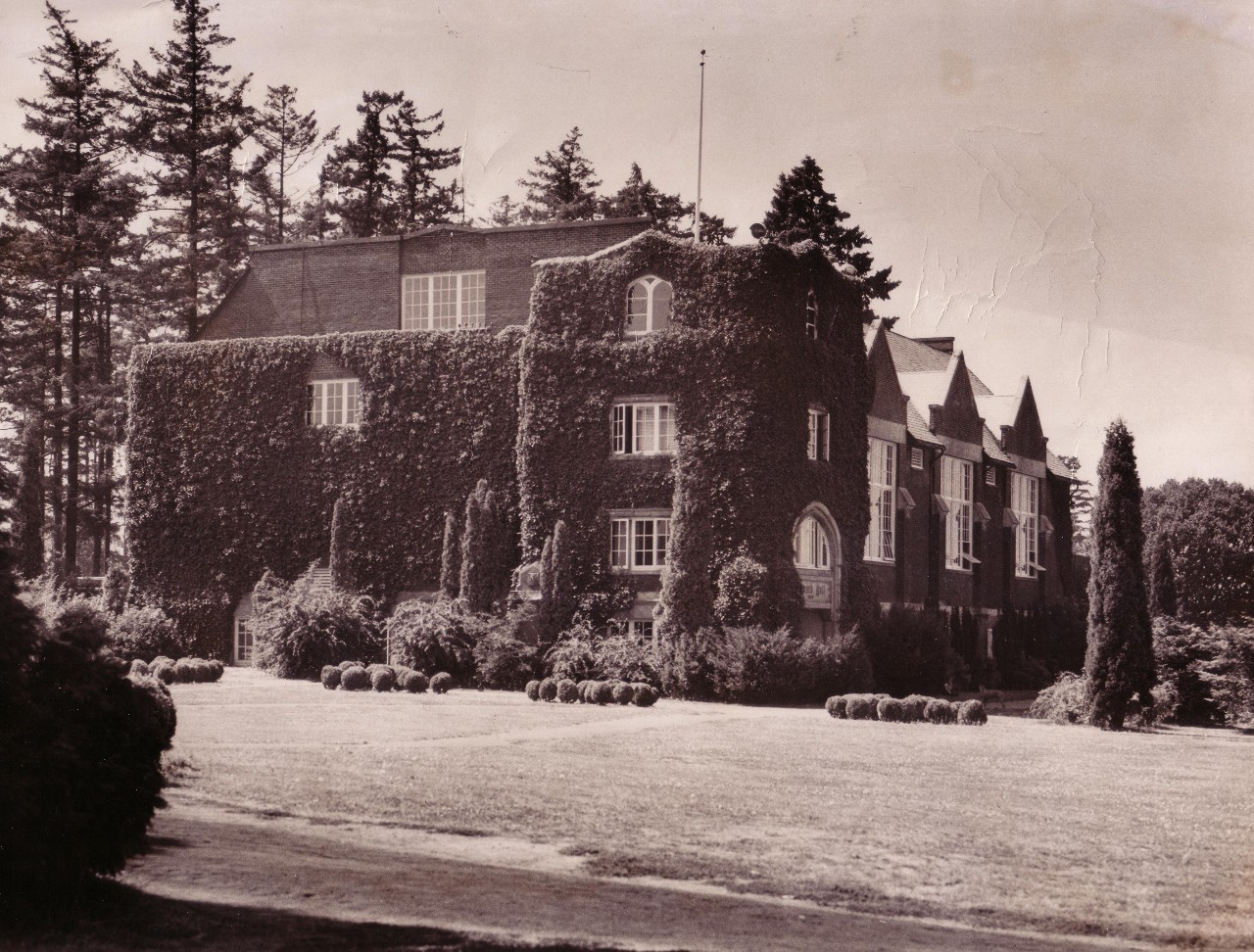
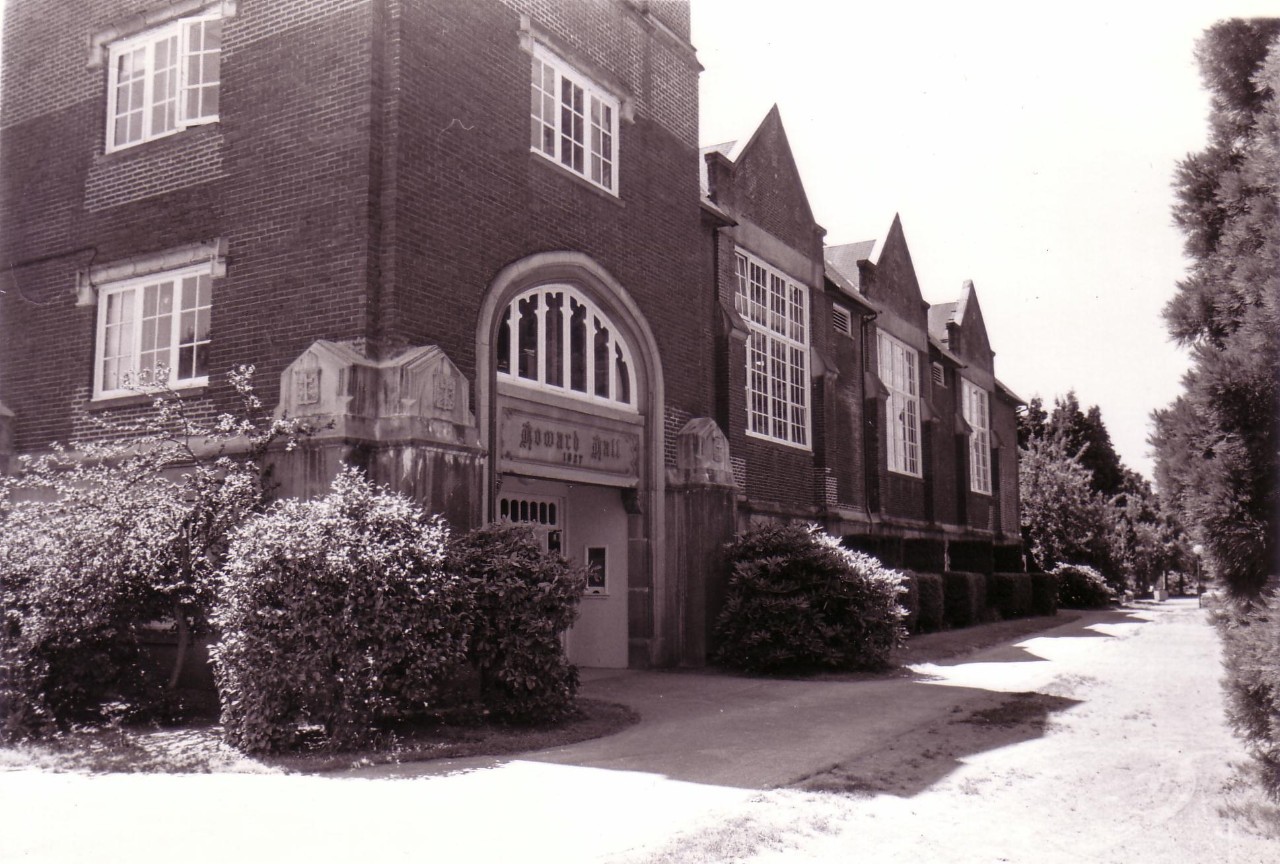
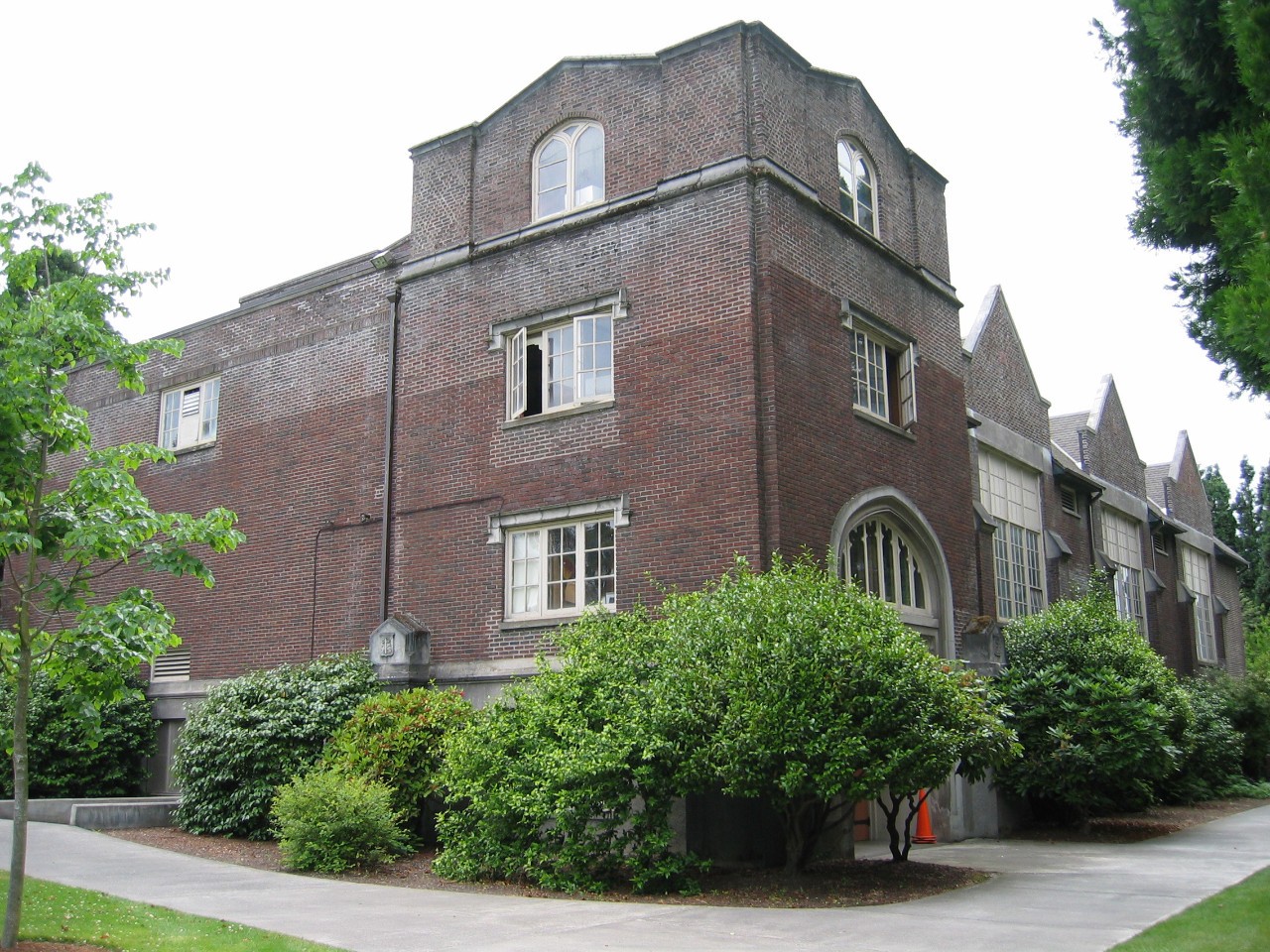
The dedication of Howard Hall was celebrated on 19 February 1928 with a student assembly, speeches, swim-races, dinner and dancing, basketball and orchestral entertainment: the several and wildly different activities all hosted in Howard Hall to showcase the diversity of design and purpose for the new building.  The cornerstone was laid previously on Homecoming Game Day, 20 November 1927.  That allows a four-month construction for a building serving 90 years of UP campus life.

And Howard Hall rendered much service through the years from Commencement Ceremonies to Academic Convocations, to student-centered activities from fund-raisers (talent shows, boxing, wrestling, dances), theater & drama production, to athletic competition hosting Conference Games and intramural sports.  It was also the student-union, with a commuter-student lunch cafeteria located in Howard, as also the offices of Student Government, The Beacon, The Log, and KDUP through the years.

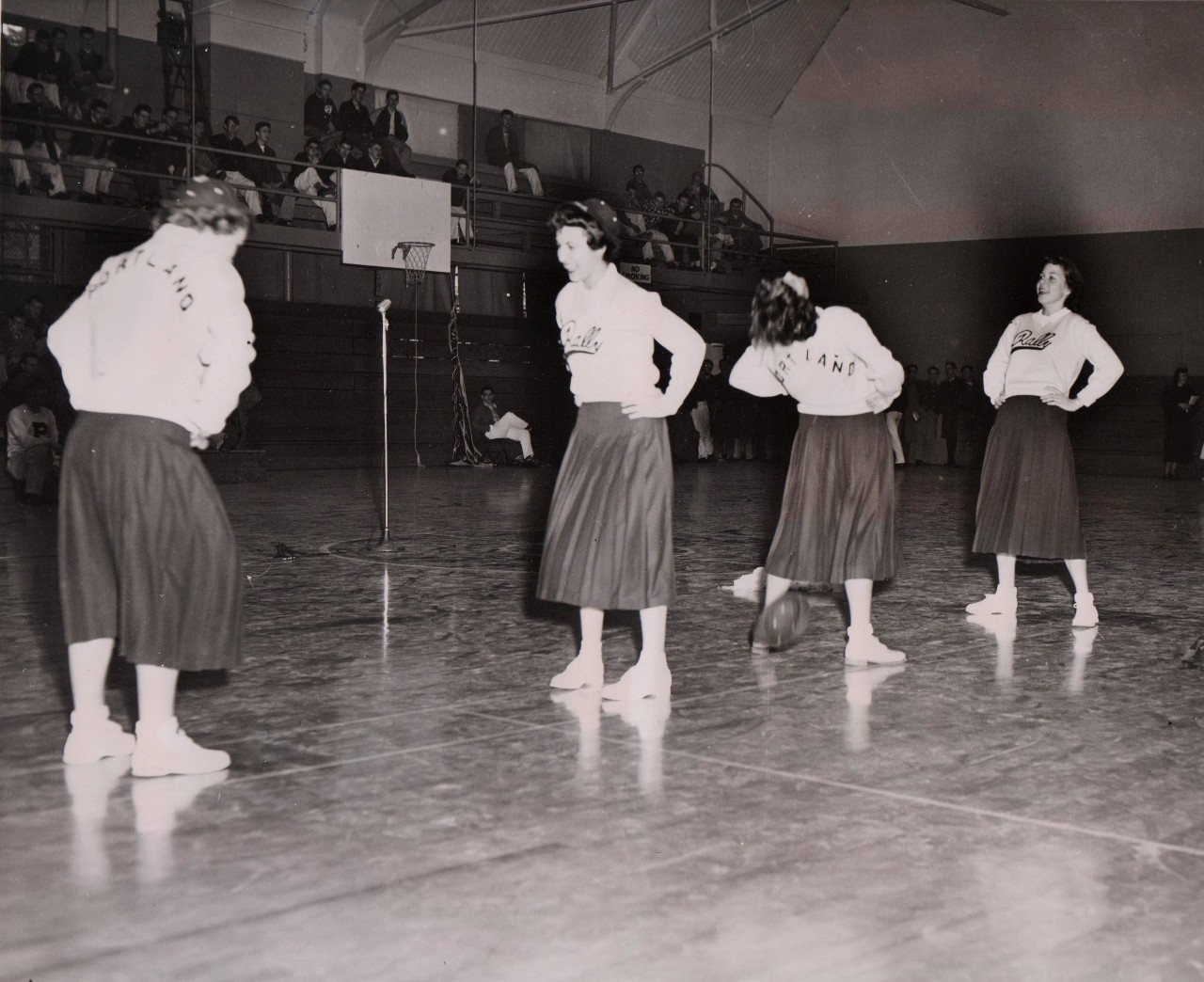
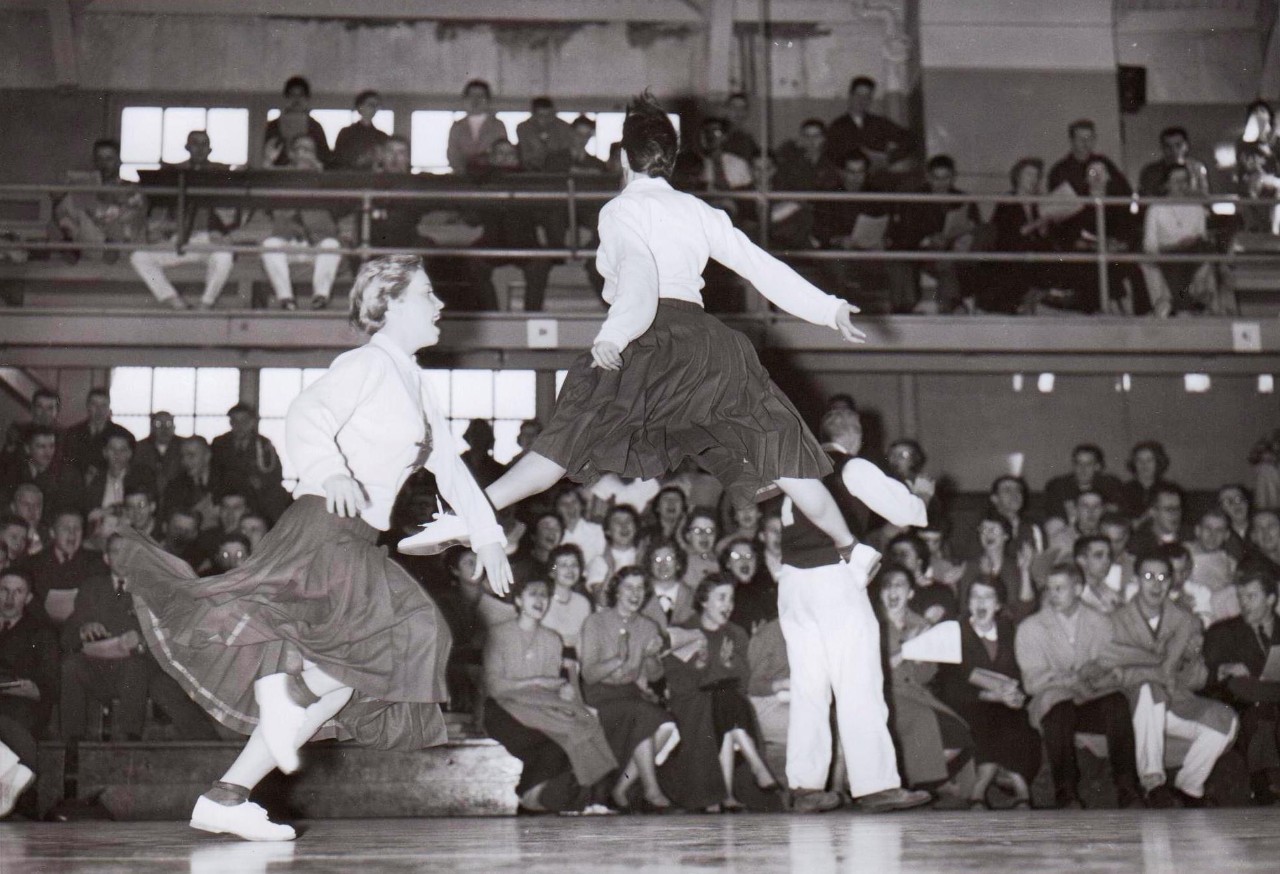
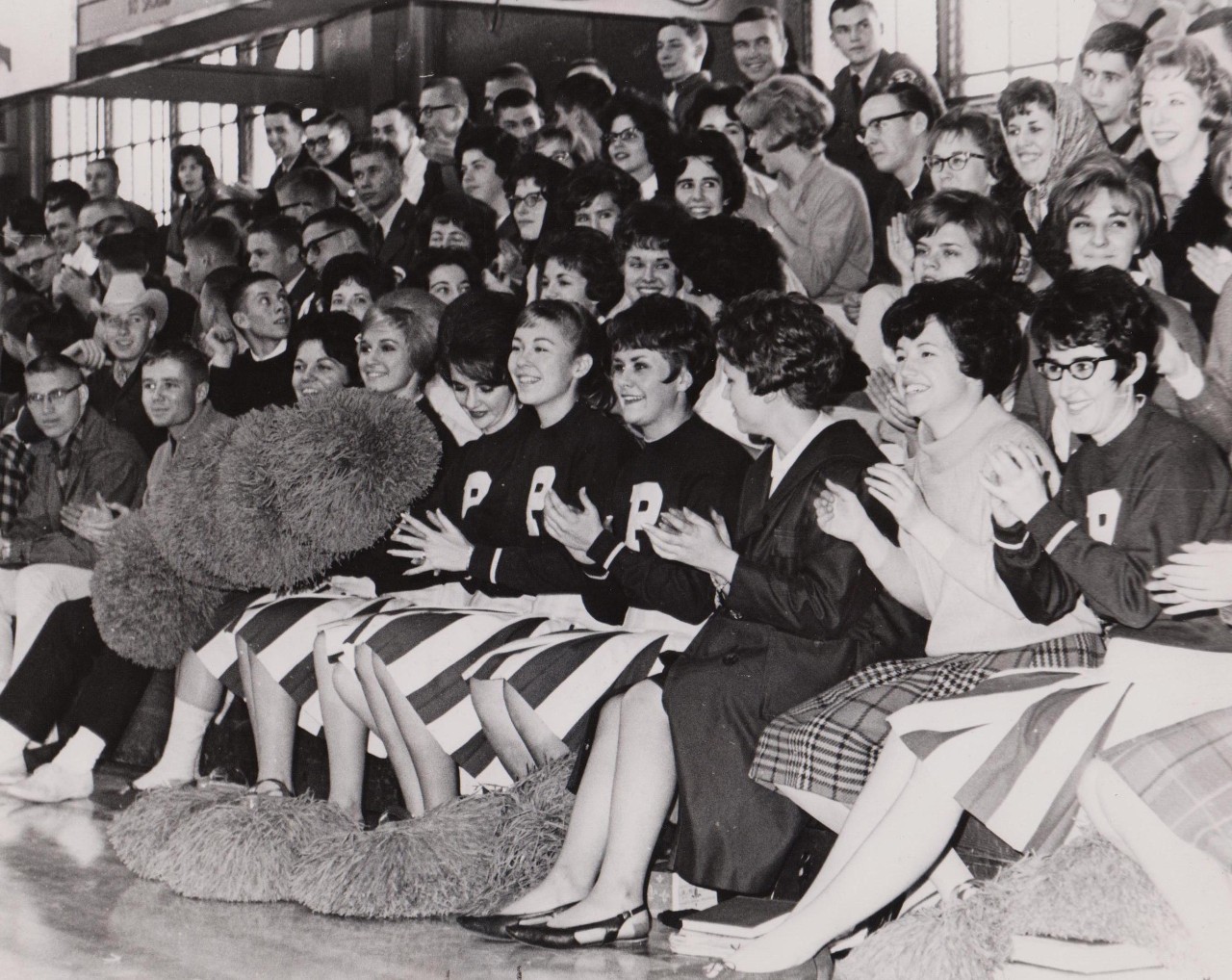
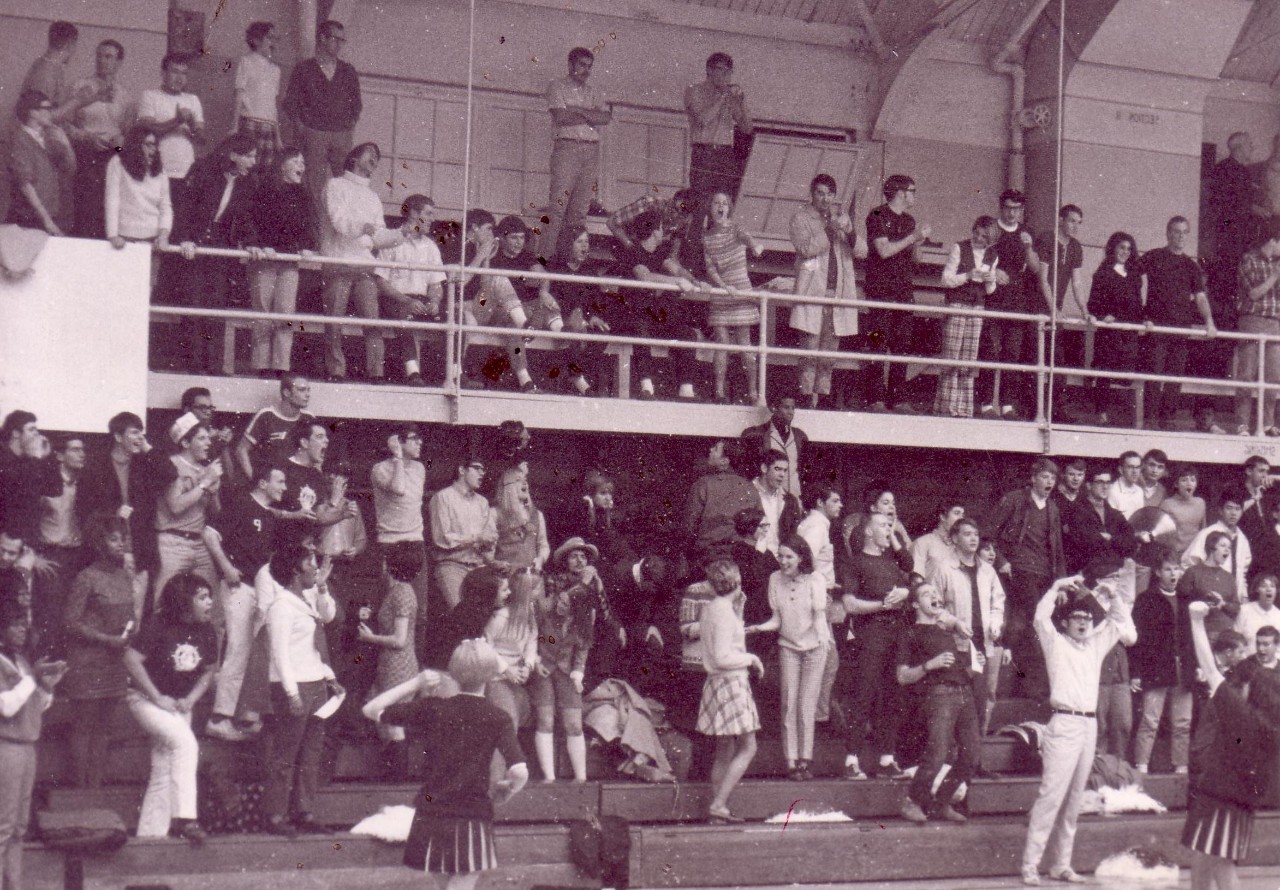
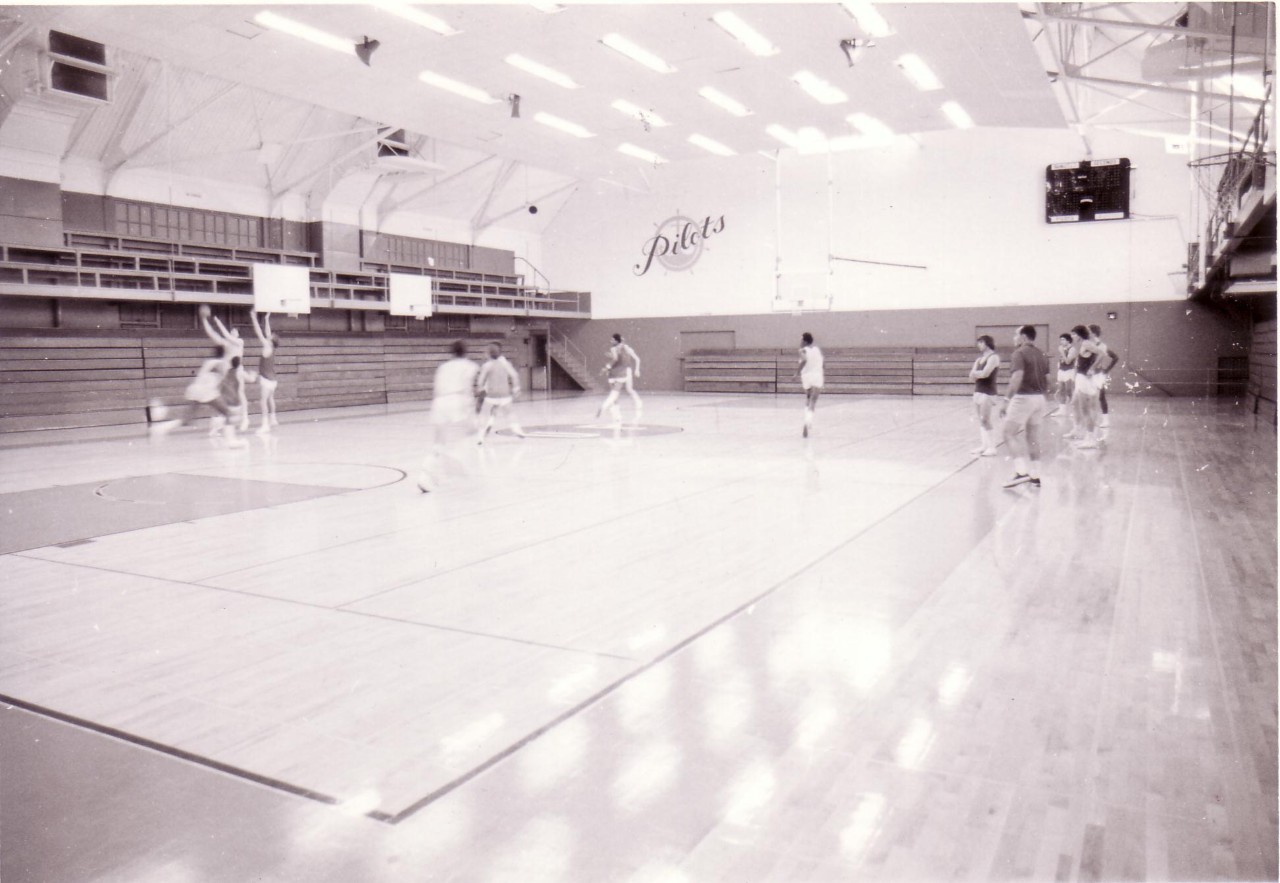
As an athletic facility, Howard Hall survived Fire & Flood, Ice & Earthquake, each time repaired and reoccupied as The Home of the Pilots whether cheering basketball, chilling between classes, or running literal treadmills.  For nearly a century, the intersection of campus life.

(Slide show of photos from the University Archives. Position cursor on each photo to view the caption.)


Spectators watching a boxing match in a gymnasium arena.
Boxing in Howard Hall, 1950s
Auditorium in Howard Hall
Howard Hall Auditorium, 1930
Cheerleaders on a gymnasium floor.
Cheerleaders, 1950
Cheerleaders performing for spectators.
Cheerleaders, 1958
Cheerleaders and spectators cheering at a game.
Cheerleaders, 1957
Cheerleaders on a gymnasium floor.
Cheerleaders in Howard Hall, 1950
Spectators around a boxing watching a fight.
Smoker, 1950 Log
Columbia's New Gymnasium text from the Columbiad.
The Columbiad, October 1927, pg. 3
Columbia's new gymnasium under construction.
Howard Hall Under Construction, 1927
Howard Hall, a modern gymnasium and auditorium.
Howard Hall, 1927
Brick building.
Howard Hall, 1938
Brick building almost completely covered with ivy.
Howard Hall with Ivy, ca1950
Brick building almost completely covered with ivy.
Howard Hall Covered with Ivy, 1960
Rows of chairs facing a stage decorated with the University of Portland Crest, ribbons, floral arrangements, and eight chairs across the stage.
Commencement Stage and Seating, Howard Hall, 1960
People standing and sitting on bleachers inside a gymnasium.
Spectators and Cheerleaders, Howard Hall, 1969 Log
Players playing basketball on an indoor gymnasium basketball court.
Howard Hall Basketball Court, 1981
Exterior corner view of the brick and windows of Howard Hall.
Howard Hall, 1984
Brick and windows exterior of Howard Hall.
Howard Hall, ca2002
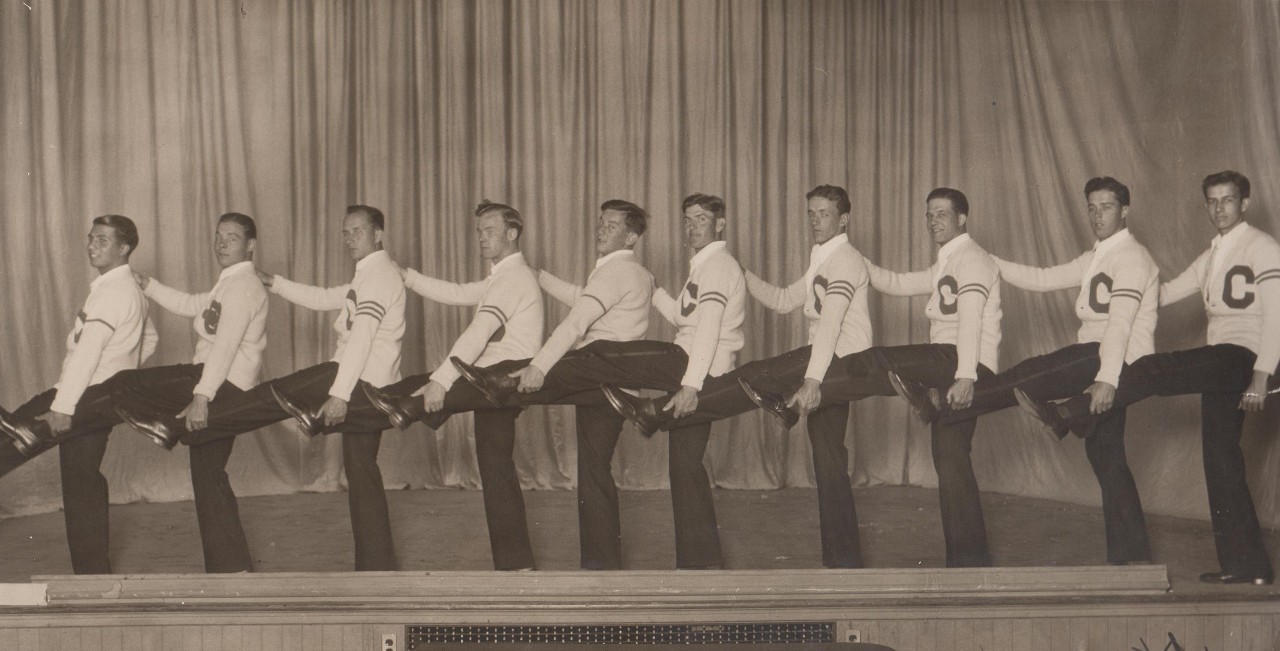
Row of 10 men in letter sweaters with one leg kicked up in an chorus line.
Monogram Club members, 1930
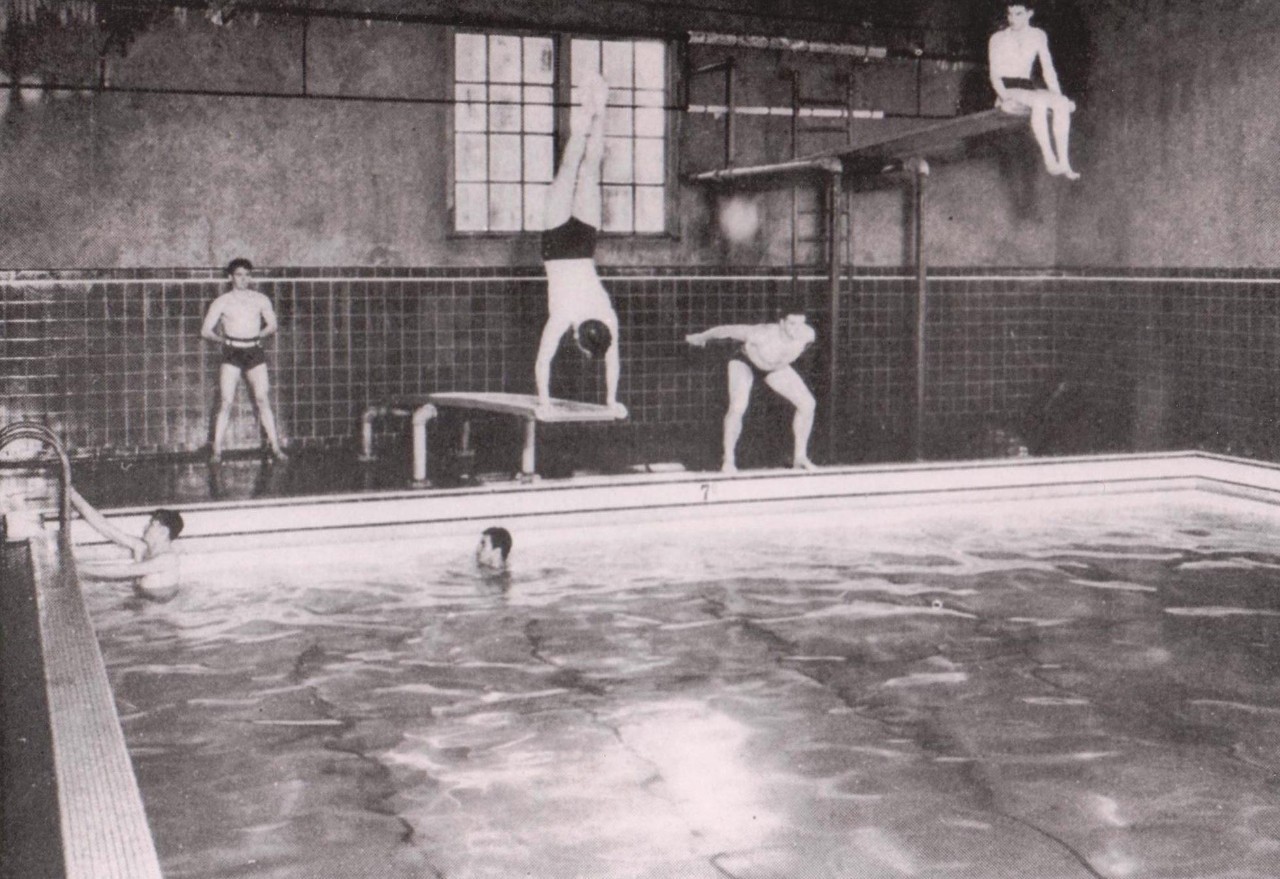
Students diving or getting ready to dive from the edge of an indoor swimming pool.
Swimming in Howard Hall, 1935
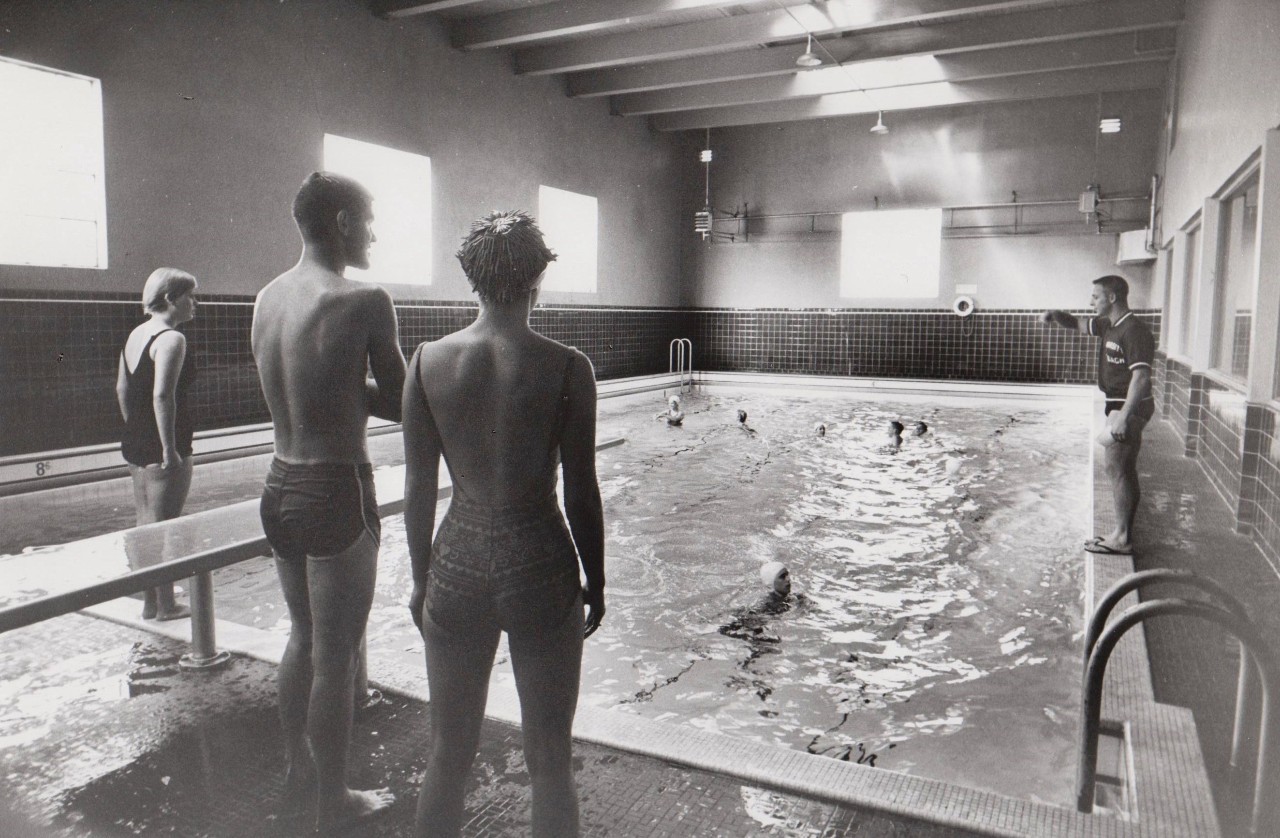
Instructor and students in an indoor swimming pool.
Swimming in Howard Hall, 1980s
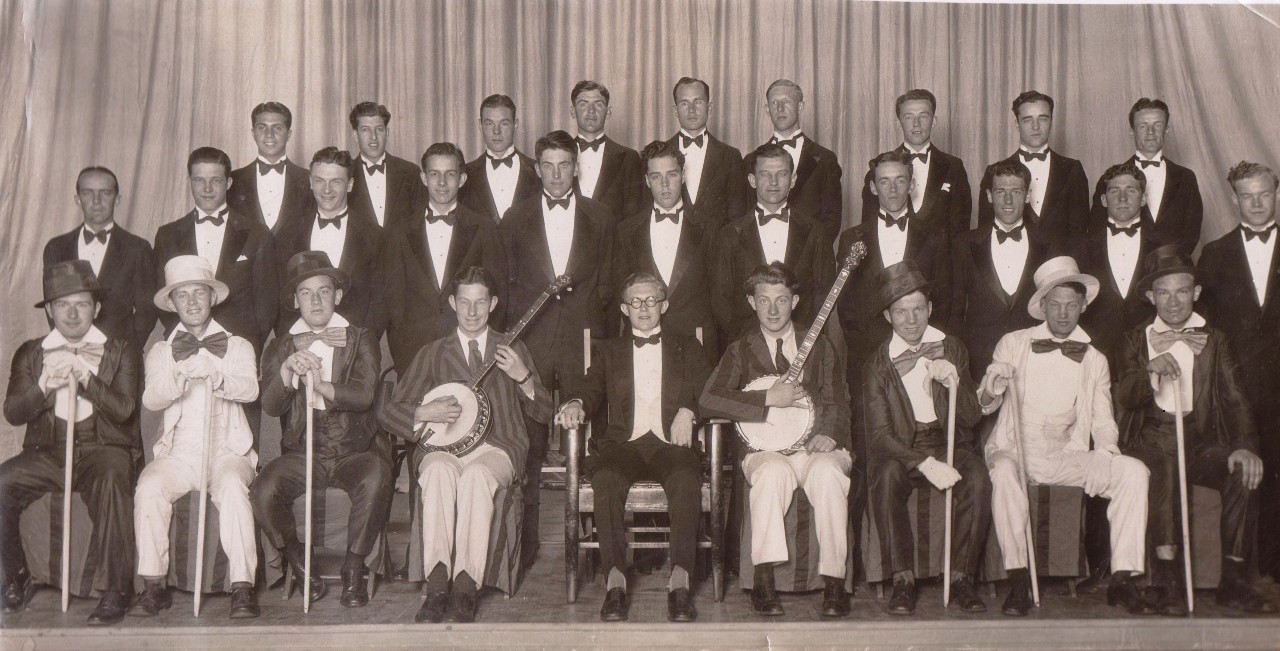
Group of people wearing tuxedos and hat and bow ties.
Varsity Vagaries, 1930
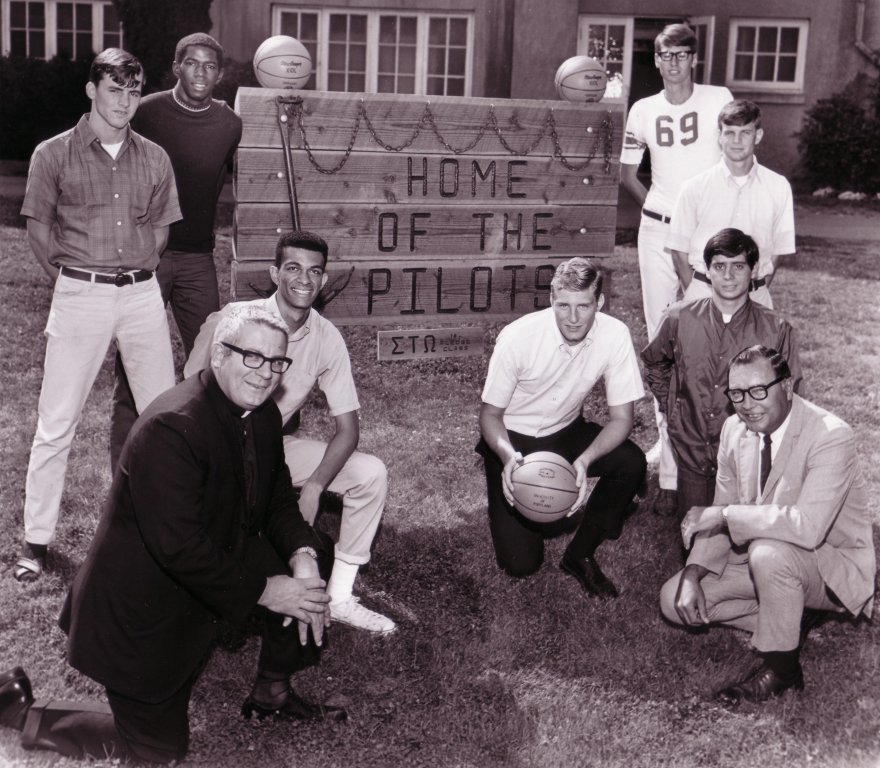
Father John Van Wolvlear and basketball players around the Home of the Pilots sign outside Howard Hall.
Rev. John Van Wolvlear, C.S.C., and Members of the Basketball Team, 1969

The metal time capsule box recovered from the Howard Hall cornerstone has been displayed in The Clark Library Gallery in conjunction with the “Remembering Howard Hall” photo exhibit.


From the Beacon

http://www.upbeacon.com/article/2017/04/goodbye-to-howard-hall

More about Howard Hall on the Museum blog:

Howard Hall Fire: https://sites.up.edu/museum/march-19-1949-howard-hall-fire/

First Cove: https://sites.up.edu/museum/lunch-room-to-night-spot/

Basketball in Howard Hall: https://sites.up.edu/museum/hearty-congrats/

Nelson Rockefeller Campaign visit: https://sites.up.edu/museum/campaign-trail-nelson-rockefeller-1964/

John F. Kennedy Campaign visit: https://sites.up.edu/museum/campaign-trail-john-f-kennedy-1960/

Howard Hall Swimming Pool: https://sites.up.edu/museum/amateur-athletics-swimming/

Trampoline in Howard Hall: https://sites.up.edu/museum/amateur-athletics-trampoline/

Weight Room: https://sites.up.edu/museum/amateur-athletics-weightlifting/

Boxing: https://sites.up.edu/museum/amateur-athletics-boxing/

Fencing: https://sites.up.edu/museum/fencing/


Filed Under: School History, School History 1

  • Go to page 1
  • Go to page 2
  • Go to page 3
  • Go to page 4
  • Go to Next Page »

Primary Sidebar

Hours and Location

University of Portland Museum
014 Shipstad Hall

Available by e-email at:  museum@up.edu

Digital Collections

Explore some collections and resources from the Archives and Museum available online through Digital Collections


Social Media

Follow us on Facebook

Follow us on Instagram

Ask Us Anything

Ask Us Anything

We'd Love to Hear from You! Questions? Comments? Topics?

This form is protected by reCAPTCHA and the Google Privacy Policy and Terms of Service apply.

Copyright © 2025 · News Pro with Full Header On Genesis Framework · WordPress · Log in

Subscribe

Subscribe By Email

Get every new post delivered right to your inbox.

This form is protected by reCAPTCHA and the Google Privacy Policy and Terms of Service apply.


Loading Comments...