• Skip to primary navigation
  • Skip to main content
  • Skip to primary sidebar

University of Portland Museum

  • Home
  • About
  • List of Entries

Carolyn

June 12, 1949 – Engineering Building Dedication

June 5, 2014 By Carolyn

The Quadrant, Dedication Issue, p.16, 1949
The Quadrant, Dedication Issue, pg. 17, 1949


This day, June 12, 1949, marks the sixty-fifth anniversary of the dedication of the Engineering building.  Built for $500,000, the 45,000 square foot, three-story building for Engineering and Physics was furnished with equipment purchased through war surplus, acquired by donations, or built-to-spec by our own faculty.  As a basement was not part of the original building plan (or covered by budget), Brother Godfrey Vassallo, C.S.C., other faculty, and dedicated students dug out the basement themselves using hand tools.  This new structure was not without its faults — though some claim that insufficient lighting and a noisy heating system added character to the building.

Engineering Building, June 12, 1949

Spring forward to the 21st century to a thriving School of Engineering in need of classrooms and space to house the equipment and technology needed for teaching the rapidly growing number of students enrolled in multiple engineering programs.   In 2008, with lead gifts from distinguished alumni and benefactors, Darlene and Donald ’51 Shiley and Sharon and Ed ’56 Sweo, the Engineering building underwent a complete remodel and expansion, nearly doubling in size and providing a state-of-the-art facility.    From the darkness of the basement labs, the School is newly re-housed within its old home, renamed Donald P. Shiley Hall, where light streams through expansive glass windows.  This year the Shiley School of Engineering conferred over 120 Bachelor of Science degrees in Mechanical, Electrical, and Civil Engineering and in the field of Computer Science on May 4, 2014 as part of the University of Portland Commencement Exercises.

Donald P. Shiley Hall, September 2009


Filed Under: School History, School History 3

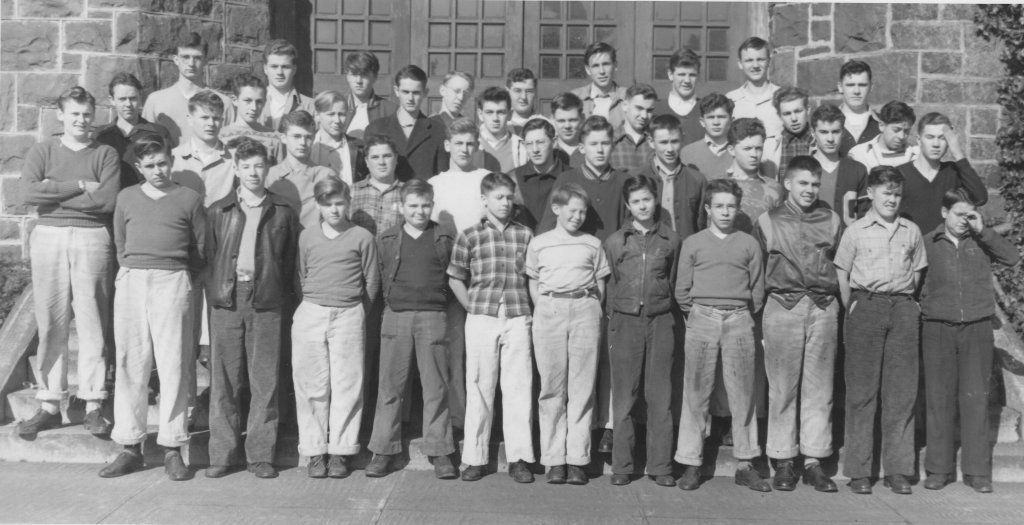
Columbia Prep: 1901-1955

May 30, 2014 By Carolyn

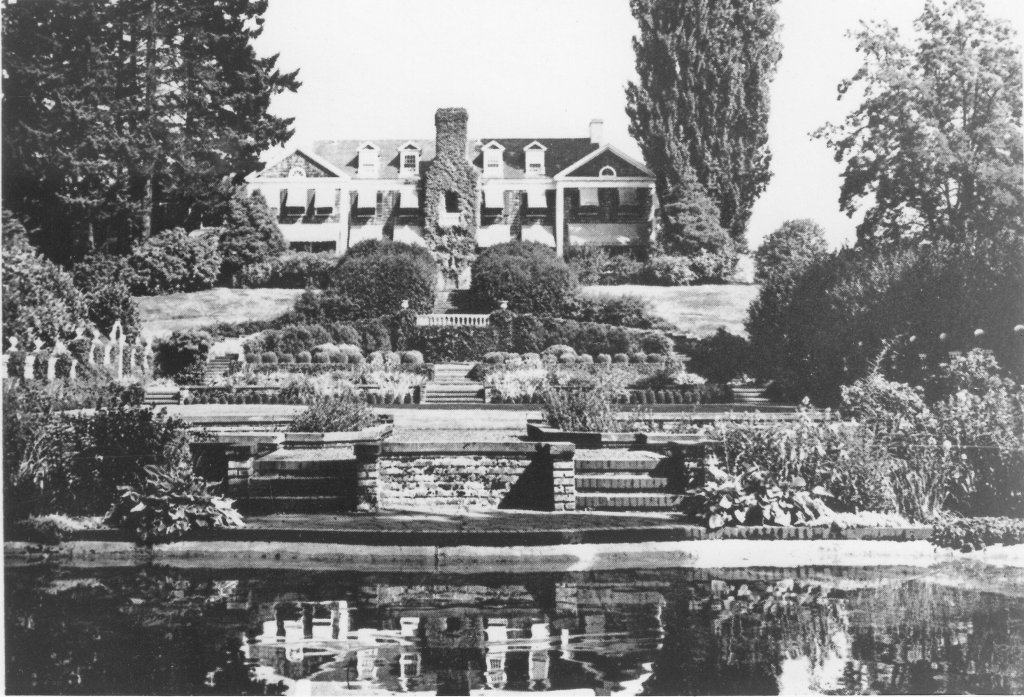
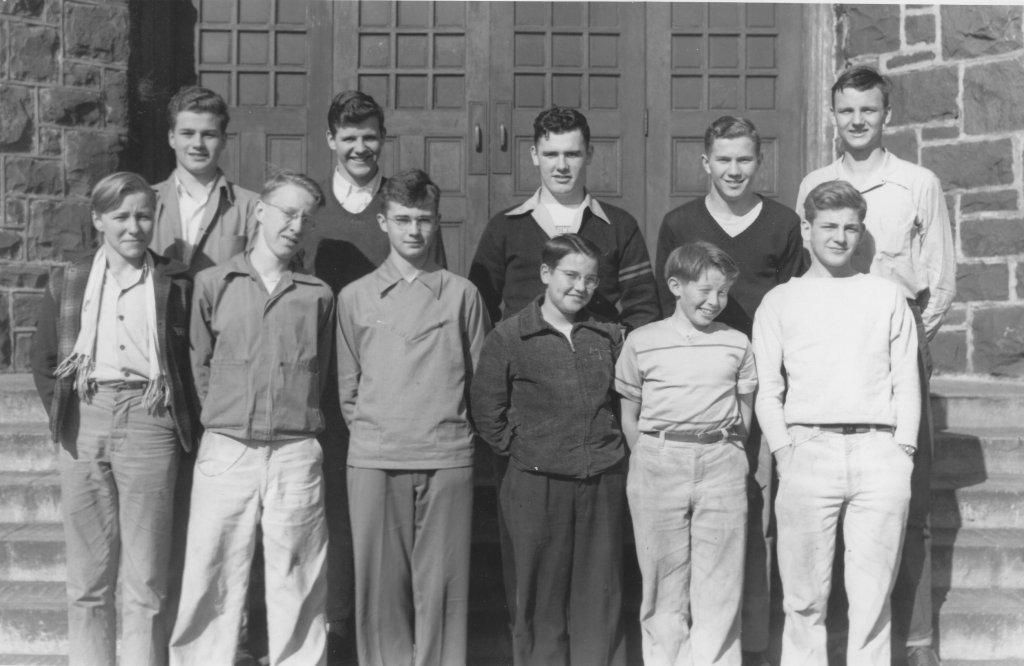
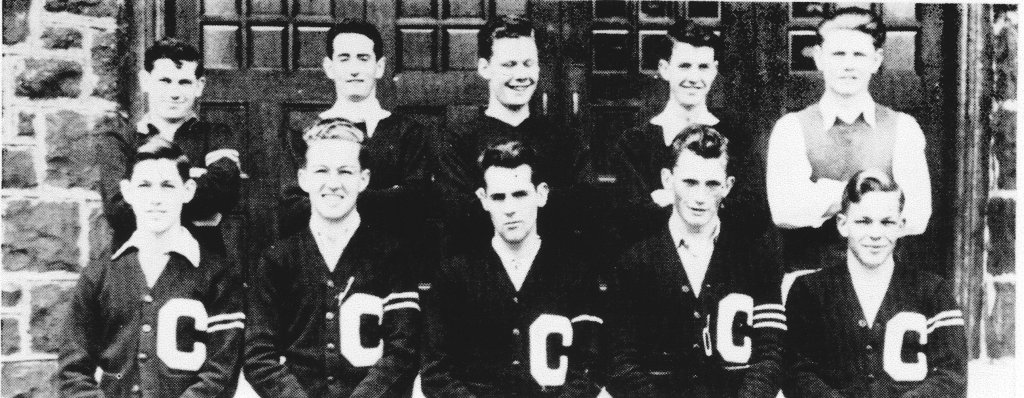
Columbia Preparatory school and Columbia University were the same school, with the same faculty, campus, and buildings.  Founded in 1901 and ‘residing’ in West (Waldschmidt) Hall the high school unit existed as the backbone of this University, with strong academic programs and a reputation for athletic competition.  With the first collegiate class graduating from the school in 1929 (SIX graduates!), the two schools separated in 1935, taking the names, The University of Portland and Columbia Preparatory School (Columbia Prep).  In 1948, due record setting undergraduate enrollments for the University following World War II, Columbia Prep was moved from the University of Portland campus and relocated to the fifty acre Wilcox Estate in Southwest Portland.  The Prep school did not thrive after this transplant, and as enrollment declined, the decision was made to close Columbia Prep for good in June 1955.  As announced in the Oregon Journal newspaper on June 3, 1955, “Doors Close for Good — Columbia ‘Prep’ Ends 54-Year Life”.  In its day Columbia Prep was one of the premier private secondary schools for young men in the West; fulfilling in part the dream and intention of Archbishop Alexander Christie, our founder and first patron.  The University of Portland proudly hosts the annual Columbia Prep reunion on campus in honor of this legacy.

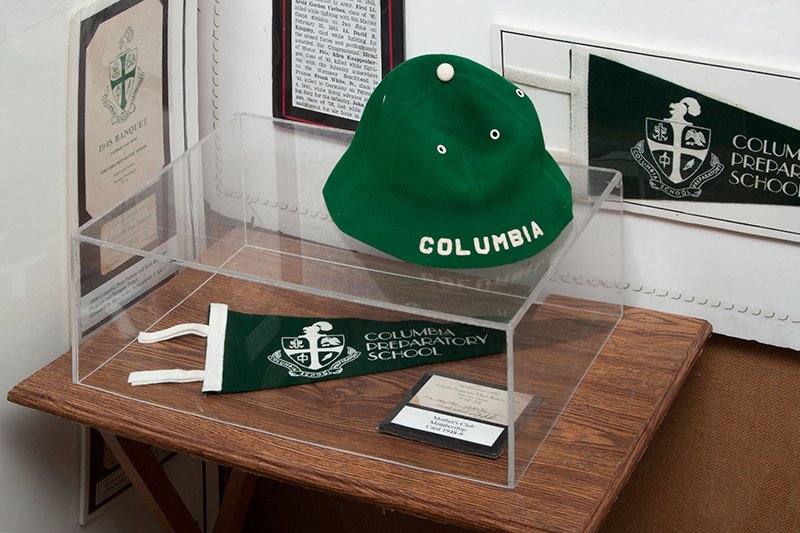
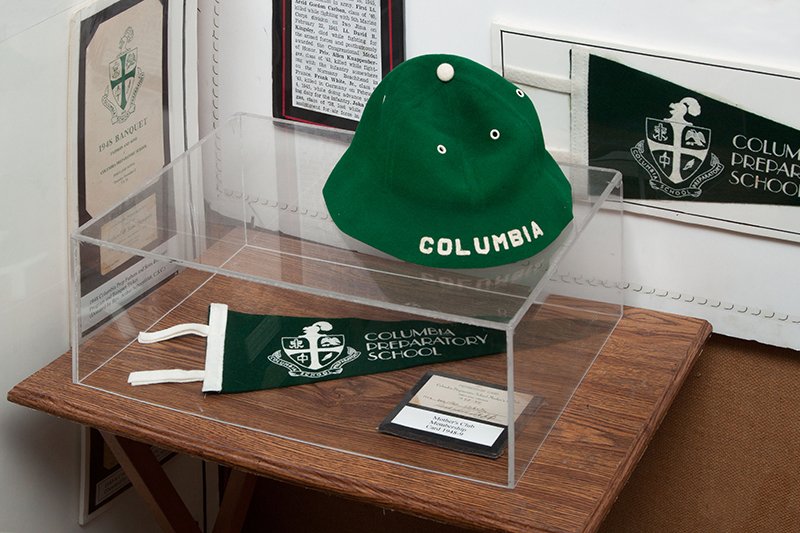
Table display of a green beanie with the word Columbia printed on the brim, Columbia Preparatory School pennant, and a membership card.
Columbia Prep Banner and Beanie
House, gardens, and pool of Wilcox Estates.
Wilcox Estates, 1949-50
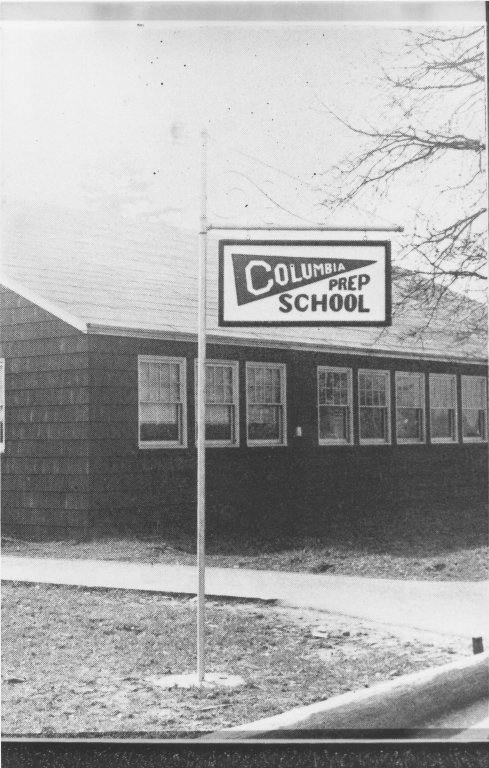
Columbia Prep School sign on sign post.
Columbia Prep School Sign, 1947
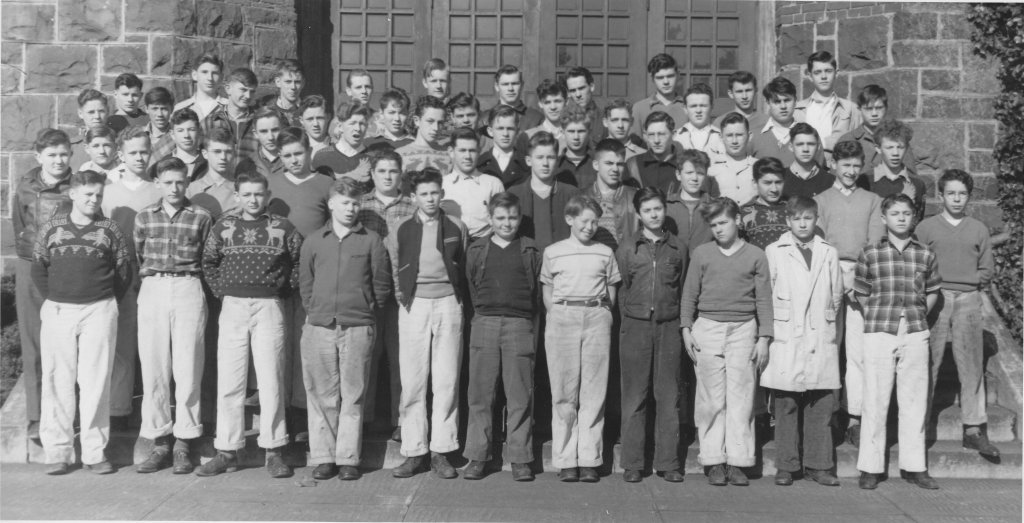
Group of freshman students posed in front of a building.
Freshman Class, 1944
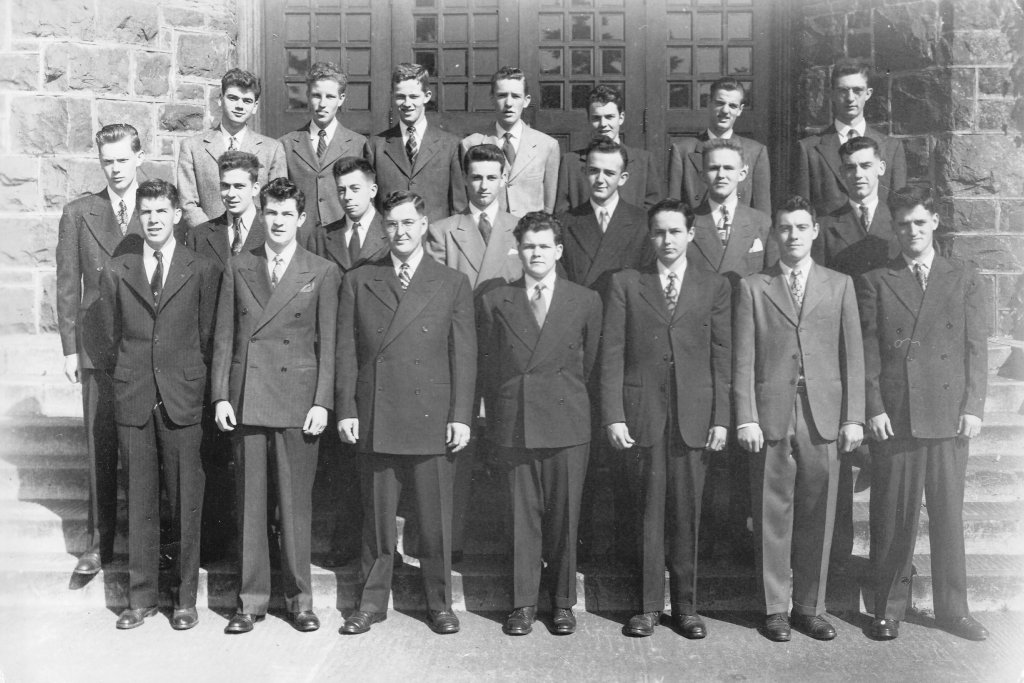
Members of the 1944 senior class.
Senior Class, 1944
Group photo of the Boarders Club from 1943.
Boarders Club, 1943-44
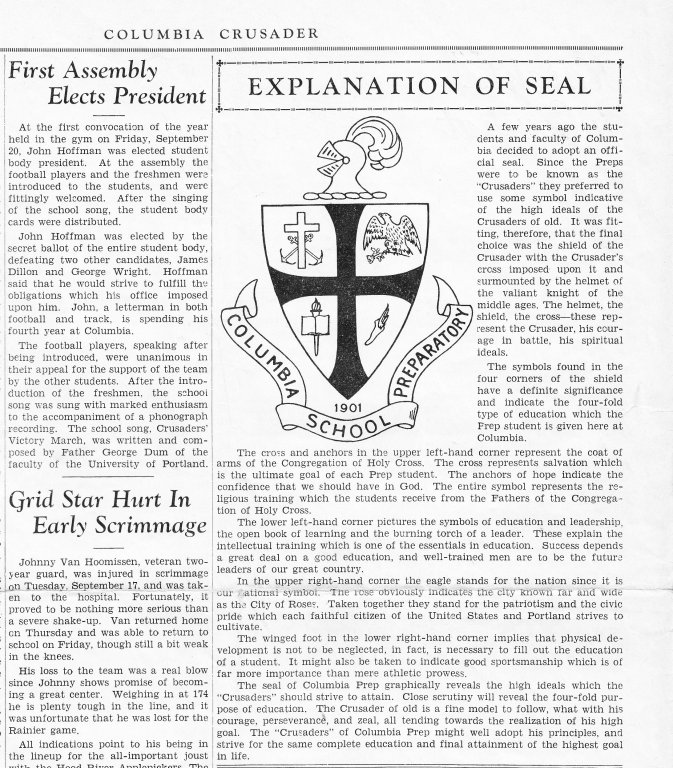
Page from the Columbia Crusader newspaper.
Explanation of the Columbia Preparatory School Seal, 1940
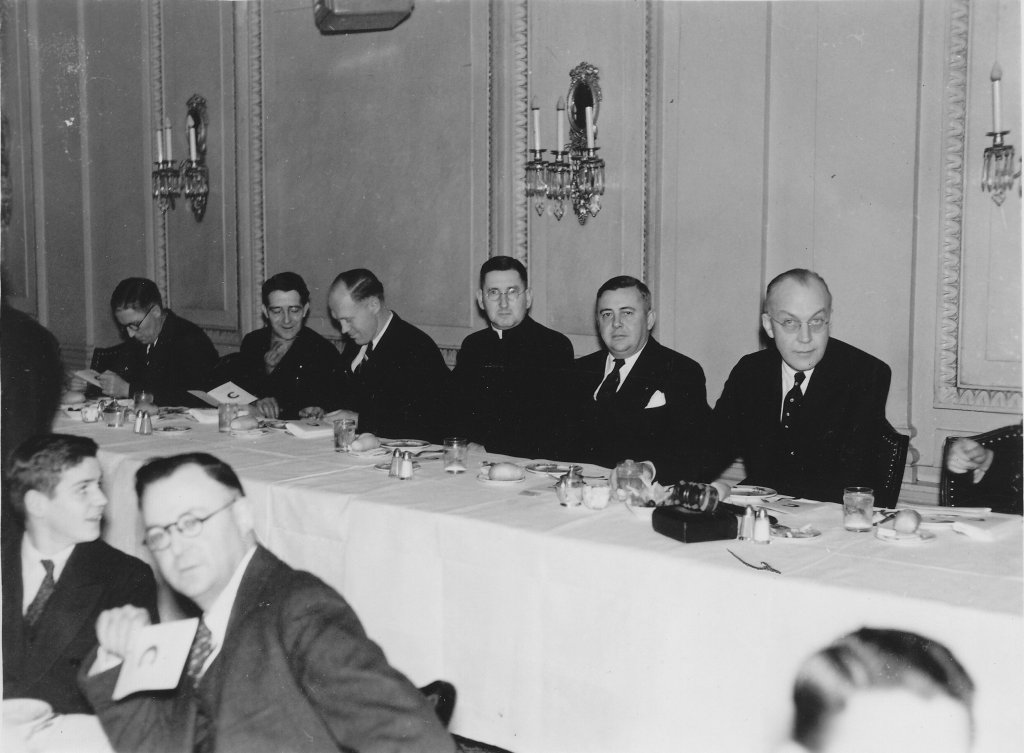
People seated at a banquet table.
Father and Son Banquet, ca1938
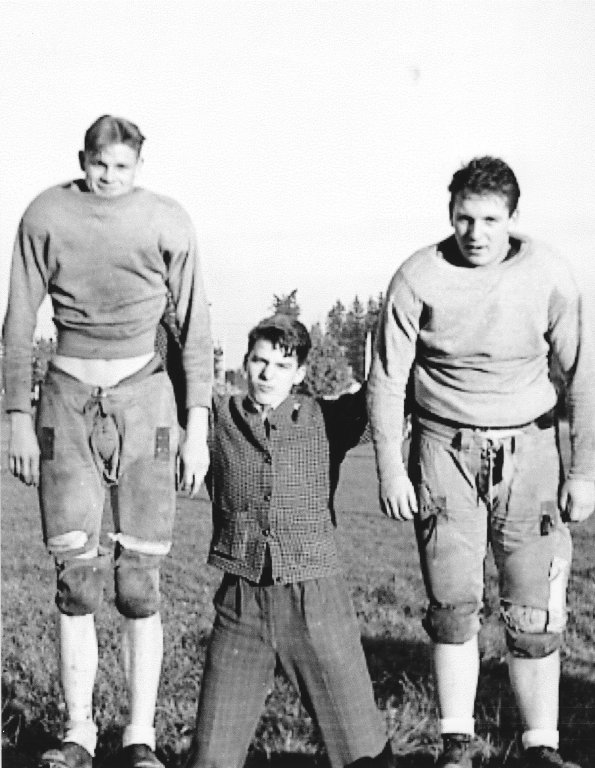
Hoagland, John Beckman, Gillis
Hoagland, John Beckman, Gillis, ca1938
Members of Sanctuary Knights.
Sanctuary Knights, 1943-44
Gooba Fappa Foo members from 1938.
Gooba Fappa Foo, 1938
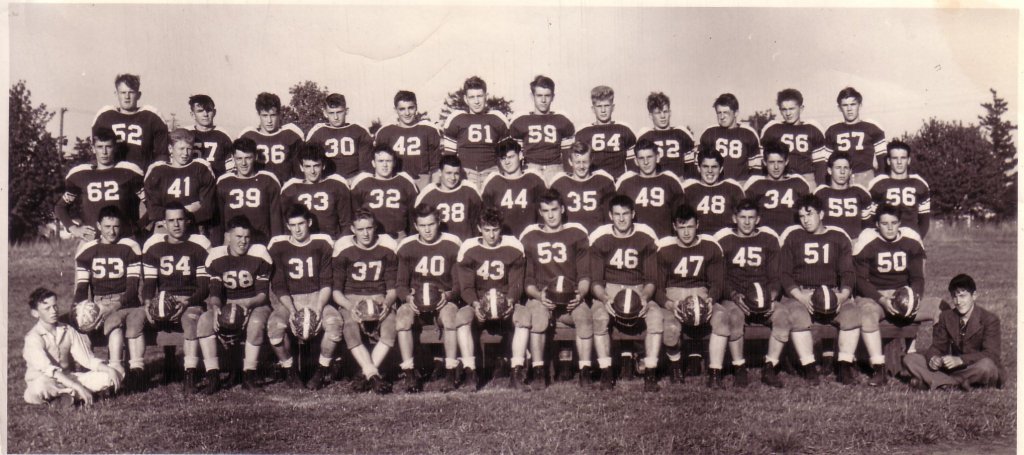
Members of the 1946 Columbia Preparatory School football team.
Columbia Prep Football Team, 1946
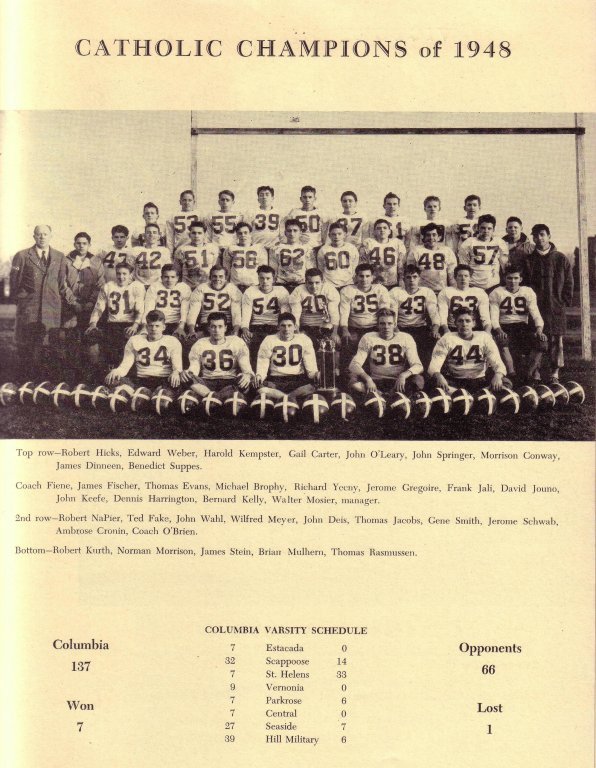
Catholic Champions of 1948.
Catholic Champions of 1948
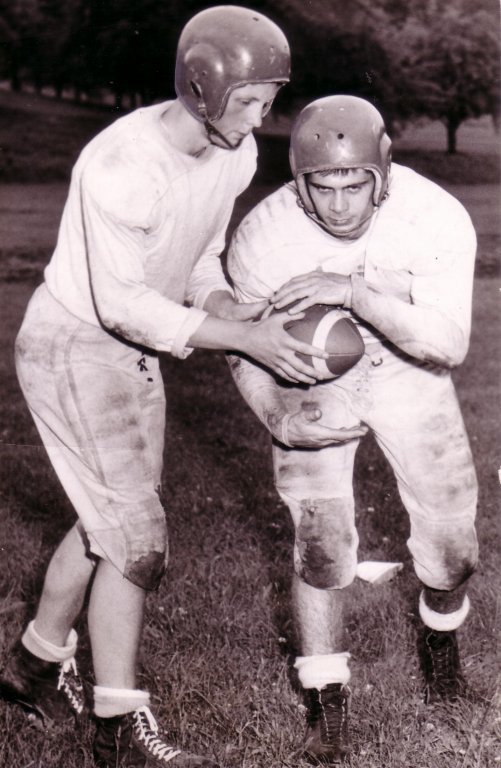
Quarterback handing a football off to the running back.
Bob Allen hands off football to Ted Parent, 1954
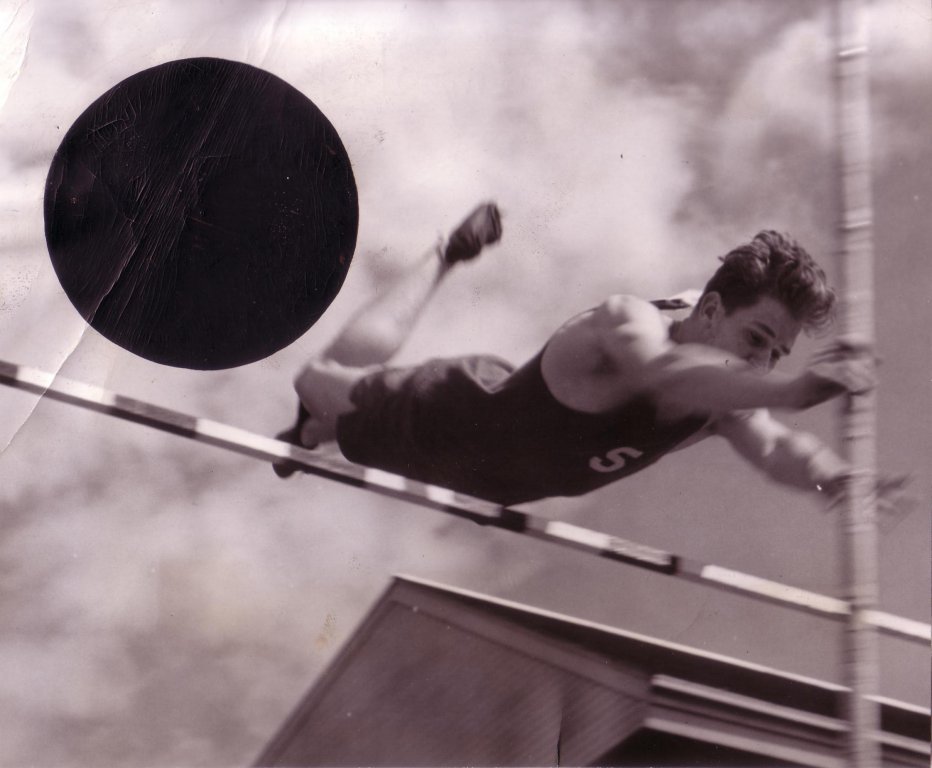
Jerry Studley clearing a pole vault bar.
Jerry Studley, Pole Vaulting, 1947
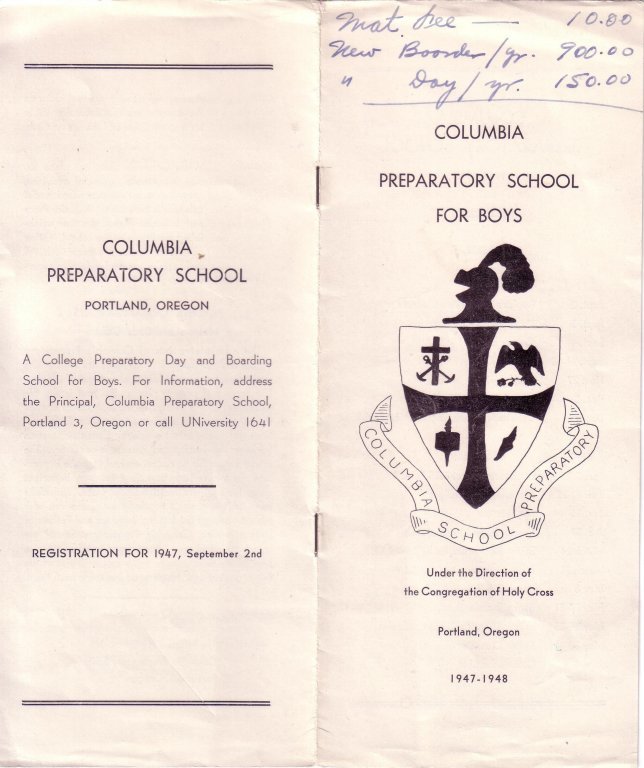
Front and back cover of the brochure for Columbia Preparatory School for Boys.
Columbia Preparatory School Brochure, 1947-48
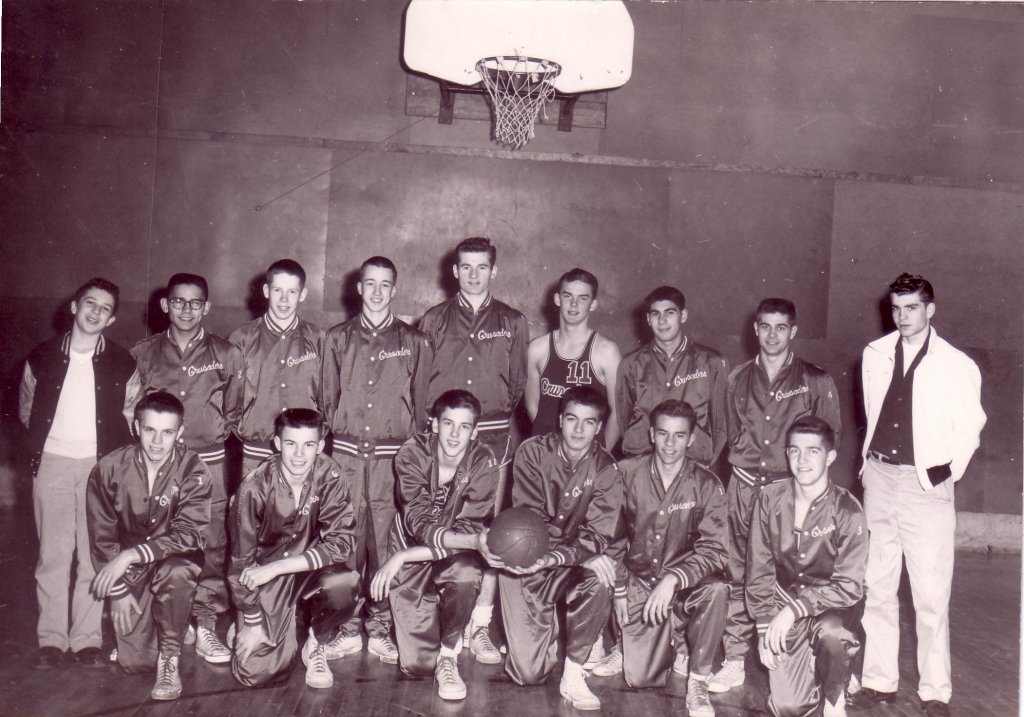
1955 Columbia Preparatory School basketball team.
Columbia Prep Basketball Team, 1955
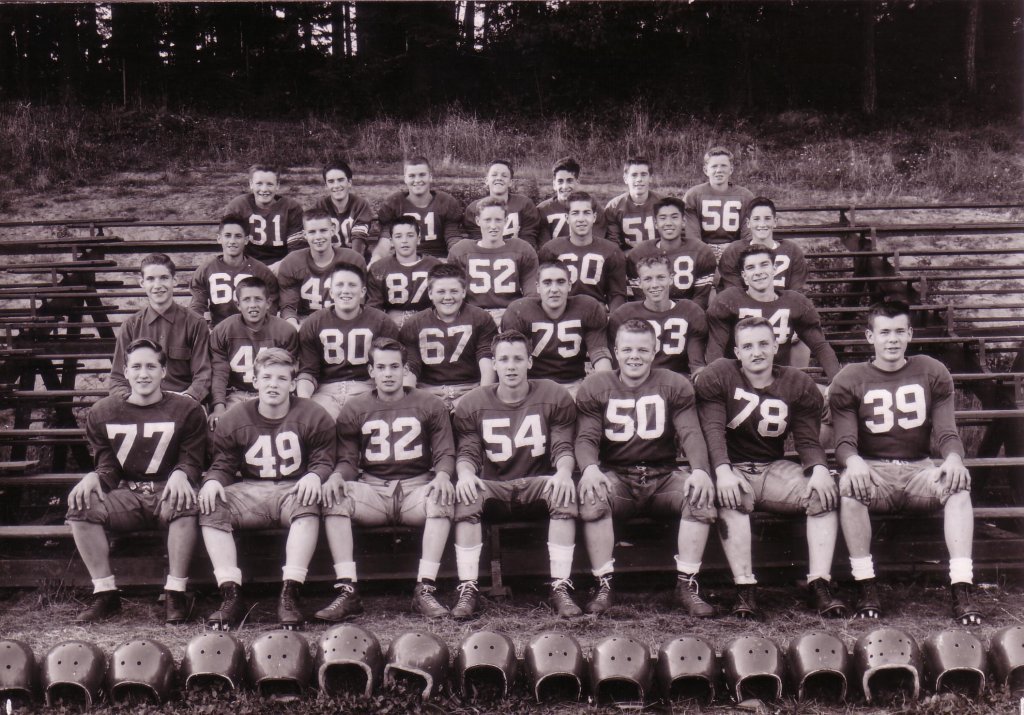
Football team in uniform sitting on benches.
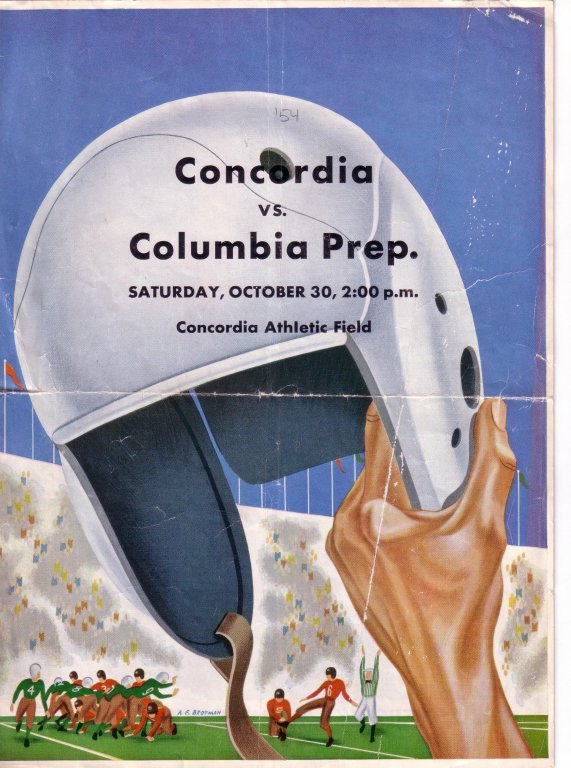
Cover of a football program for Concordia versus Columbia Preparatory School Saturday October 30, 1954.
Concordia vs Columbia Prep Football Program, 1954
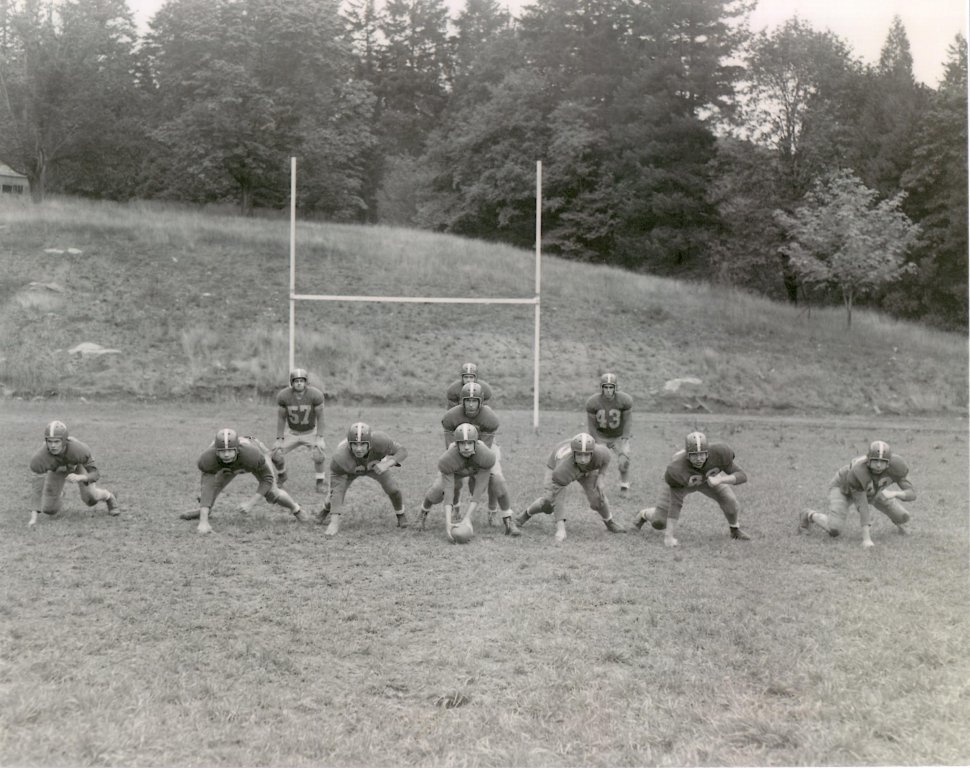
Football players setting up for their offensive position.
Columbia Prep District Champions, 1952
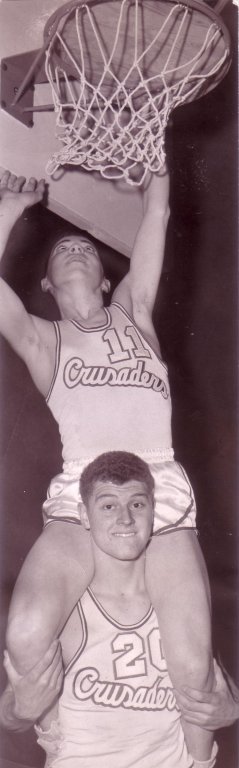
Basketball player carrying another basketball player on his shoulders while standing beneath a basketball hoop.
Ed Verdurman holding Peter Murphy, Basketball, 1953
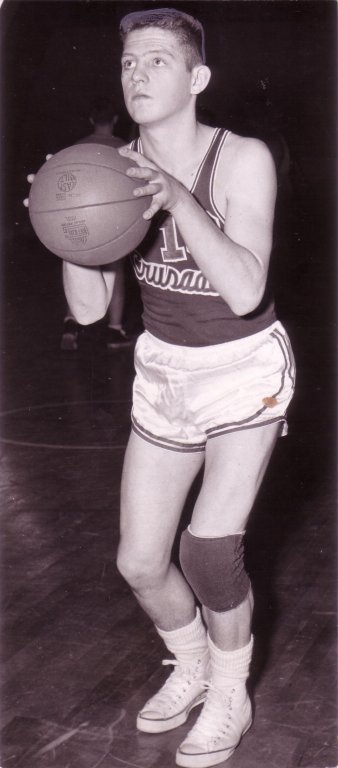
Basketball player getting ready to make a shot with a basketball.
Dick Smith, Basketball, 1952
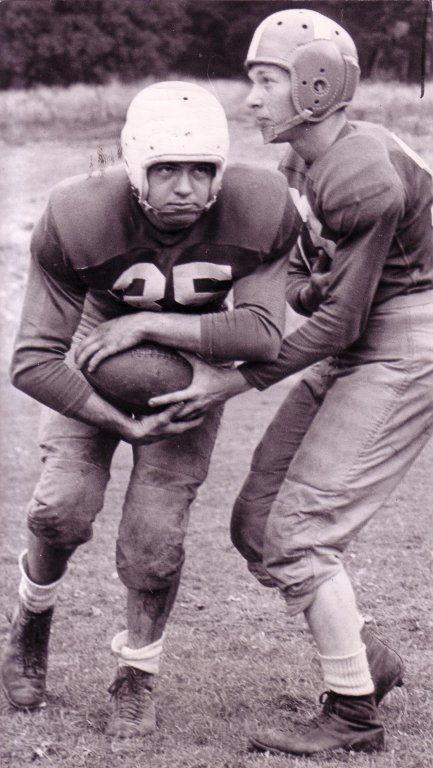
Quarterback handing a football off to the running back.
Charlie Kaye, Phil Galluzzo, 1949
Table display of a green beanie with the word Columbia printed on the brim, Columbia Preparatory School pennant, and a membership card.
Columbia Preparatory School Banner and Beanie

Filed Under: School History, School History 3

Let Us Commence

May 1, 2014 By Carolyn

Each year at this time the University of Portland sends its graduates beyond the Bluff into the world.   This year the University announces a record number of 212 graduate and 929 undergraduate students to receive their degrees during the first weekend of May here on campus in the Earle A. and Virginia H. Chiles Center.

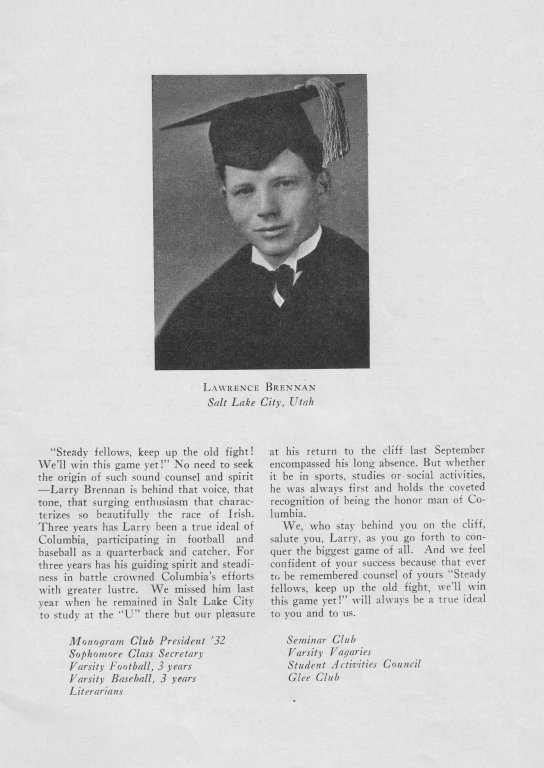
The number of University graduates has fluctuated during the years of the University’s existence.   For example, Lawrence Brennan received the only university degree awarded in 1932 (we had first become a 4-year University four years before).    The University of Portland became fully co-educational in 1951, and when the University conferred its 10,000th degree in 1974, it was received by Catherine Glidden, an earned bachelor’s degree in Nursing.

From Army and Air Force commissionings, to the Nursing pinning ceremonies, President’s Luncheon, academic procession, and valedictory addresses, the end of college is marked by more than moving out and moving on.  It is a time of accomplishment and pride, celebration and ritual for both faculty and students and families met together this weekend in joy.

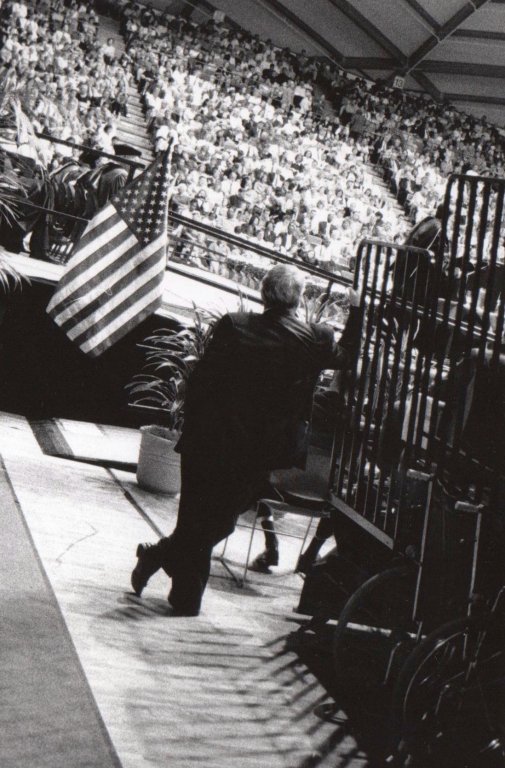
People gathered in the Chiles Center for an event.
Waiting to Commence, 2000
Father David Tyson shakes hand and presents diploma to a graduate.
Rev. David Tyson, CSC, University President, presents diploma to a graduate, 2000
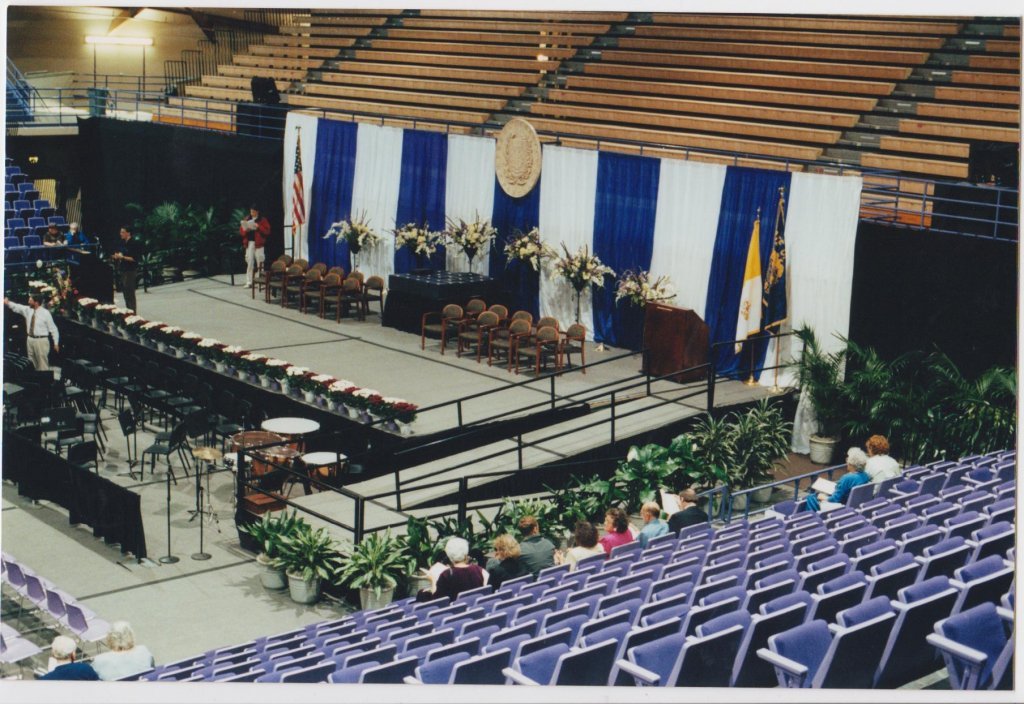
Stage and chairs set up for an event at the Chiles Center.
Commencement, 2000
Stage, bleachers and chairs set up for an event in the Chiles Center.
Sound Check, 2000
Raising of the United States flag on the Chiles Center Plaza flag pole.
Raising of the Flag, 1991
Faculty and graduates standing outside the Chiles Center for the flag raising ceremony.
Raising of the Flag, 1989
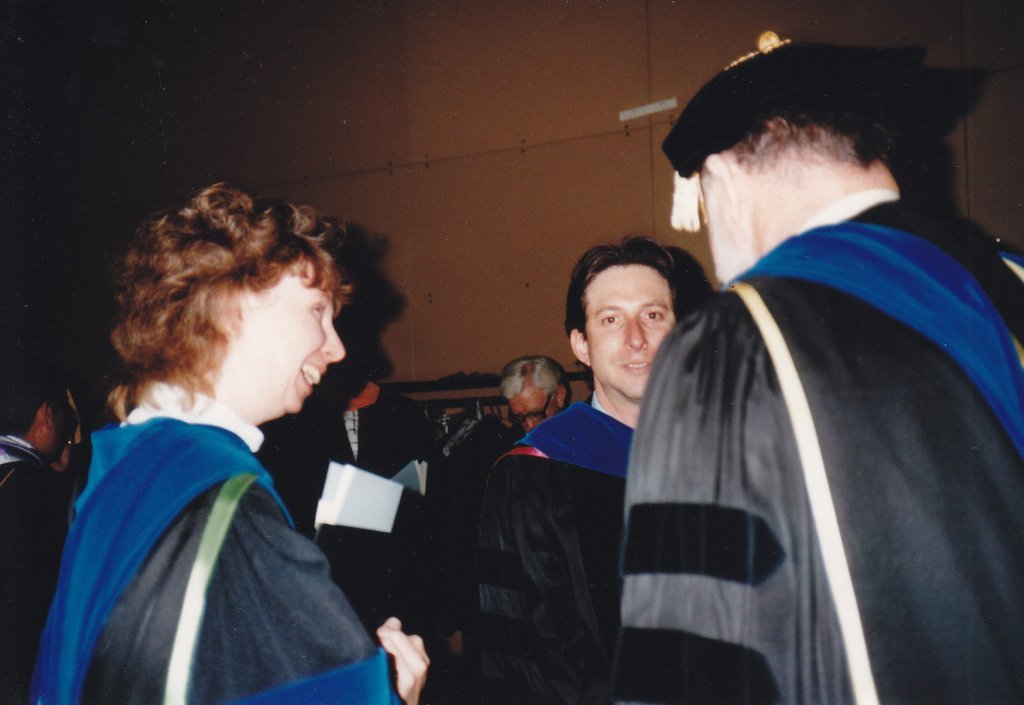
Doctor Agnes Tenney and Father Thomas Oddo with a university graduate.
Dr. Agnes Tenney and University President, Rev. Thomas Oddo, CSC with a University graduate, 1987
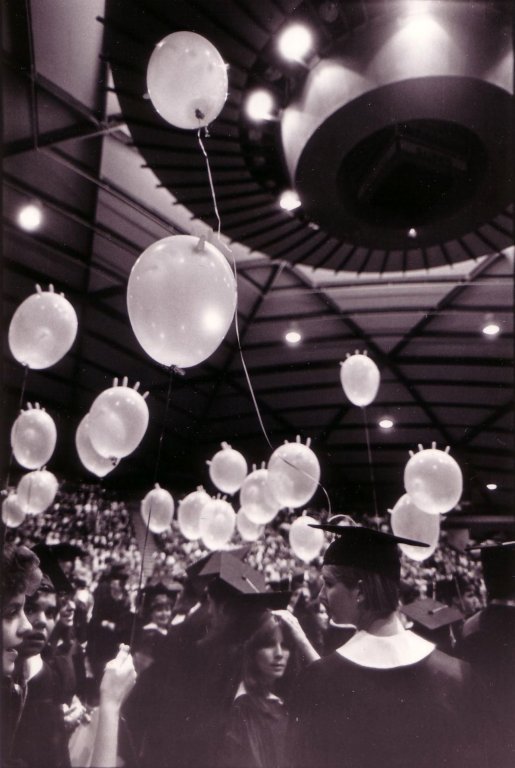
Nursing graduates release surgical glove balloons into the air.
Nursing Graduates, 1985
Two graduates with big smiles.
Graduation Joy, 1974
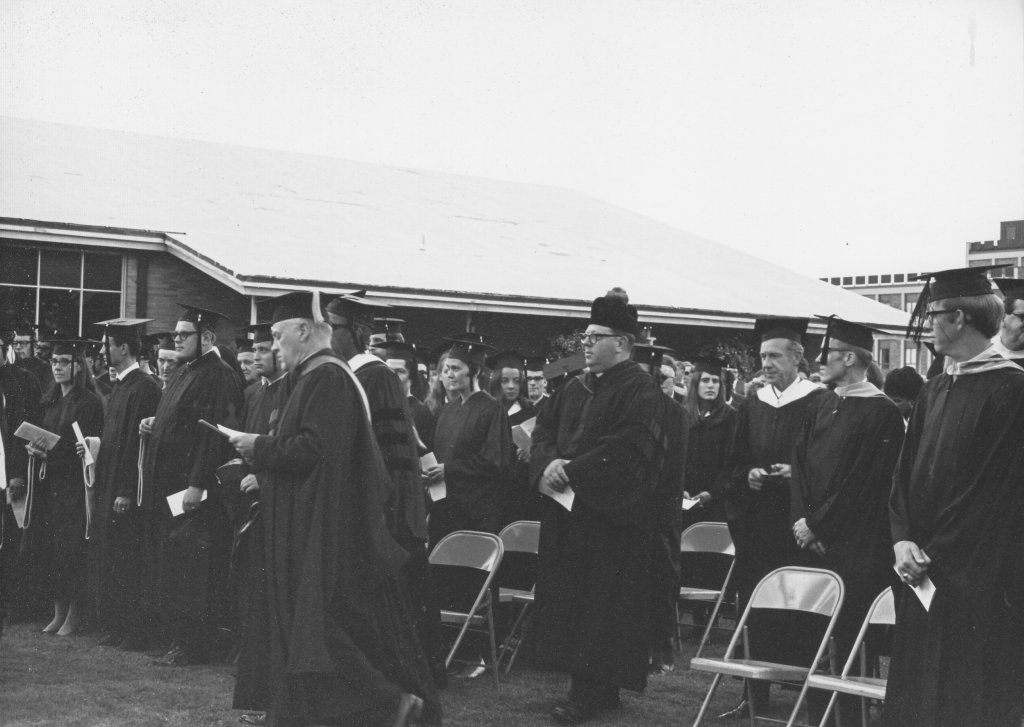
Academic procession for an outdoor commencement ceremony.
Rev. Paul Waldschmidt, CSC, Summer Commencement, 1970s
Blessing of the flag at a University of Portland Commencement Exercises ceremony.
Blessing the Flag, 1969
Two students wearing graduation cap and gown and holding their diplomas.
William and Kay Pankratz, 1964
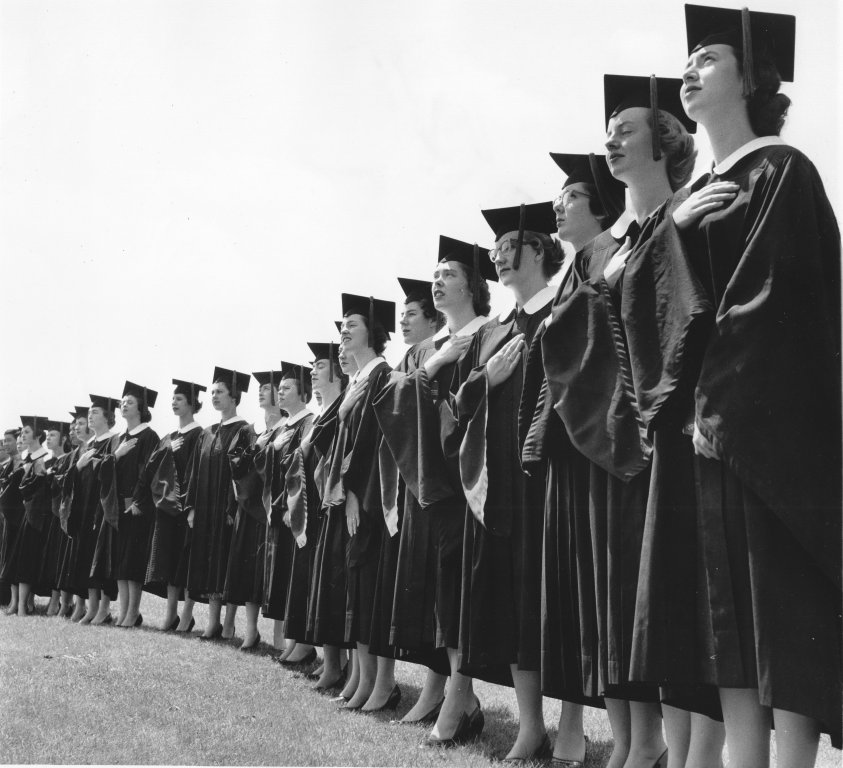
Row of students wearing academic regalia with hands across their chests.
Graduates, 1957
Baccalaureate Mass in Howard Hall.
Baccalaureate Mass in Howard Hall, 1951
Brother Godfrey Vassallo leads the student procession at commencement.
Brother Godfrey Vassallo, CSC, processes with University Graduates, 1944
Lawrence Brennan, Columbia University's only graduate in 1932.
Lawrence Brennan, Columbia University’s only graduate in 1932

Filed Under: Annuals, Annuals 2

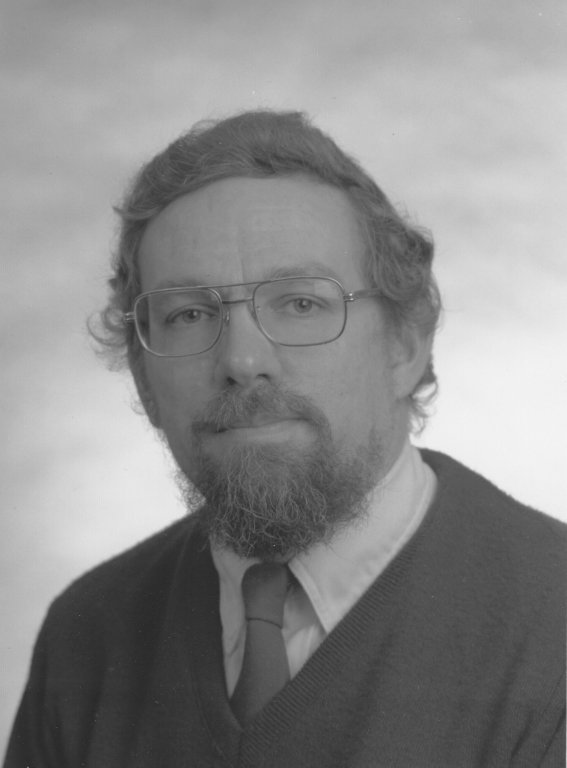
2014 Retiring University Faculty

April 29, 2014 By Carolyn

At the end of the 2013-14 academic year, eight members of the University of Portland faculty will retire after many years of service to this institution, making a difference in the lives of untold number of students.    The University gives thanks to our retiring faculty for their dedication and commitment to teaching and learning and wishes them all the best.

Dr. Herman Asarnow, English, at UP since 1979
Dr. Susan Baillet, Psychology, at UP since 1983
Dr. Kathy Crabtree, Nursing, at UP since 2011
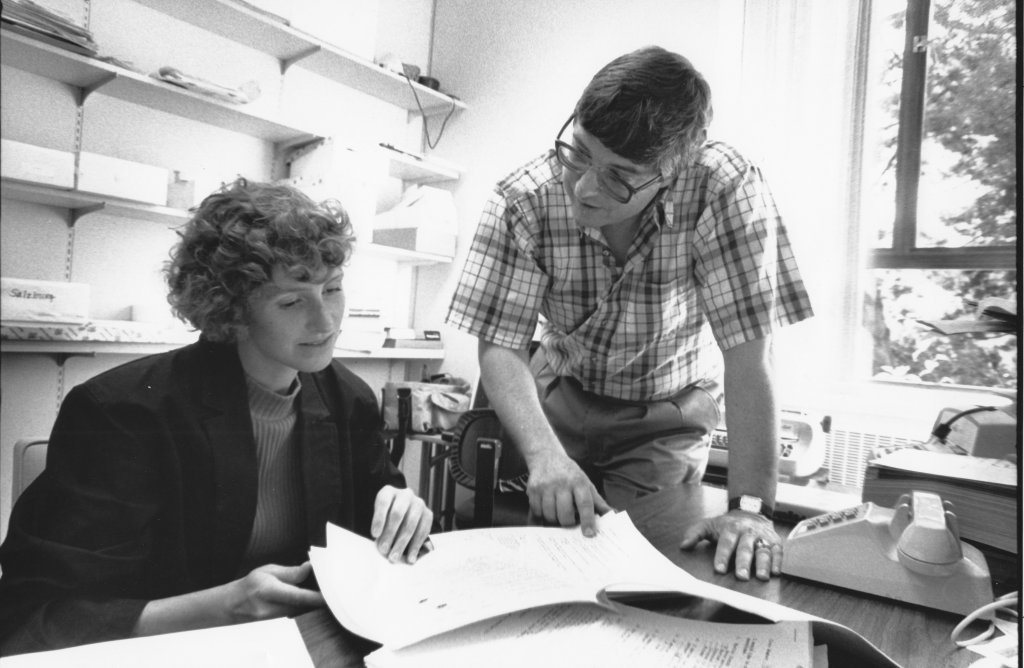
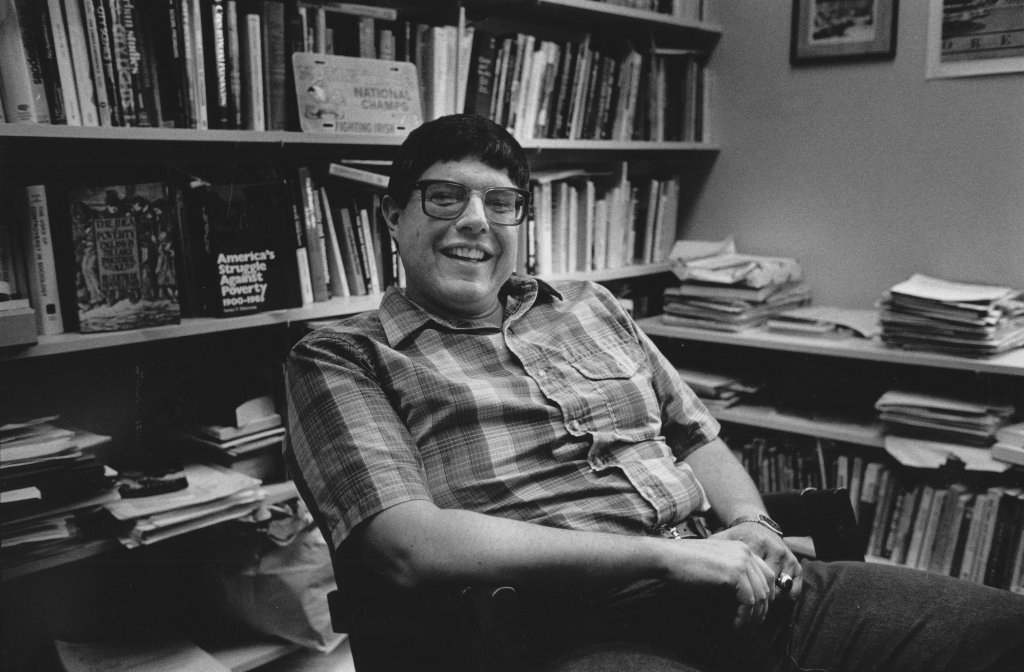
Dr. Robert Duff, Sociology, at UP since 1972
Dr. Thompson Faller, Philosophy, at UP since 1964
Dr. Christopher Kodadek, Biology, at UP since 1982
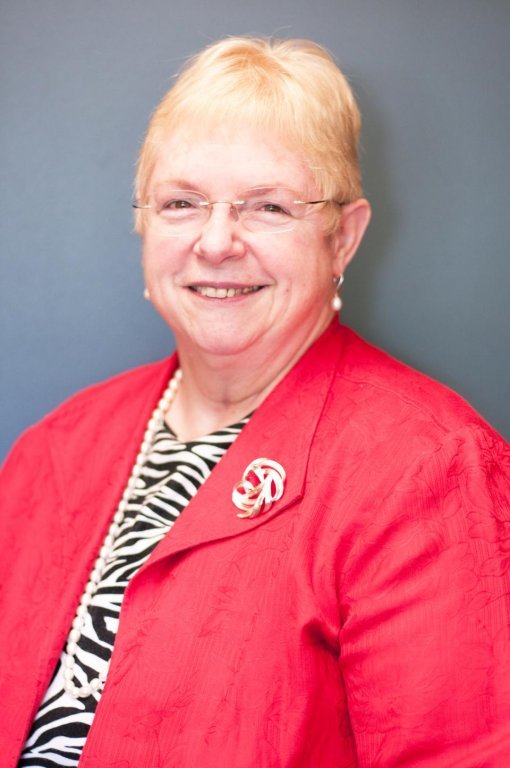
Ms. Caroline Mann, Library, at UP since 1998
Fr. Claude Pomerleau, C.S.C., Political Science, at UP since 1991

Gallery of 2014 Retiring Faculty

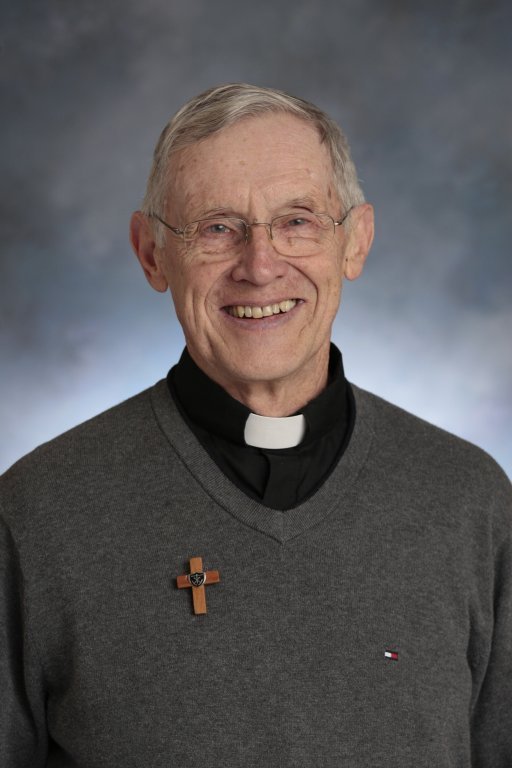
Father Claude Pomerleau
Fr. Claude Pomerleau, CSC, 2011
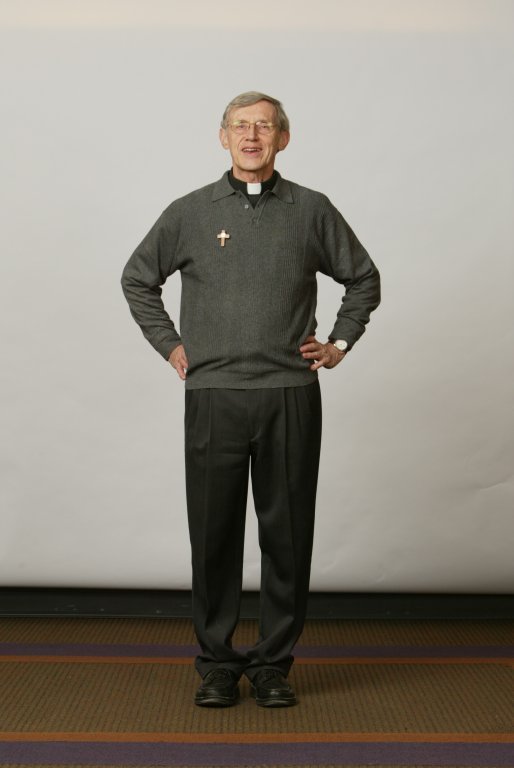
Father Claude Pomerleau
Fr. Claude Pomerleau, CSC, 2004
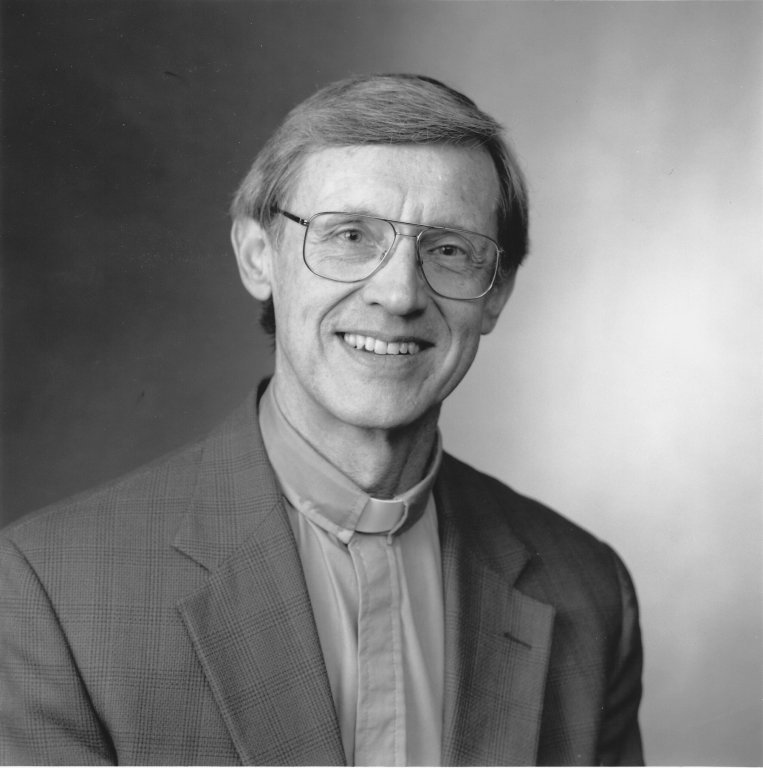
Father Claude Pomerleau
Father Claude Pomerleau, 1997
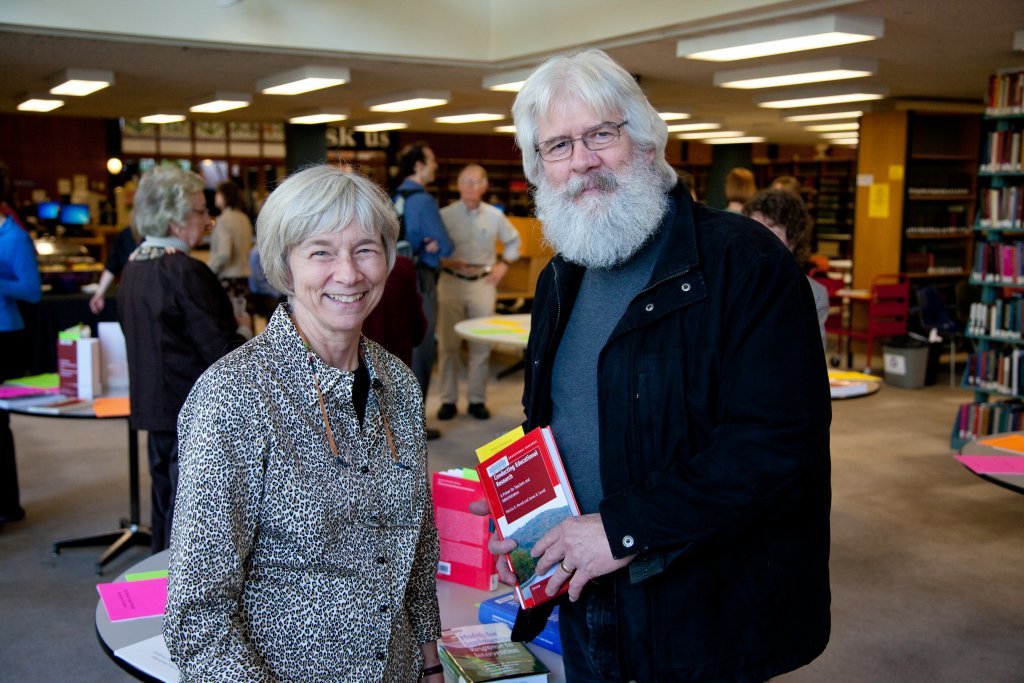
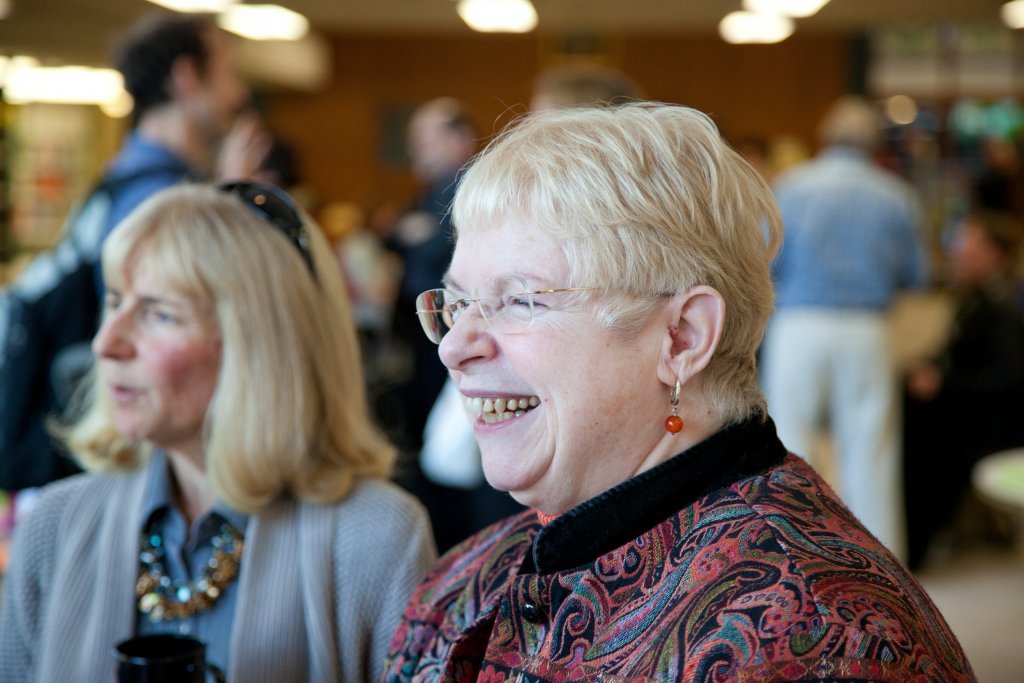
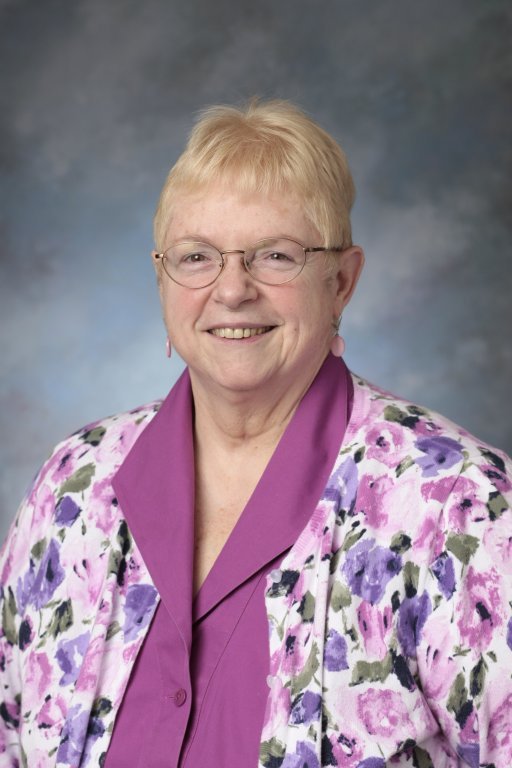
Caroline Mann and Doctor James Carroll.
Caroline Mann and Dr. James Carroll at the UP Authors Reception, 2010
Doctor Christopher Kodadek.
Dr. Chris Kodadek, 1999
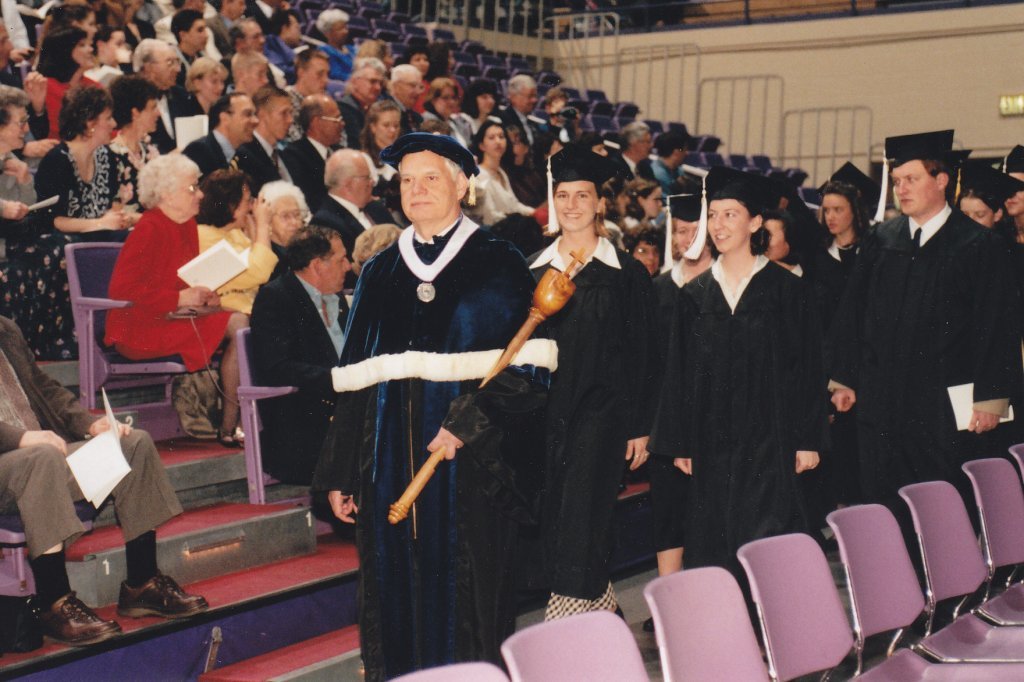
Doctor Thompson Faller leads the student procession at commencement.
Dr. Thompson Faller, 1997
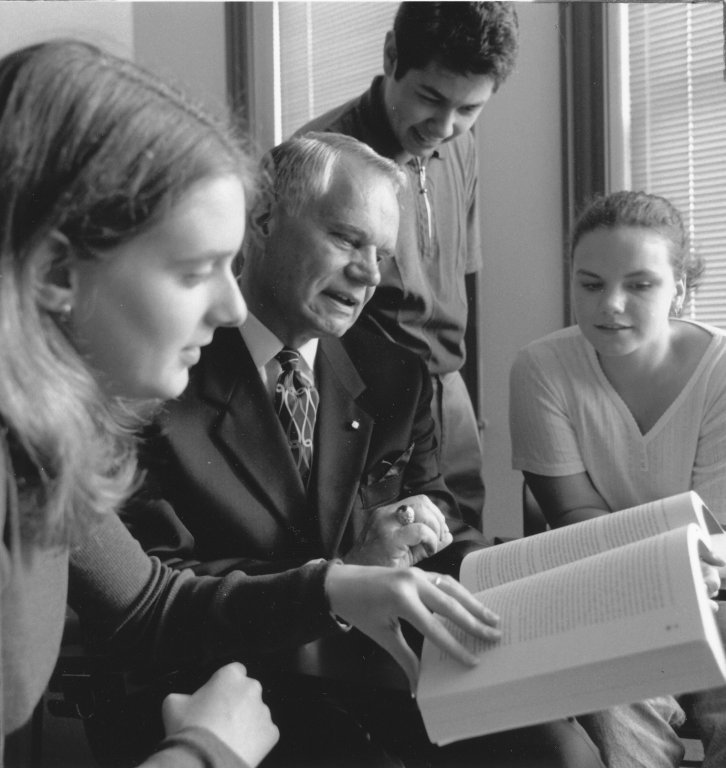
Doctor Thompson Faller and students looking at a book.
Dr. Thompson Faller with students, 1997
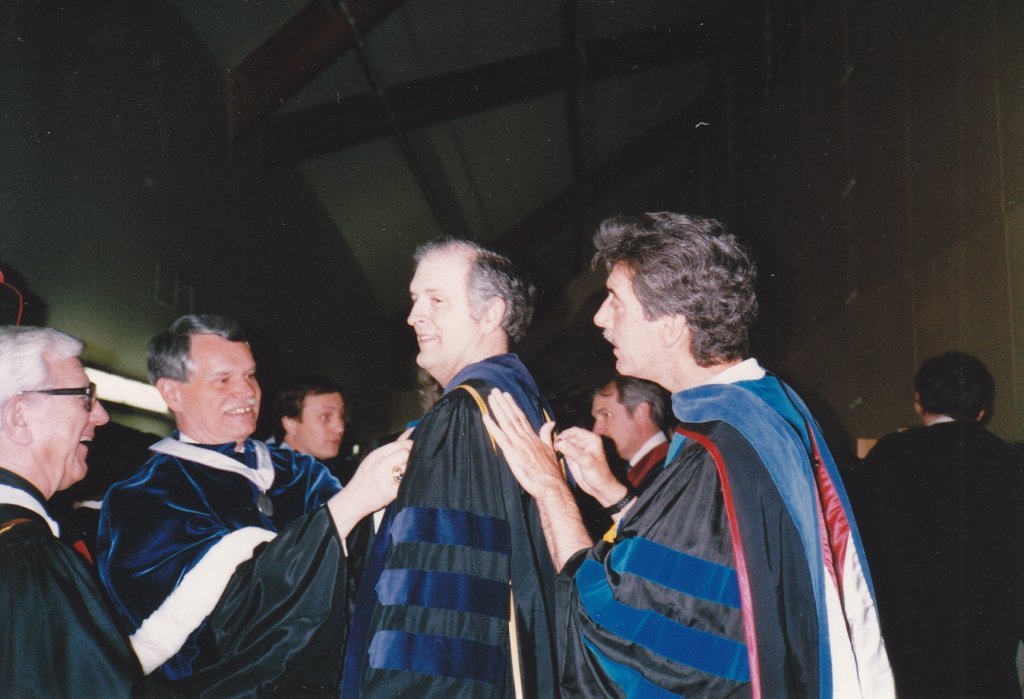
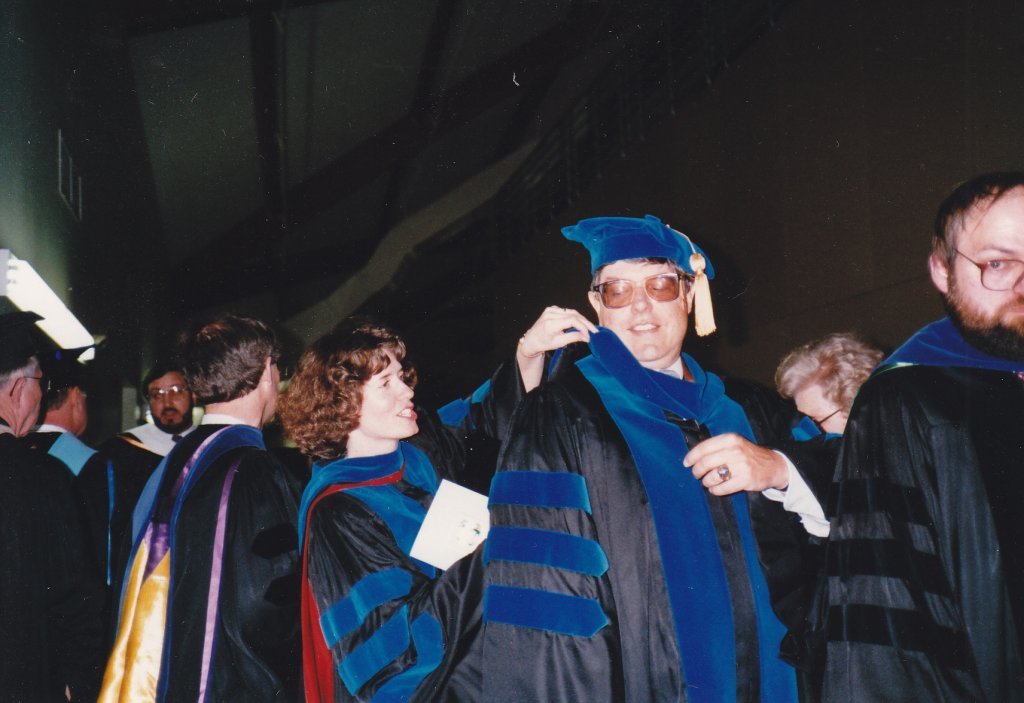
Doctor Thompson Faller helping faculty members with their academic regalia.
Dr. Thompson Faller, 1989
Doctor Thompson Faller
Dr. Thompson Faller, 1987
Doctor Thompson Faller
Dr. Thompson Faller, 1986
Doctor Robert Duff
Dr. Robert Duff, 2010
Doctor Robert Duff
Dr. Robert Duff, 1994
Doctor Robert Duff reviewing academic assignment with a student.
Dr. Robert Duff with student, 1988
Doctor Robert Duff
Dr. Robert Duff, 1986
Doctor Carol Craig and Kathy Crabtree
Dr. Carol Craig, Kathy Crabtree, 2010
Kathy Crabtree
Kathy Crabtree, 2012
Kathy Crabtree
Kathy Crabtree, 2011 Beacon
Doctor Susan Baillet and Doctor Robert Duff with others in academic regalia.
Dr. Susan Baillet, Dr. Robert Duff, 1989
Doctor Susan Baillet
Dr. Susan Baillet, 1989
Doctor Herman Asarnow
Dr. Herman Asarnow, ca1996
Doctor Becky Houck and Doctor Herman Asarnow in academic regalia.
Dr. Becky Houck and Dr. Herman Asarnow, 1989
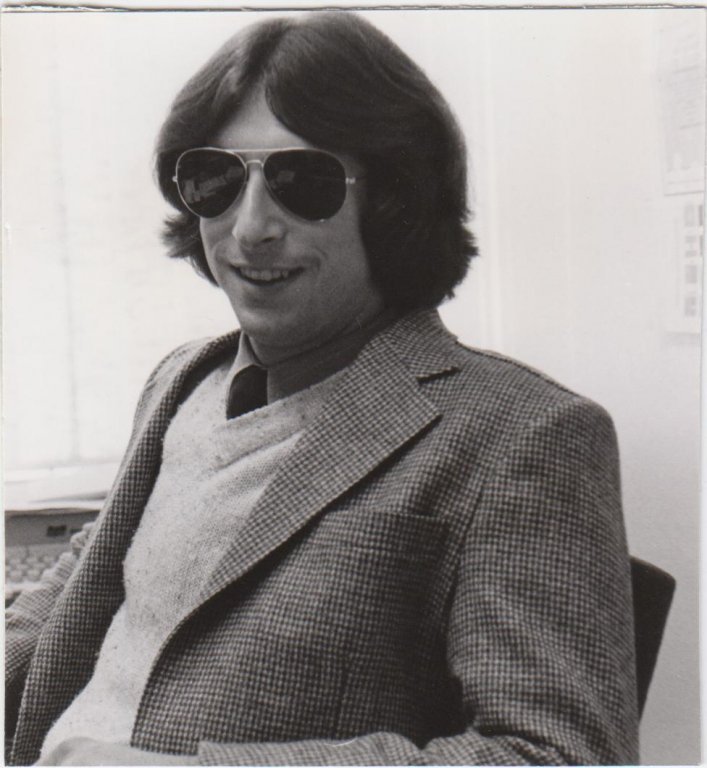
Doctor Herman Asarnow wearing sunglasses.
Dr. Herman Asarnow, 1980 Log

Filed Under: Annuals, Annuals 2

Wally Pilot

April 16, 2014 By Carolyn

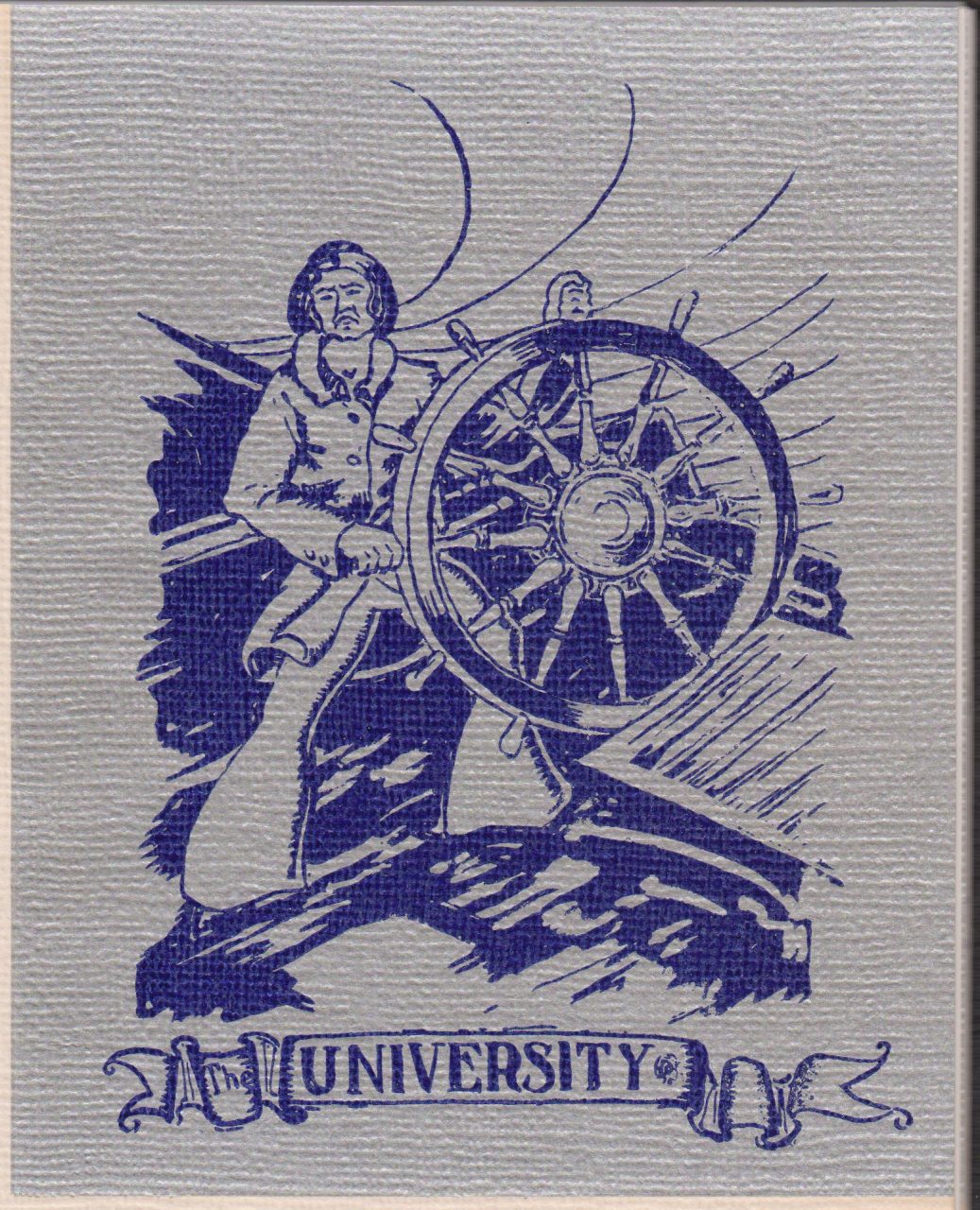
The Spirit of Portland U 

The Beacon, April 12, 1935
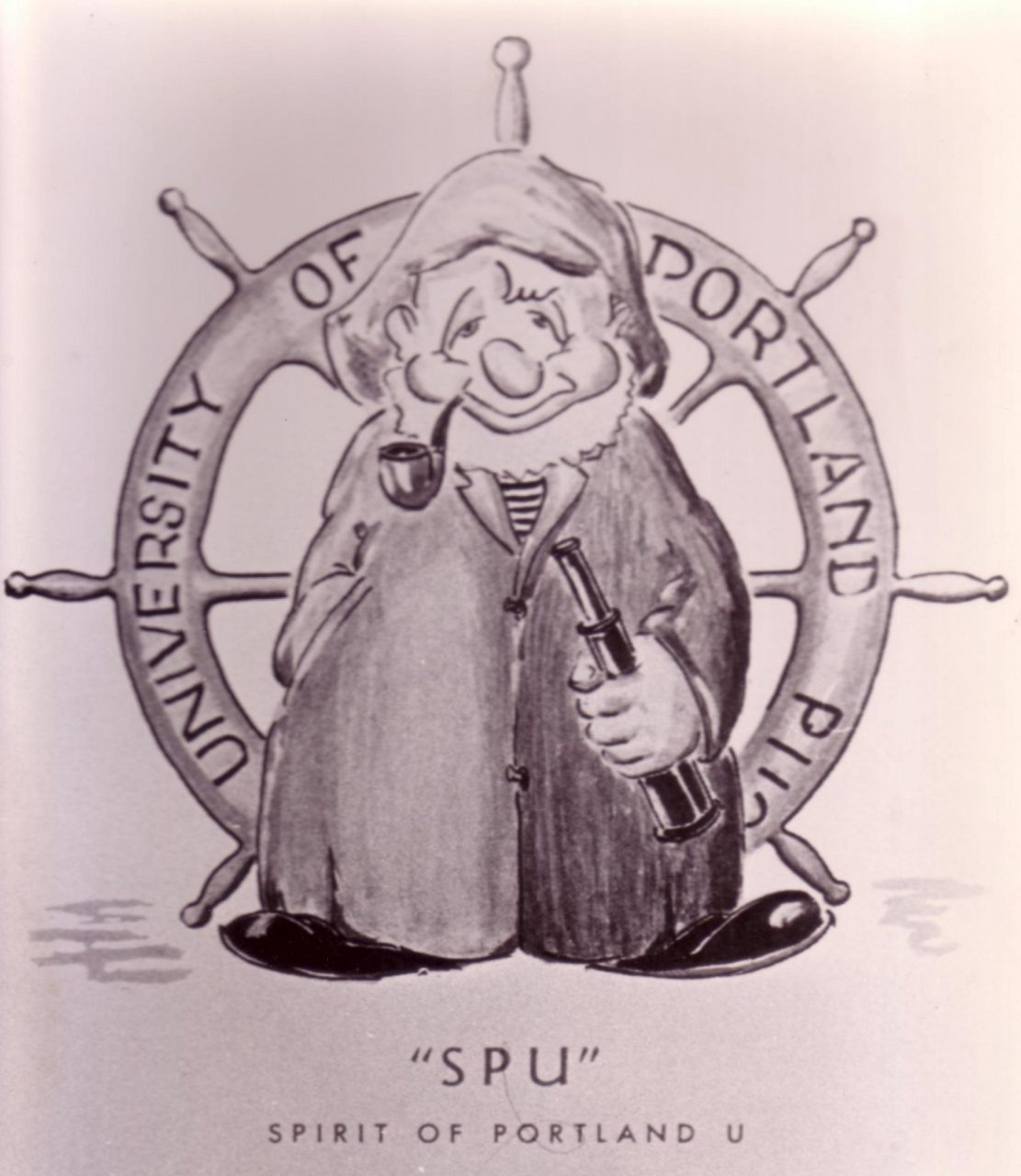
Nolan Drurey drawing of the Spirit of Portland U, 1948


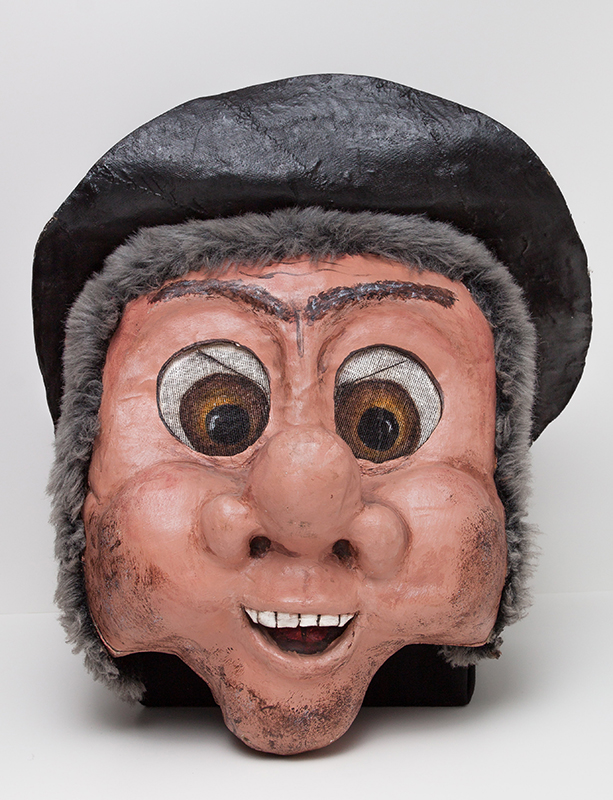
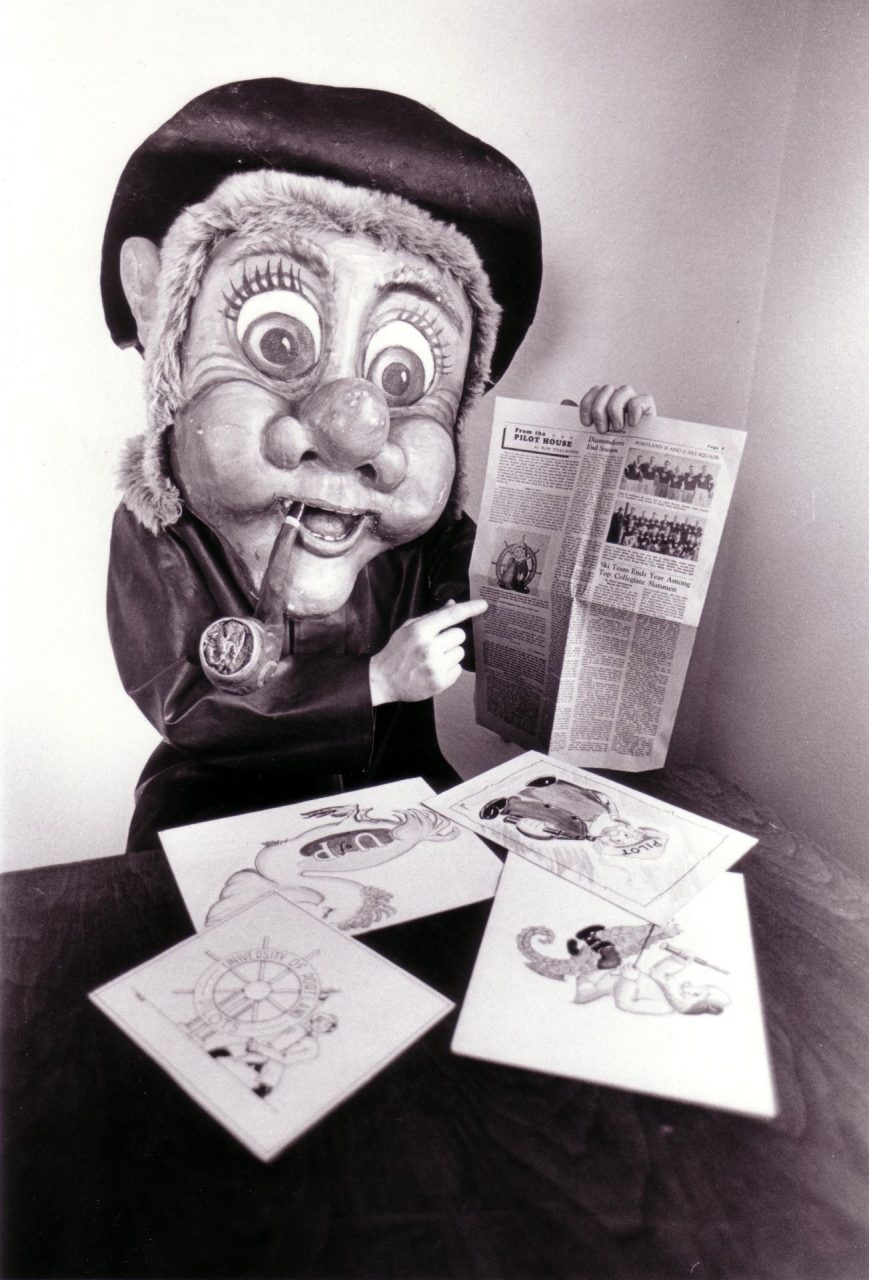
Wally Pilot came to life in 1948, when Nolan Drurey ’49, lured by a grand prize of five boxes of Chesterfield cigarettes, entered a Beacon mascot-design contest and first drew the bewhiskered river pilot.  . . .  Records are foggy about SPU’s animation, but the 1953 Log reported that the University fraternity Upsilon Omega Pi “spent 70 hours building a paper-mache head.”

from, Christine Fundak Rohan, I Was Wally Pilot,
Portland Magazine, Winter 1998

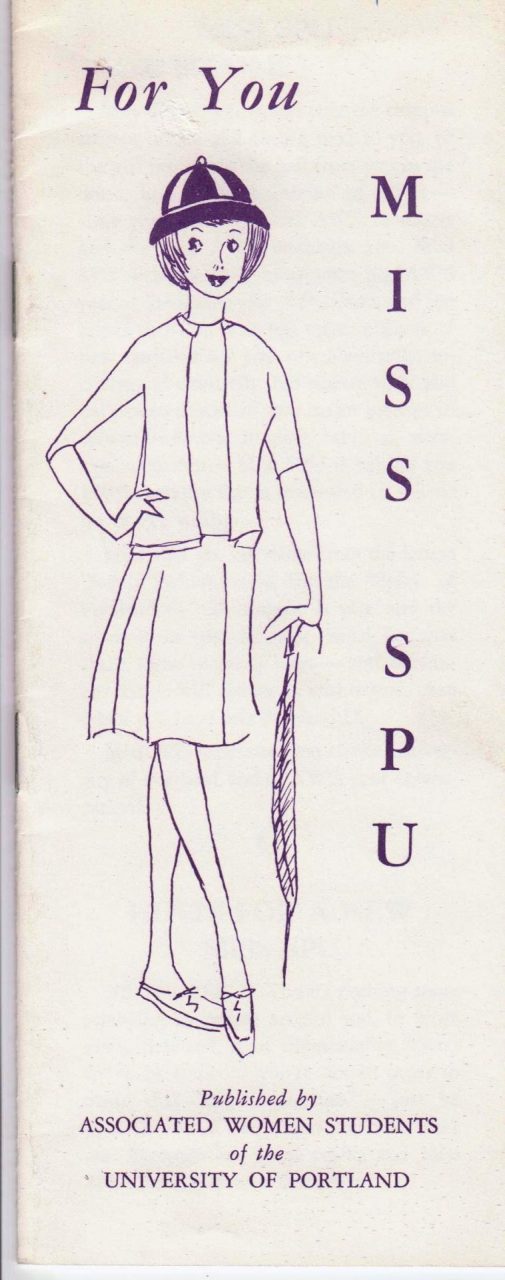
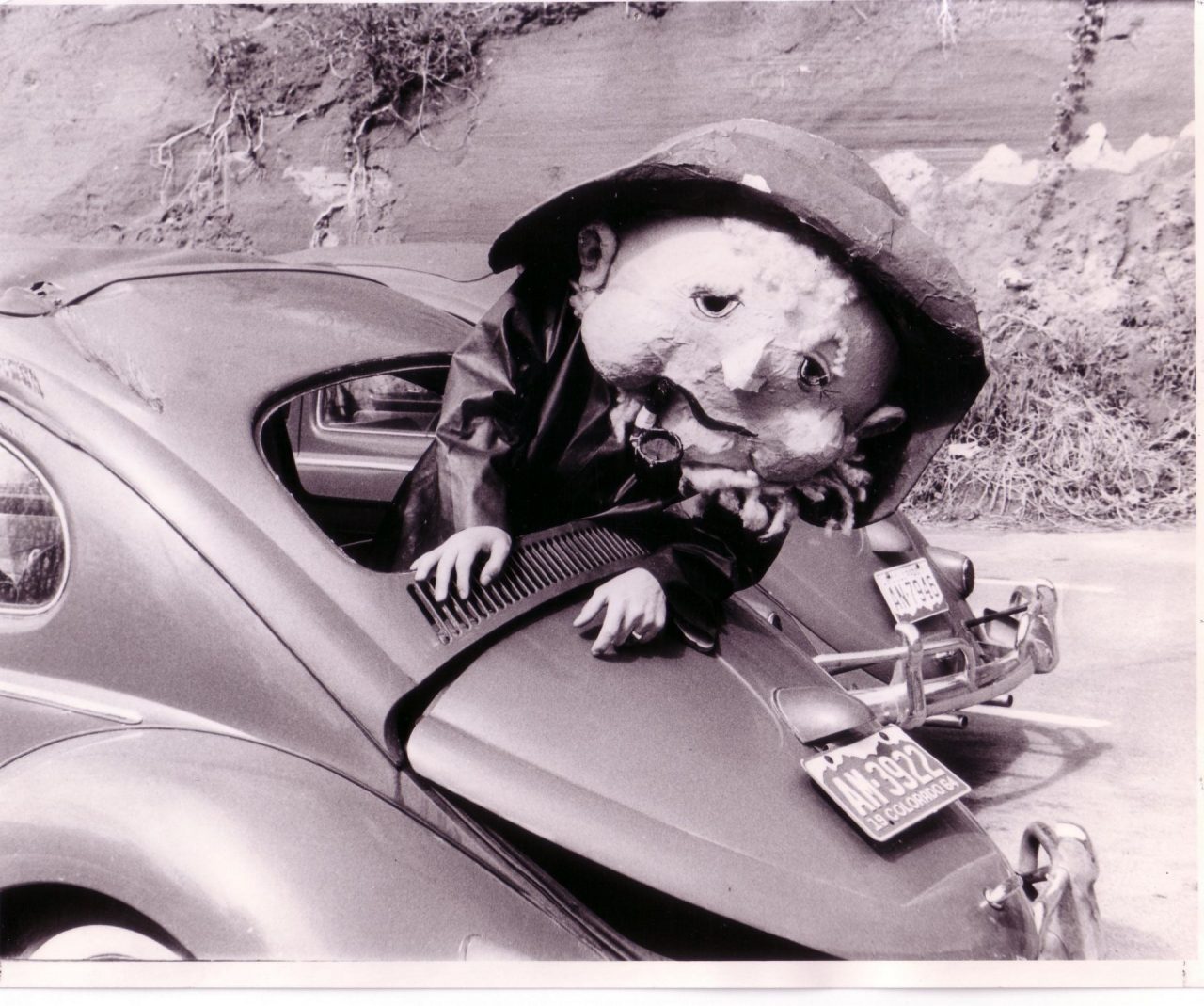
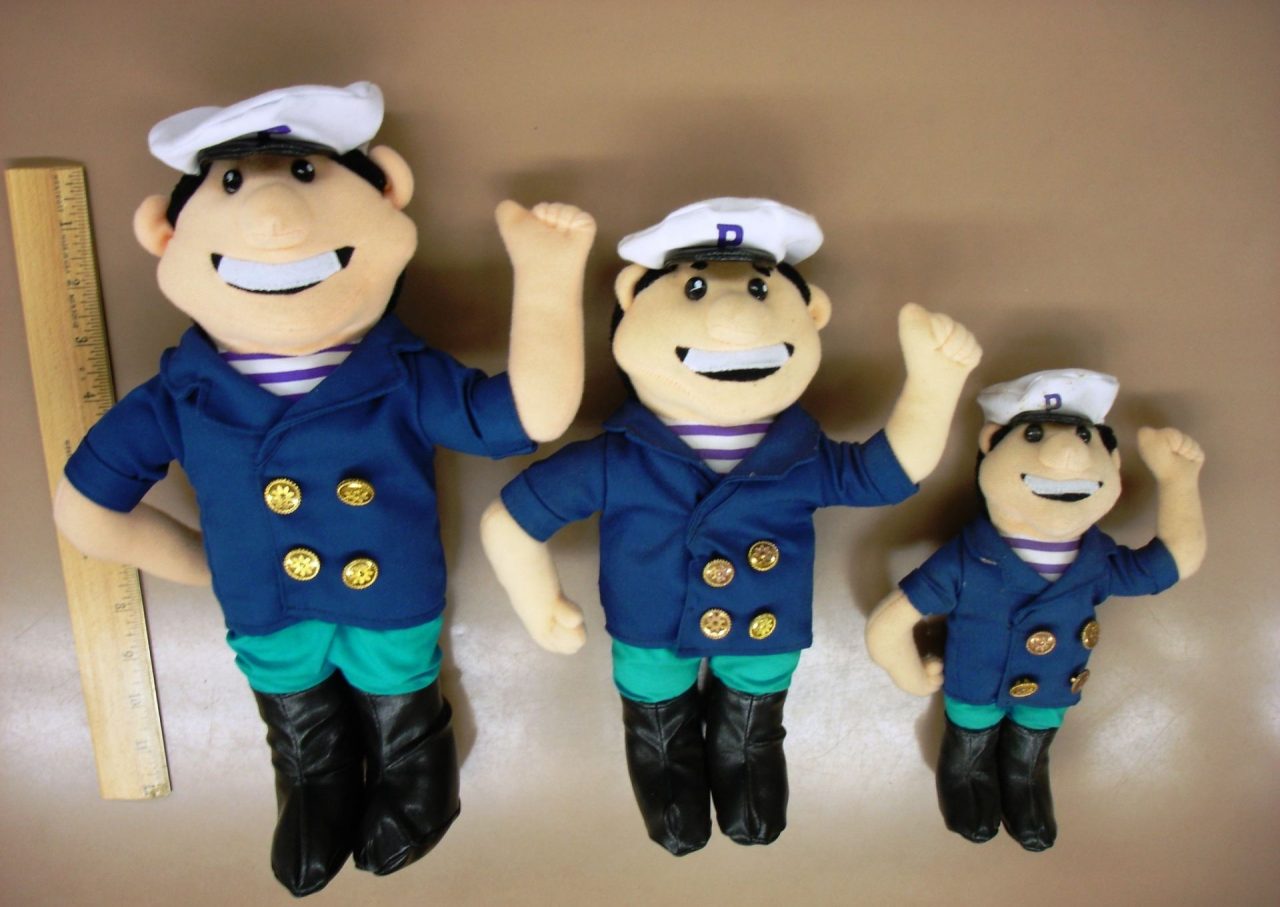
From the 1950s to 1993, the members of Upsilon Omega Pi fraternity were Wally’s caretakers and wore the Wally Pilot head and rain gear at sports and other University events.  In his early years, Wally Pilot was known as the Spirit of Portland U or SPU.  As he integrated into campus life, SPU was most often a willing participant in Homecoming displays created by student organizations in the 1950s and 60s.  Wally Pilot also graced the cover of campus directories and Pilot student guides for a period of years.   Through the decades, Wally’s face underwent several makeovers with the latest in the 1980’s.  In 1978 University president, Rev. Paul Waldschmidt, C.S.C., declared February 13-17 as Wally Pilot week with his 30th birthday celebration on February 16.  When fraternities and sororities disbanded on campus in the early 1990s, Wally’s head, rain gear, and boots were given to the University Museum where they are on display today.  In 1993, a more friendly, healthy, and modern Wally Pilot was unveiled but to mixed reviews by students and alumni.  Wally Pilot took a few years off and underwent a complete renovation and emerged in 2009 as a taller and more physically fit Wally (with six-pack abs), entertaining spectators at athletic venues and through his own Facebook page:
https://www.facebook.com/WallyPilot?fref=ts.

Filed Under: Campus - Student Life, Campus - Student Life 1

Hours and Bases

April 10, 2014 By Carolyn

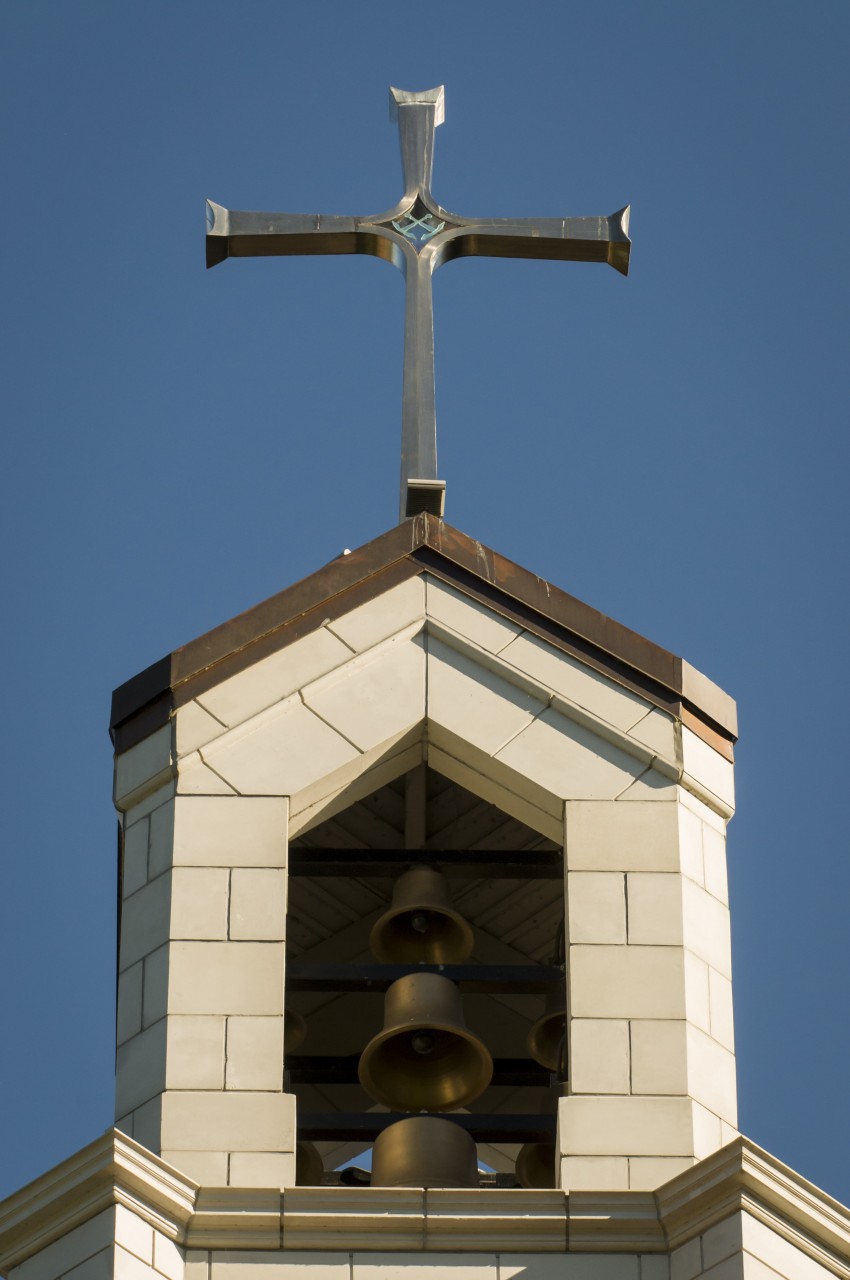
Bell Tower, University of Portland Viewbook, 2012

The Congregation of Holy Cross is a religious community founded for education, and that dedication is woven into the very fabric and foundations of campus life at the University of Portland, from the buildings where we work and study, to the hours which divide the day.

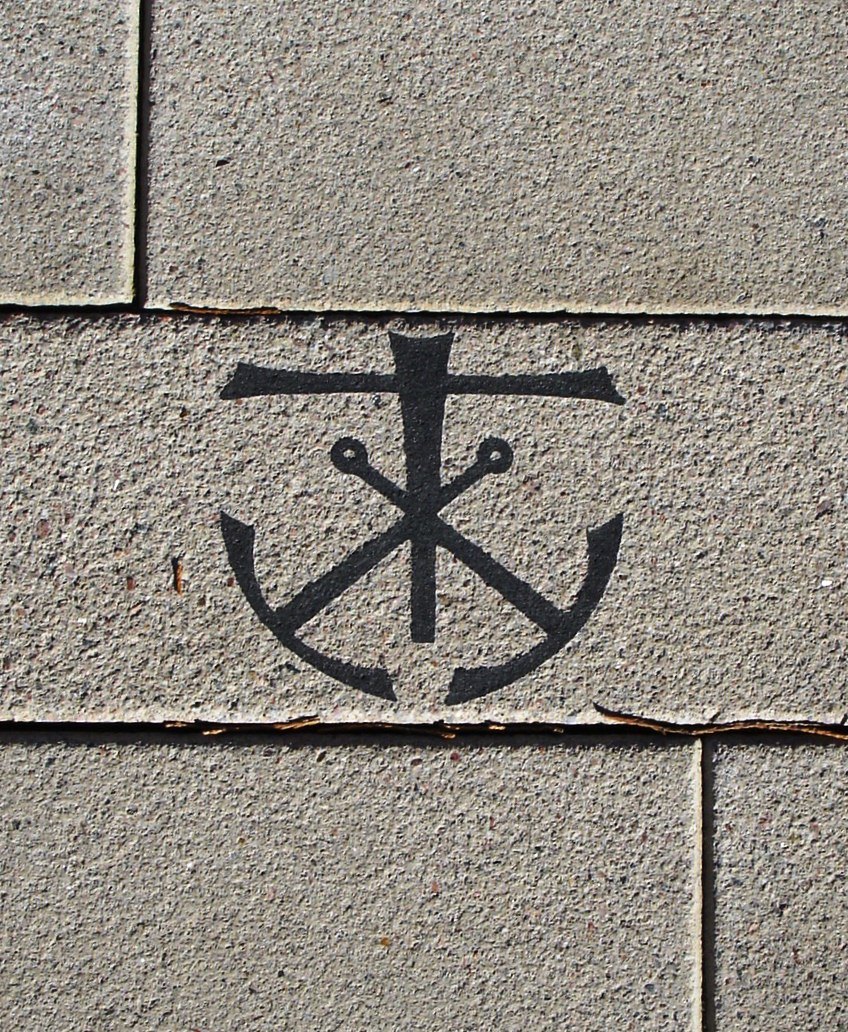
Standing more than 100 feet, the University Bell Tower is the tallest building on campus.   At the center of the cross atop the tower we find the Cross and Anchor symbol of the Congregation of Holy Cross.  From this tower fourteen bells of various sizes chime the hours for all on campus on a daily basis.  The two principal bells where christened for Blessed Basil Anthony Moreau, C.S.C., and for Saint Andre Bessette, C.S.C.  Father Moreau is the founder of the Congregation of Holy Cross.  Saint Andre is a Holy Cross brother who served as porter and doorkeeper at a Holy Cross school in Montreal.

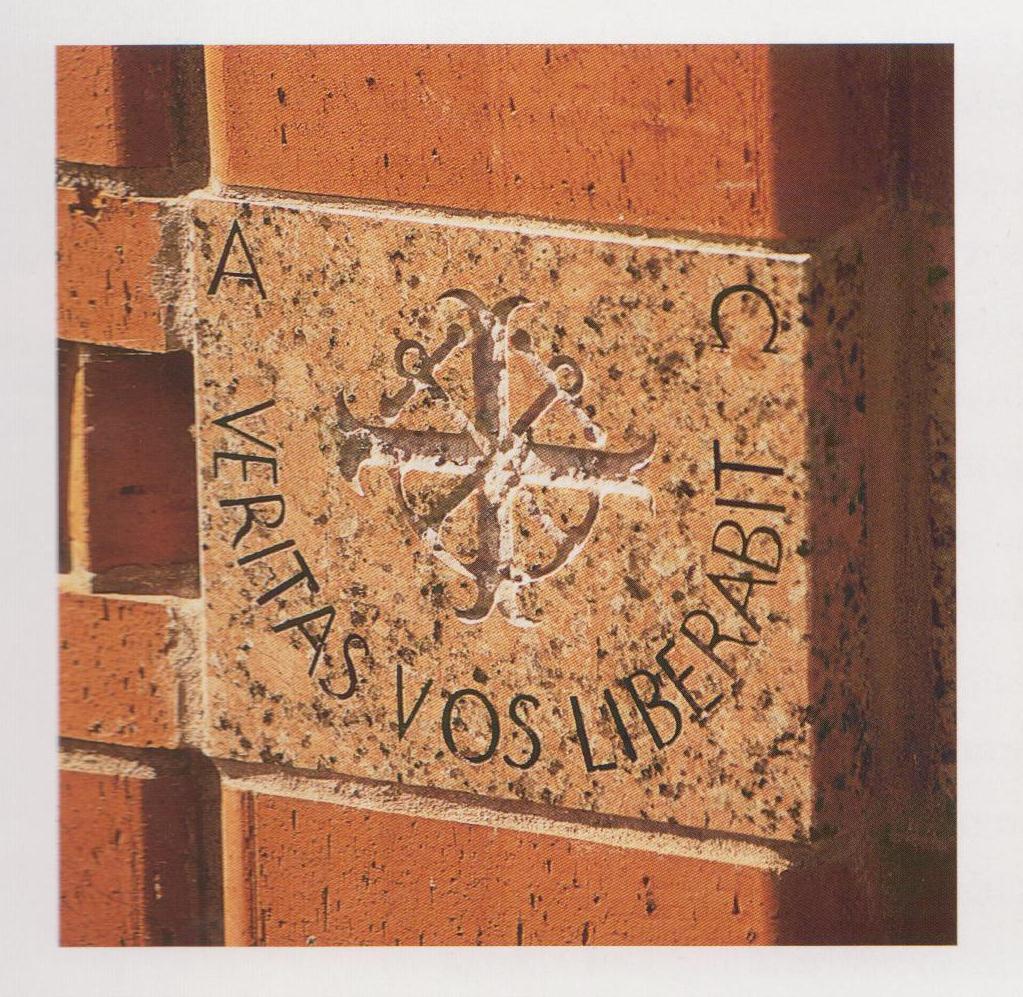
The Cross and Anchors symbol ornamenting the door frames at Howard and Christie Halls and engraved in the cornerstones of residential and classroom buildings alike memorializes the fact that the University of Portland finds Holy Cross values at the heart of our educational mission.

With the eyes of faith consider the greatness of your mission and the
wonderful amount of good you can accomplish.  And also consider
the great reward promised to those who have taught the truth to others
and have helped form them into justice: “they will shine eternally in the
skies like the stars of the heavens.”  With the hope of this glory, we must
generously complete the Lord’s work.

From Christian Education
The Very Reverend Basil Anthony Moreau, C.S.C.
founder of the Congregation of Holy Cross

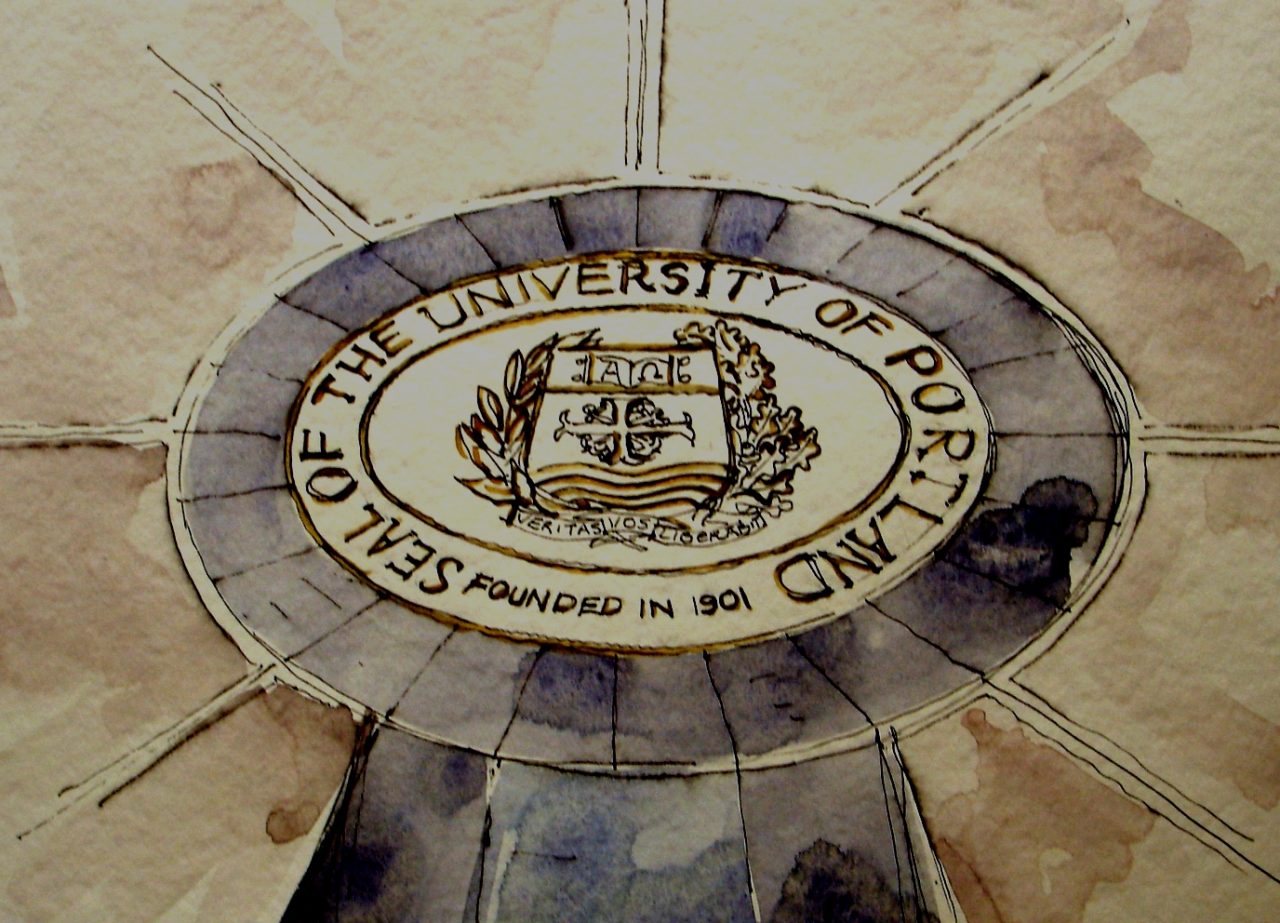
Cross and Anchor symbols around campus

Haggerty and Tyson Halls Chapel Door
Cornerstone, Chapel of Christ the Teacher
Howard Hall
Storm Drain Cover
Blessed Basil Moreau, C.S.C. Bell, Lund Bell Tower
Bell Tower Lintel Keystone
Main Entrance to Campus
Franz Hall Plaza, Dennis Clemmens Watercolor
Library Plaza

Filed Under: Values, Values 1

April 12, 1935 – Pilots on the Bluff

April 10, 2014 By Carolyn

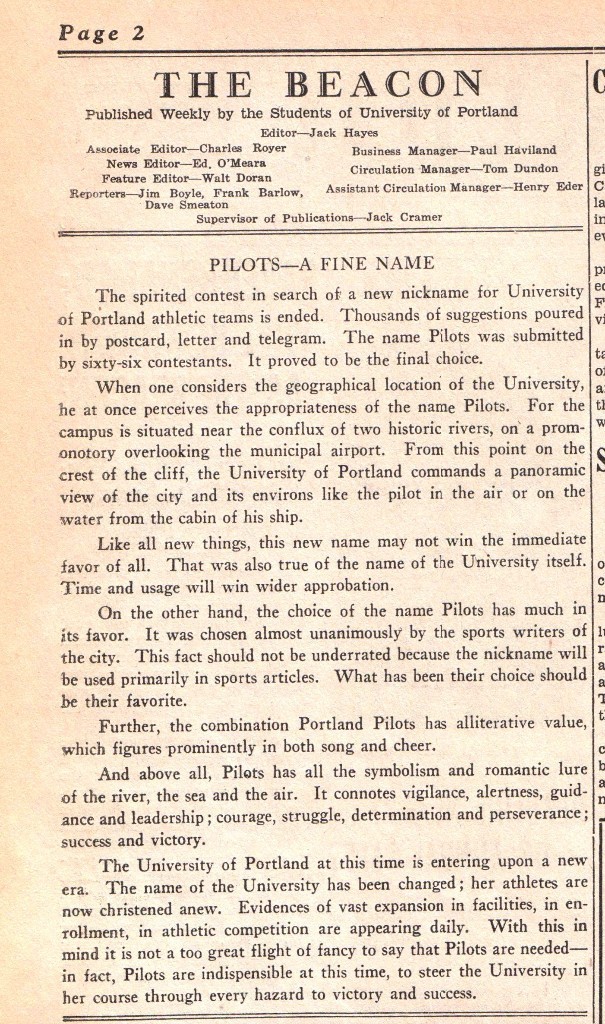
On this day in 1935 University officials announced the adoption of the nickname “The Pilots” for the athletic teams of the newly renamed University of Portland.  Prior to 1935, teams had been called, variously “The Irish” and “The Cliffdwellers”.

The Beacon, April 12, 1935
The Beacon, April 12, 1935 (University Archives, Click to enlarge)


Filed Under: School History, School History 3

April 6, 1917 – Outbreak of World War I

April 6, 2014 By Carolyn

The outbreak of World War I
and the experience of students at Columbia University

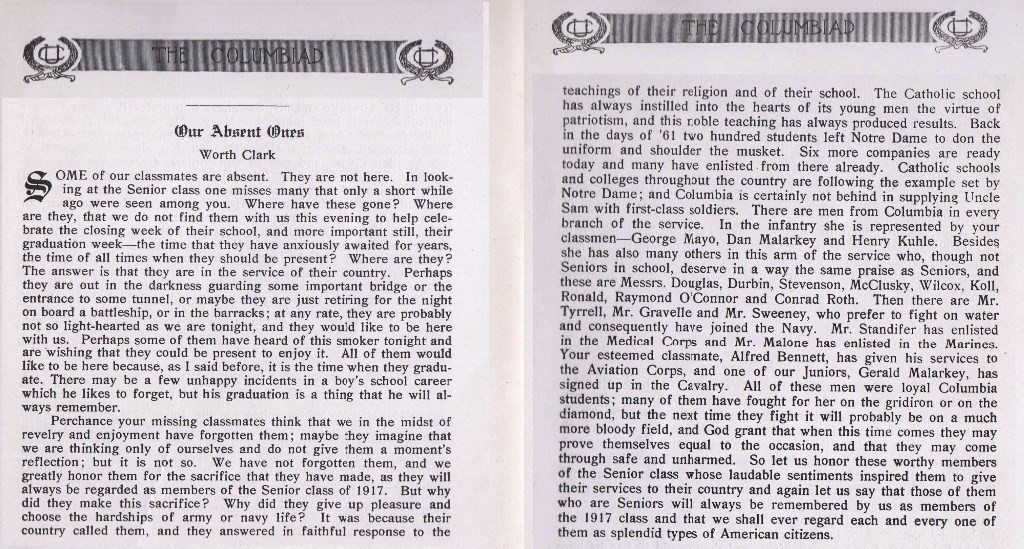
The Columbiad was a student authored and edited publication published monthly.  In that respect, it was not an organ of news and current events.  The War in Europe began for Europe in 1914; the United States remaining outside the Great War until 1917, and even then the arguments and issues of America’s entry into the War were cast in a world, or global political context.

When the United States entered the war in April of 1917, the Columbiad editorializes for the support of the war and also reports that already 18 students have enlisted alongside 6 alumni recruits.  By June, and high school commencement, the war is the significant reference for the graduation ceremony, and in the graduation issue the Columbiad prints an article of valedictory in which a remaining student combines in friendship and service those left behind as also taking part with their classmates who have volunteered, united together in the forward adventure of war service and the battle for freedom.

Columbiad Editorial by Worth Clark, April 1917
Columbiad Editorial by Worth Clark, April 1917 (University Archives, Click to enlarge)


Worth Clark, The Columbiad, June 1917
Worth Clark, The Columbiad, June 1917  (University Archives, Click to enlarge)


Worth David Clark graduates from the high school division of Columbia University in 1918, editor of the Columbiad and valedictorian in a class of 17 people.

Of those mentioned in Mr. Clark’s June 1917 article, Gerald Malarkey was one of only three sons of Columbia who died in war service; in total, Columbia contributed some 180 men and boys who enlisted as part of the war effort.

Filed Under: School History, School History 3

April 3, 1806 – Lewis and Clark Expedition

April 3, 2014 By Carolyn

On this date in 1806 Captain William Clark and a party of scouts from his expedition investigated the lower Willamette River near the present site of the University.

Bench on the Bluff behind Swindell's Hall, 2014
Bench on the Bluff behind Swindell’s Hall, 2014

The bench at the designated smoking area behind Swindell’s Hall is turned inward to campus.  This spot on the Bluff used to be a look-out point, indeed notably as far back as 1806, eighty years before the University was even conceived.  This is duly observed in the February 1944 issue of The University of Portland Bookman, a journal for the Friends of the Library.  In M. Leona Nichols’ article, “Captain Clark Discovers Waud’s Bluff Site of the University” (a review of the explorers’ journals), Ms. Nichols writes,

Captain Lewis says that “… The most important spot is Wappatoo Island, a large extent of country lying between the Multnomah and an arm of the Columbia, which we have called Wappatoo Inlet … which at a distance of seven miles up the Multnomah connects that river with the inlet … “
(History of the Expedition under Lewis and Clark, ed. by Elliott Coues, v. III, p. 928-929).

A note on the history of the expedition by Dr. Elliott Coues says that “The locality which Clark makes ten miles up river is certainly not so far, probably about St. John(s).  The two miles further he goes … would bring him to Waud’s Bluff and Swan Island whence it is still three or four miles to Portland (p. 924)”.

Captain Lewis and party came to the Bluff on April 3, 1806 on the expedition’s return from the coast, and the University campus is an official landmark stop on the Lewis and Clark National Historic Trail (designated by the National Park Service in 1988).

There are three different monuments on the University campus which memorialize this event.

Clark's Point stone marker dedicated October 10, 1945
Clark’s Point stone marker dedicated October 10, 1945

On October 10, 1945 the ‘Clark’s Point’ stone marker was dedicated by the mayor and members of The Oregon Trails Association; one of a series of markers tracing the Lewis and Clark route from St. Louis, Missouri to Astoria, Oregon.  A five and a half ton boulder, the first marker stands at the then far edge of campus, a location that is now the exit where Willamette Boulevard curves toward the city.  The plaque reads: “Clark’s Point / Furthest point up the Willamette explored by William Clark and six men of the Lewis and Clark expedition / April 3, 1806”.

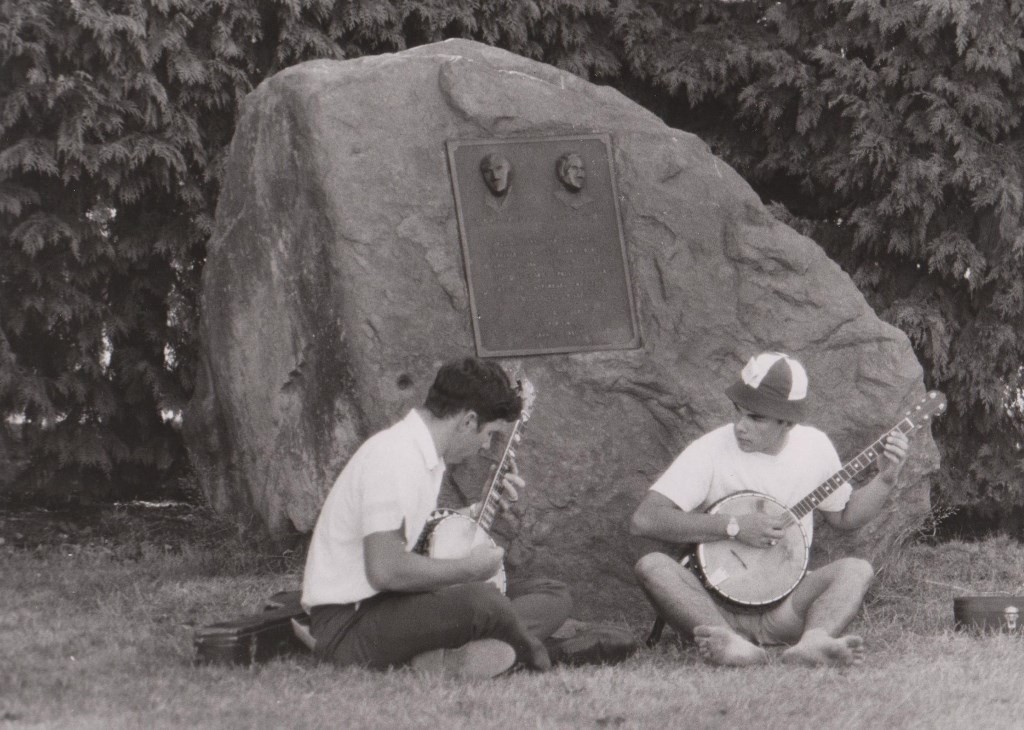
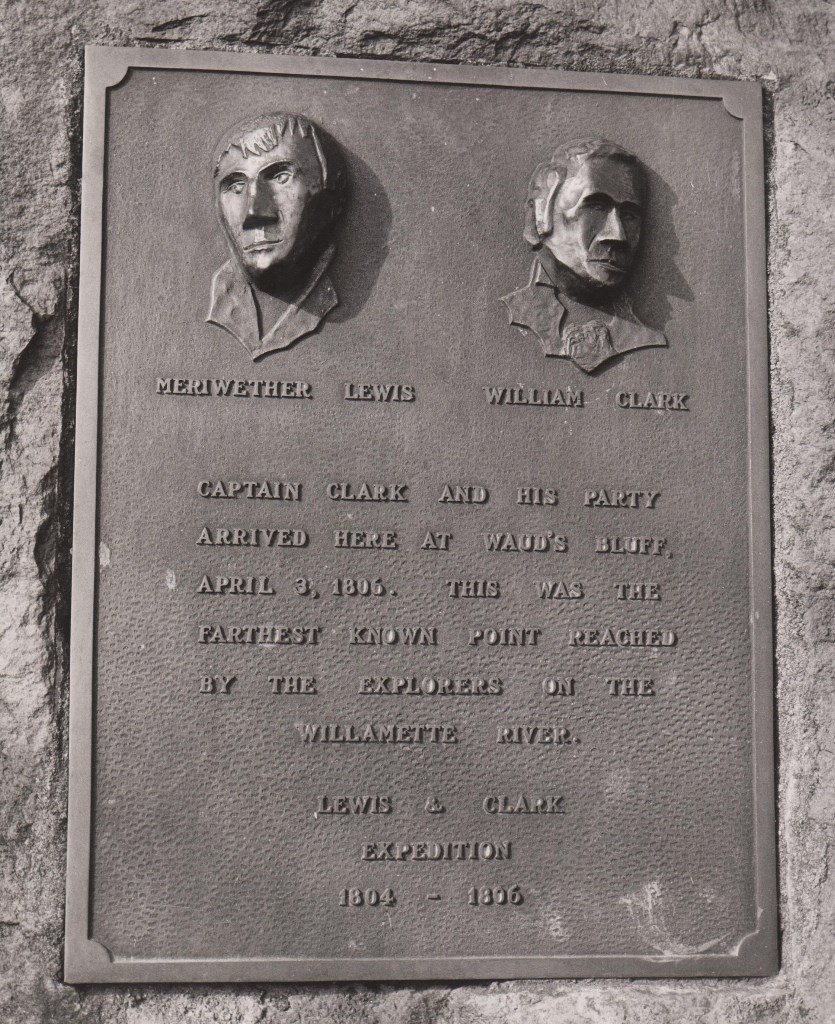
A second, larger monument was established in 1948.  The new location, deeper into the campus proper, better approximates details found in the scouting report preserved in expedition journals.   The new monument, beyond Swindell’s Hall, is an eight ton boulder obtained by Brother Godfrey Vassallo, C.S.C., bearing a plaque designed by Brother Pius Liesing, C.S.C. and fabricated by student Joe Goehler ’48, featuring portrait reliefs of the two explorers, Meriwether Lewis and William Clark.   From this spot, on a very clear day, it is still possible to credit the words of Clark’s journal, “I can plainly see Mt. Jefferson”; which stands 100 miles away to the SE.

Students in front of Lewis and Clark Monument, 1967
Lewis and Clark Monument Plaque, 1948

The third monument, sculpted by University of Portland art professor Michael Dente and dedicated December 11, 1988, is three seven-foot bronze statues mounted on a four-foot platform.

Captain William Clark Monument sculpted by Michael Dente and dedicated on December 11, 1988
Captain William Clark Monument sculpted by University of Portland professor Michael Dente, dedicated on December 11, 1988

(Note: The Captain William Clark Monument was relocated to protective storage in 2020.)

University Archives: Sources and Holdings Consulted:
The Beacon, The University of Portland BOOKMAN, The Log, The Columbiad,  The University of Portland Alumni Bulletin, The Oregonian, The Washington County Times, Portland: Greater Portland Commerce, The Captain William Clark Monument Brochure; and correspondence from Oregon Lewis & Clark Trail Heritage Foundation Committee, Oregon Historical Society, Rev. Thomas Oddo, C.S.C., University of Portland president, Office of University  Relations.

Filed Under: Campus - Landscape, Campus - Landscape 2

April 8 – Founder’s Day

April 3, 2014 By Carolyn

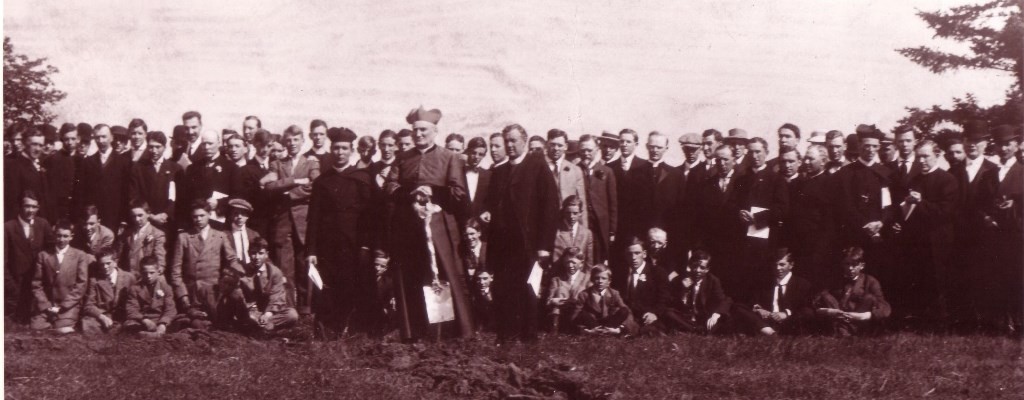
Archbishop Alexander Christie, founder of the University, with faculty, staff, and students, 1911

The Origins of the Feast . . .

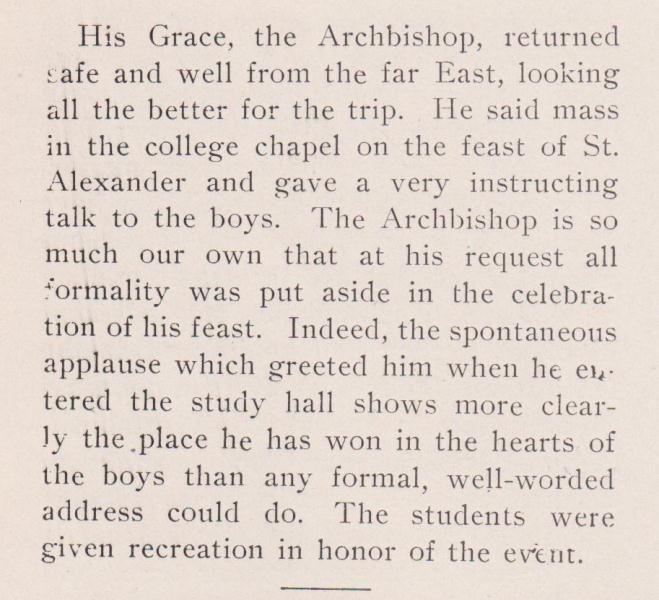
Founder’s Day began informally in the kind act of Archbishop Alexander Christie who chose to celebrate his name’s day by spending time with the community of students on the Bluff at the school he so strongly supported and with which he powerfully identified himself.  And so in the Columbiad, the University periodical of 1903, there is this note:

Founder's Day, 1903 Columbiad

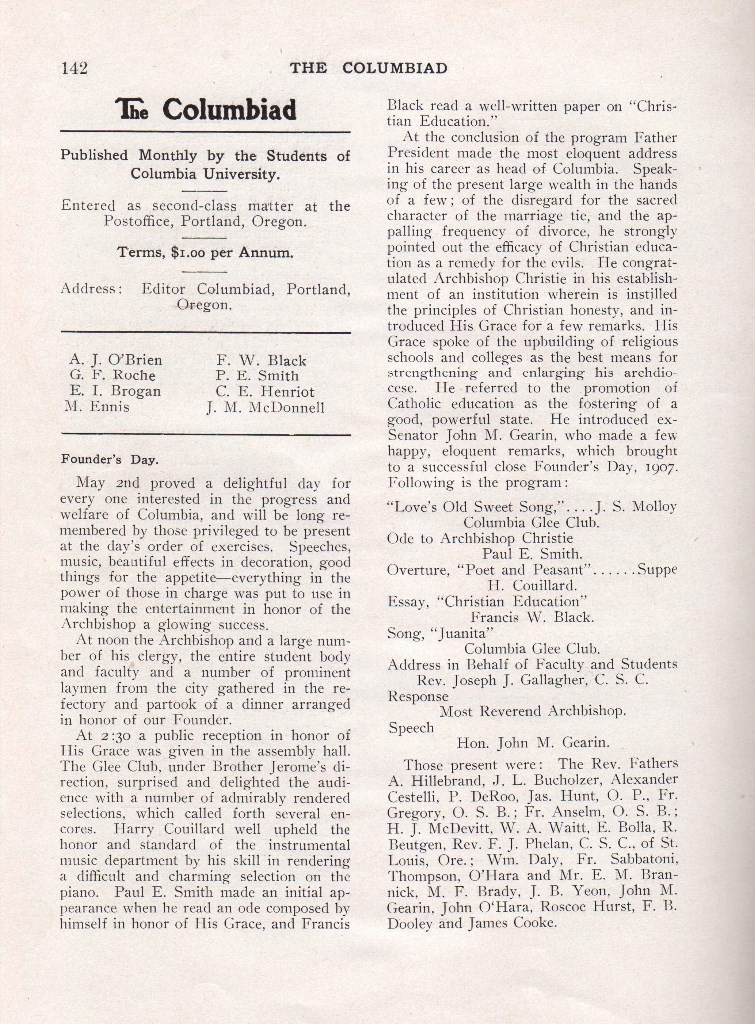
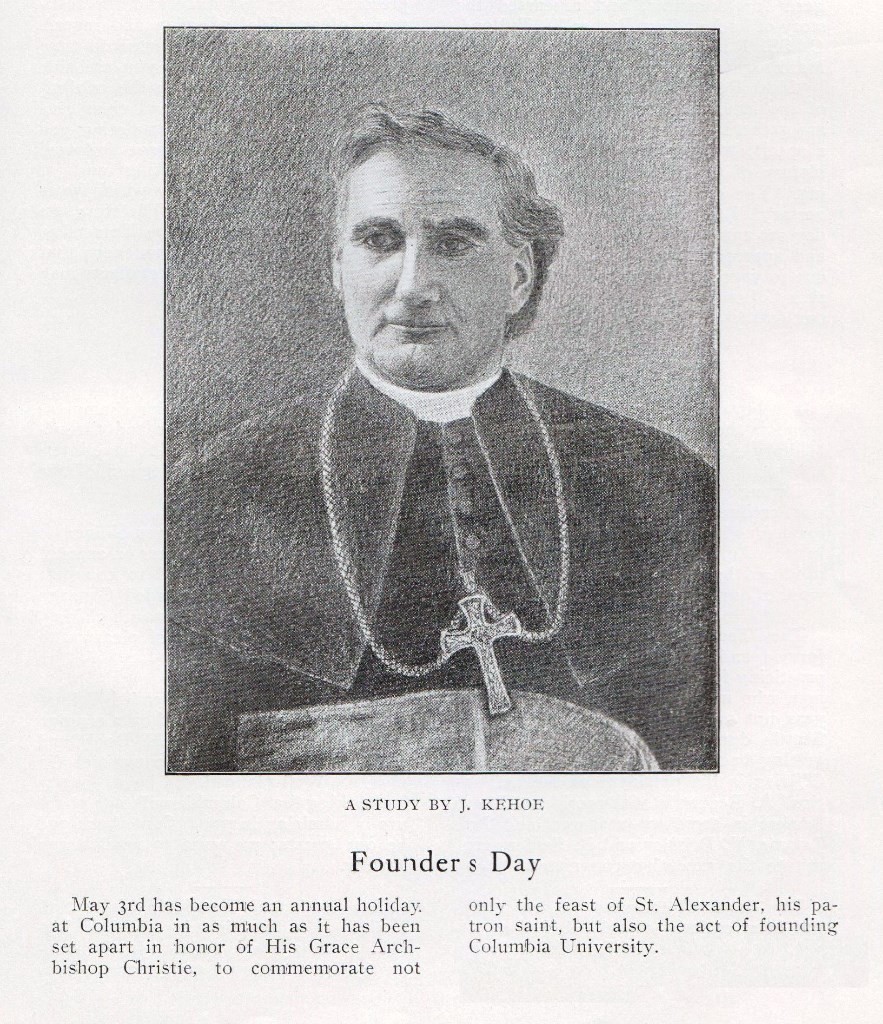
Called ‘Founder’s Day’ already in 1904, and celebrated even in the absence of the Archbishop in 1905, the Columbiad of 1906 hails the day as an institution.

Founder's Day, 1907, The Columbiad
Founder’s Day, 1907, The Columbiad

Archbishop Alexander Christie, Founder's Day, 1906
Archbishop Alexander Christie, Founder’s Day, 1906

In 1907 the day of assembly as opened with the recitation of an Ode to Archbishop Christie, a student composition of 113 lines, over seven stanzas.  Prudentially not repeated here.

Filed Under: School History, School History 3

  • « Go to Previous Page
  • Go to page 1
  • Interim pages omitted …
  • Go to page 16
  • Go to page 17
  • Go to page 18
  • Go to page 19
  • Go to page 20
  • Go to Next Page »

Primary Sidebar

Hours and Location

University of Portland Museum
014 Shipstad Hall

Available by e-email at:  museum@up.edu

Digital Collections

Explore some collections and resources from the Archives and Museum available online through Digital Collections


Social Media

Follow us on Facebook

Follow us on Instagram

Ask Us Anything

Ask Us Anything

We'd Love to Hear from You! Questions? Comments? Topics?

This form is protected by reCAPTCHA and the Google Privacy Policy and Terms of Service apply.

Copyright © 2026 · News Pro with Full Header On Genesis Framework · WordPress · Log in

Subscribe

Subscribe By Email

Get every new post delivered right to your inbox.

This form is protected by reCAPTCHA and the Google Privacy Policy and Terms of Service apply.


Loading Comments...